
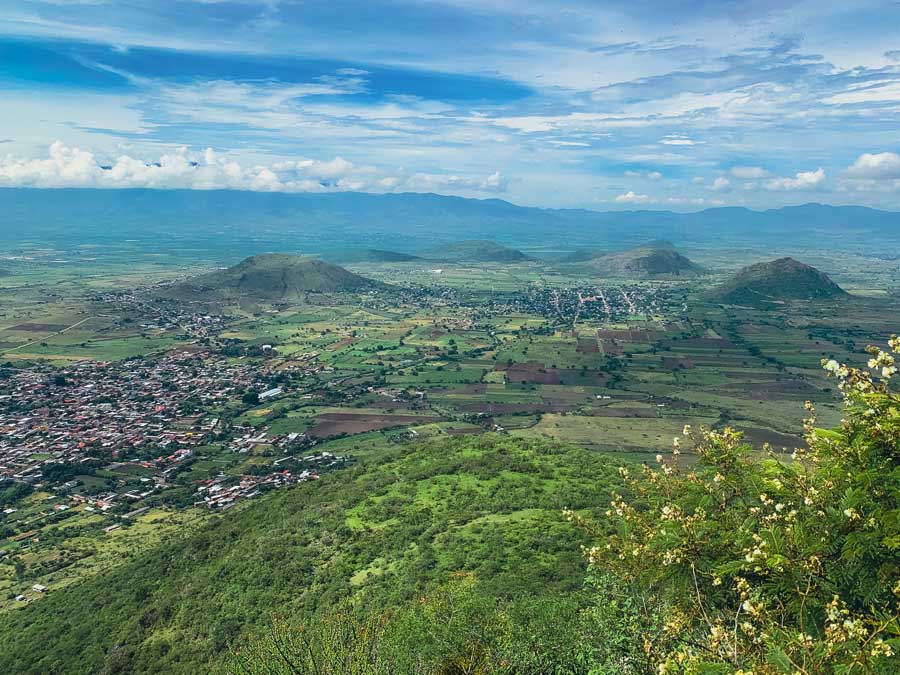
Oaxaca to Mitla | Over 9 Places to Visit in the Culturally Rich East Oaxaca Valley
Oaxaca Mexico seems to be a buzzword these days, and honestly, why wouldn’t it be? The diverse Oaxaca culture is seen on hilltop ruins, tucked away in tiny artisan villages, and sipped on from tiny shot glasses of Mezcal. The colorful streets that line the city of Oaxaca are a delight to wander and let’s not forget to mention how Oaxaca State boasts it’s own unique cuisine.
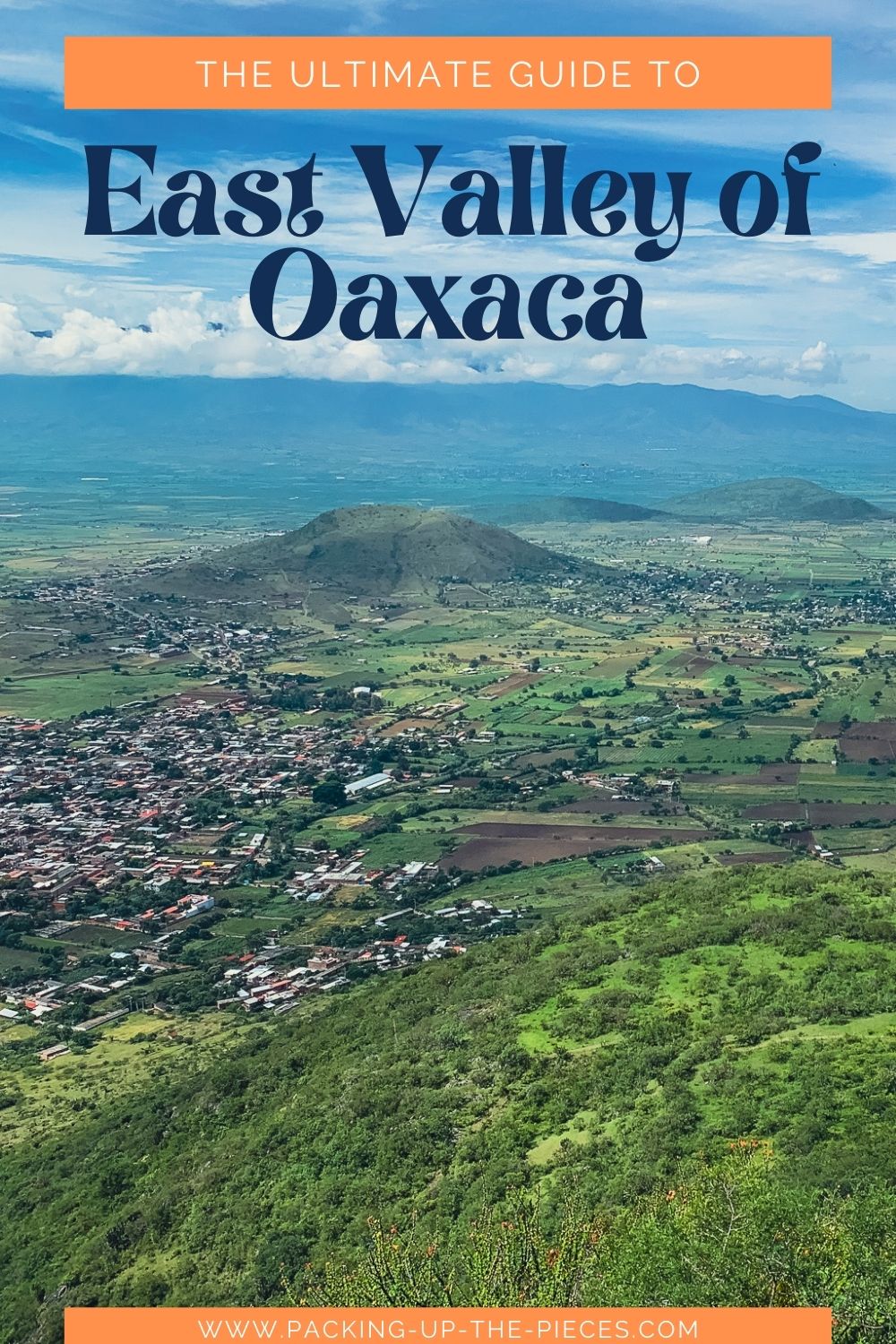
But besides the charm of Oaxaca city, the entire Oaxaca Valley is a treasure chest of Indigenous cultures, natural beauty, and traditional villages. The incredible East Oaxaca Valley from Oaxaca to Mitla has so many worthwhile places to see.
While it is much easier to explore the diverse East Valley of Oaxaca highlights from Oaxaca to Mitla by car, it’s still possible to reach every single site independently by public transportation, a shared collectivo, or via a local Oaxaca tour. This definitive guides explains all the popular Oaxaca attractions of the East Valley of Oaxaca (from Oaxaca to Mitla) and how to reach these sites without a tour.
Here are all the beautiful places to see from Oaxaca to Mitla in the rich East Valley of Oaxaca.
Table of Contents
- But First, What to Do in Oaxaca
- How to Visit the East Oaxaca Valley
- Oaxaca Attractions of the Fabulous East Oaxaca Valley
- Beyond Oaxaca to Mitla & the East Valley of Oaxaca
- The Lovely East Valley of Oaxaca Highlights | Oaxaca to Mitla
But First, What to Do in Oaxaca

Oaxaca Mexico is one of Mexico’s most beautiful city. Officially, Oaxaca is known on as Oaxaca de Juárez, but to locals and travelers alike, the city simply is Oaxaca (pronounced waa·haa·kuh).
There are lots of things to see and do in Oaxaca, each highlight of the city teases all the sense. Wander the UNESCO World Heritage recognized historical city center. The cobblestone streets are lined with bright colonial buildings that sit short to the ground to withstand even the tiniest of daily tremors.

A walk through town should include the centerpiece church of Santo Domingo de Guzmán, the old aqueduct, the colorful and diverse Mercado Benito Juárez, and at least one of the whimsical barrios like Xochimilco, or hip Jalatlaco. There are plenty of colorful Oaxaca markets to visit. Chill out in one of the lovely plazas, like near Plaza de la Danza that is filled with ice cream shops.
Oaxaca Food Guide | Here’s 60+ of my personal favorite Oaxaca Restaurants, Cafes, Coffeeshops, & More
Indulge in a typical Oaxacan dish, like say a tlayuda, or try at least one of the seven moles that are distinctively Oaxacan. Did you taste a glass of mezcal made with love? There are lots of stunning rooftops and intimate bars to sip a few. Oaxacan cuisine is incredible, so don’t miss a chance to participate in these top rated Oaxaca food experiences.
Oaxaca has a fun and vibrant art scene. Culture can be found everywhere in the form of modern art galleries, street art, free museums, and street performers.
Don’t miss the Oaxaca ruins of Monte Alban. This impressive Archaeological Site is also recognized as a UNESCO site due to the fact this hilltop zone was inhabited for over 1,500 by the three most prevalent Indigenous civilizations found in the Oaxaca region: Olmecs, Zapotecs and Mixtecs.
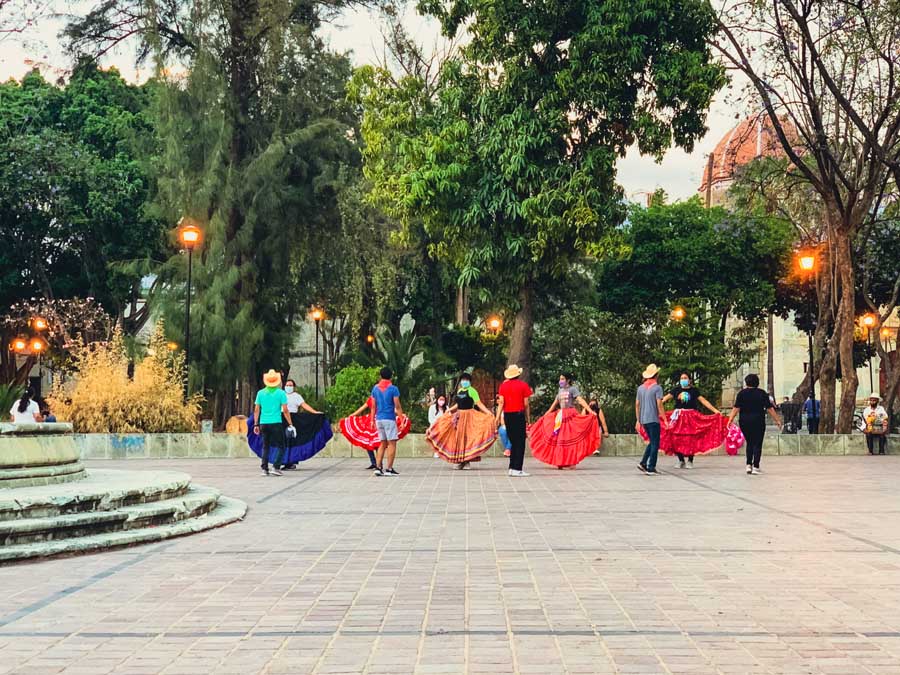
Be observant while exploring the city of Oaxaca, many people still wear the typical clothing of the these Indigenous cultures. With all the diversity, 16 languages alone are spoken throughout Oaxaca state.
While the list of things to do in Oaxaca continues to grow, this is just a tiny sampler. To get a feel and a better understanding of the city, try to spend at least 5 days soaking in the vibes of one of Mexico’s best city.
➯ Oaxaca Travel Guide | The Best Things to Do in Oaxaca City
Where is Oaxaca Mexico Located

Oaxaca Mexico is located in the south of Mexico. Technically, Oaxaca state is made up of eight regions, and each region is just as diverse as the next.
Along the Pacific Coast, find Costa with rugged, wild, and magical beach towns. There’s a unique Afro-Mexican culture found in the rustic beach town of Lagunas de Chacahua. Istmo also has a long coastline and shares a border with the beautiful and underrated state of Chiapas.
The Sierra Sur is home to powerful mountains and even more powerful magic mushrooms. Travelers usually stop in San Jose del Pacifico to dabble in mushrooms, hike in the twisting “senderos,” or paths through the mystical pine forests. Here it’s possible to sit in a traditional temazcal.
Likewise, the Sierra Norte has mountains filled with charming little communities, hiking trails, and unspoiled nature.

Mixteca is the primary home of the Mixtec culture and has hidden gems, like Santiago Apoala, and magic pueblos like San Pedro y San Pablo Teposcolula. Papaloapan and Cañada make up the far north of Oaxaca State and share a border with Veracruz Mexico.
Oaxaca Mexico is found in the, Valles Centrales, or Central Valleys. And yes, there is more than one valley. With each valley being so diverse and rich, let’s break it down and only focus on the East Valley of Oaxaca from the city of Oaxaca to Mitla!
Where to Stay in Oaxaca City
With it’s connected public transportation, Oaxaca Valley is easy to explore via one, two, or three day trips! So, stay in Oaxaca and explore Valles Centrales as day trips from Oaxaca.
- Budget | Casa Montaña Oaxaca is a hidden gem oasis found just on the outskirts of Oaxaca. There are stunning rooftop views, clean spacious rooms, and self-sufficient apartments. Roci, the hostess goes above and beyond for her guests. Since it’s easily connected by bus, Casa Montaña is perfect for short or long stays in Oaxaca.
- Midrange | Hotel Oaxaca Real is one of the most popular hotels in Oaxaca due to its prime-time location, outdoor pool, and free parking. Hotel Oaxaca Real makes a perfect place to explore the many day trips from Oaxaca.
- Luxury | Quinta Real Oaxaca stay in one of Oaxaca’s most beautiful building in the historical center of Oaxaca. This luxury accommodation in Oaxaca has it all from a pool, gym, gardens, and more.
➜ Browse the best hotels in Oaxaca City
How to Visit the East Oaxaca Valley
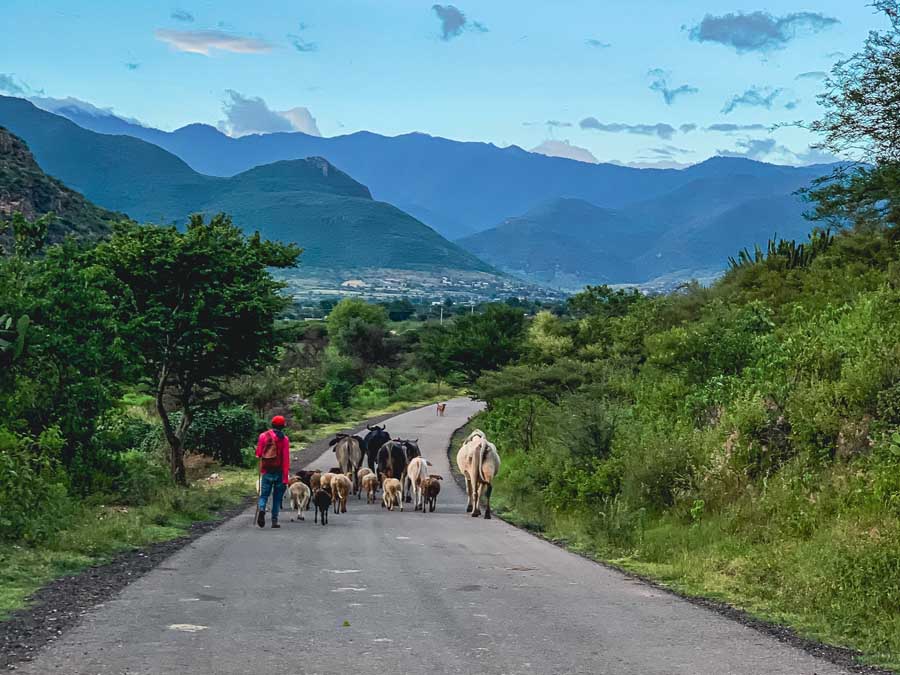
In its entirety, Valles Centrales is connected to Oaxaca City. There are Oaxaca tours that hit a majority of the Oaxaca Valley highlights, but I highly suggest visiting on your own terms via car or using public transportation.
The main attractions from Oaxaca to Mitla can be explored in a full day, however, I suggest slowing down and spending at least 2-3 days to explore just the East Oaxaca Valley. There are excellent museums, Archaeological sites, vibrant markets, stunning hiking trails, and delicious Oaxacan cuisine that should not be missed.
Oaxaca to Mitla is less than 35 miles long (55km), but it’s jam packed with worthwhile attractions and things to see and do.
Oaxaca to Mitla via Public Transportation

Buses and collectivos constantly run between Oaxaca to Mitla. The best place to catch one is here, on the main road of Eduardo Vasconcelos, after the Eduardo Vasconcelos Stadium, and before McDonald’s. Buses and collectivos pass by here frequently and often advertise which destinations they are going to, like Tule, Tlacolula, and Mitla. If unsure, just verify with the driver.
Buses are slower and hold more people. Colletivos are small cars that fit up to 5 people, plus the driver, and usually zip fast through the Oaxaca Valley. Buses and collectivos usually drop on the main road, so follow along with an offline map so you can follow along on where to exit. If riding a bus or collectivo, you may have to take a smaller moto (like a tuk-tuk) to your desired Oaxaca Valley destination.
🚌 Bus Oaxaca Mitla | Average Cost: $22 pesos / Collectivos Oaxaca to Mitla | Average Cost: $40 pesos
Oaxaca Attractions | The Fabulous East Oaxaca Valley
Now, let’s dig deep and discover the region from Oaxaca to Mitla, the stunning East Oaxaca Valley. From archaeological sites to artisan villages to bustling markets, this section of Centrales Valley is rich in Oaxaca culture.
Santa María del Tule
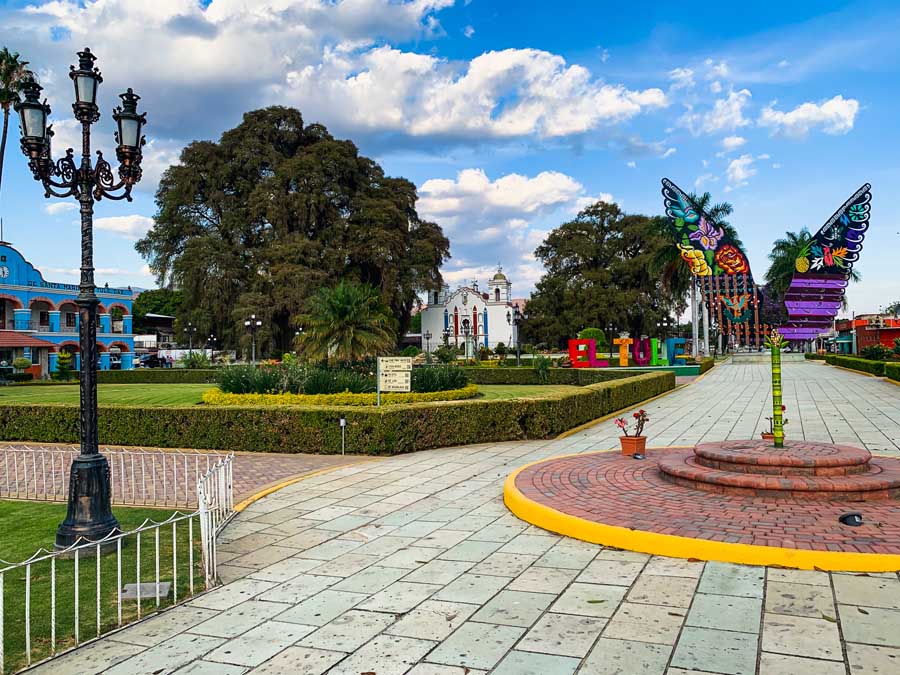
Less than 15 minutes from Oaxaca is the tiny village of Santa María del Tule, or simply Tule. El Tule Oaxaca is most famous for the large tree that sits in the main plaza. The Árbol del Tule claims to be one of the widest cypress trees in the world. It’s estimated that this tree is over 1,400 years old.
The plaza is nice with lots of walkways and benches. There is an artisan market close to the plaza that is worth a stroll through. Tule also has its own gastronomic market filled with vendors selling typical food.
Culiary enthusiast should eat at El Milenario, which serves up delicious plates of food for a more than reasonable price. El Milenario has some of the best memelas, or a mesa tortilla that is grilled on a comal and brushed with pork lard. In the restaurant, watch the women actually cooking on the comal, the typical grill is found right inside the restaurant.
🚌 Oaxaca to El Tule Public Bus | Average Bus Fare: 8 pesos | Look for the purple buses close to the stadium here
🚗 Oaxaca to El Tule Collectivos | Average collectivo Fare: 12 pesos | Collectivos have signage for TULE & also can be flagged down near the stadium here
San Jerónimo Tlacochahuaya
Another underrated place to stop from Oaxaca to Mitla is the village of San Jerónimo Tlacochahuaya. What makes this place worth a stop is the lovely 16th-century church that has recently been restored.
The interior of this church has a hand-painted ceiling. In fact, some original sections of the ceiling remain. The Convento de San Jerónimo Tlacochahuaya also boasts an antique baroque organ that is still used to this day. Sadly, the church was built by the Indigenous labor force, but they left behind pieces of their own culture intricately painted within the Christian Church.
The village of San Jeronimo Tlacochahuaya is also known for its rabbit stew. Many of the restaurants are painted on the outside with rabbits. To sample a traditional dish, look for “conejo” on the menu.
🚌 Oaxaca to San Jerónimo Tlacochahuaya | Take any bus or collectivo heading in the direction of Mitla or Tlacolula | Exit on the main road and flag down a Moto to arrive in the village
Dainzu Ruins | Dainzú
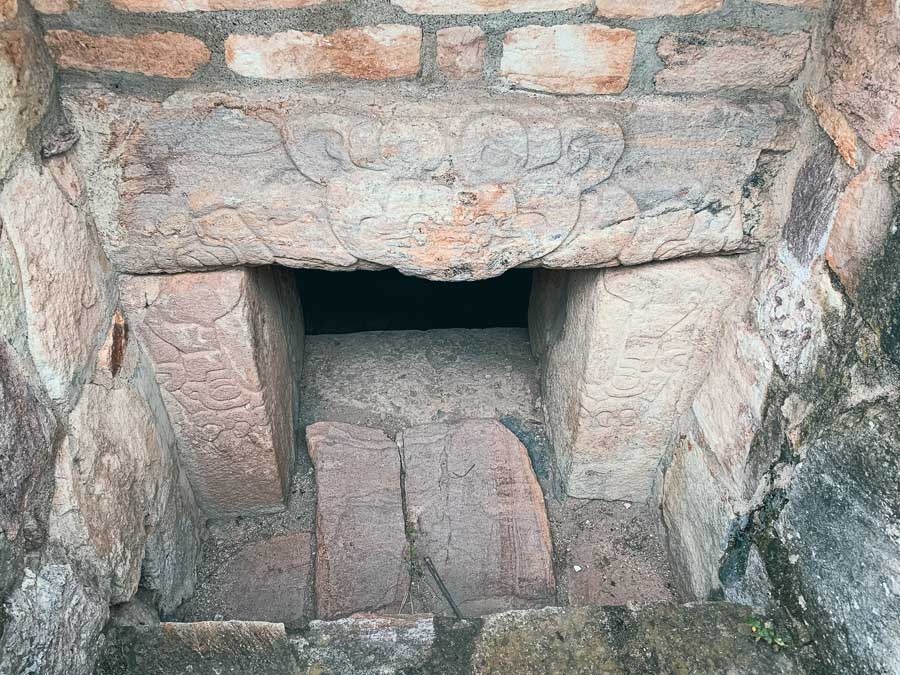

One of the most underrated Oaxaca ruins can be found at the Archaeological Site of Dainzu. Find them after Tlacochahuaya, but before Teotitlán del Valle.
These Zapotec ruins have a pelota field, an ancient game played by many Mesoamerica civilizations. On-site, wander along the ruins with well-mapped-out signboards. Keep an eye out for the Tomb that has a jaguar protecting the entrance. The views are spectacular and not many people visit Dainzu, so it’s the perfect sunset destination. For now, Dainzú Archaeological site is free to visit.
🚌 Oaxaca to Dainzú | Take any bus or collectivo heading in the direction of Mitla or Tlacolula | Exit on the main road and then walk to the main entrance gate (3/4 of a mile)
Teotitlan del Valle | Teotitlán del Valle

Teotitlan del Valle in the East Valles Centrales region can be explored for a few hours or as an interesting full-day trip from Oaxaca. There are lots of things to do in Teotitlan del Valle from visiting a textile workshop, exploring the museum, or hiking up El Picacho.
☛ Travel Tip | On Wednesdays early in morning, the Teotitlan del Valle market in the village is busy and vendors spill out onto the street selling items
Teotitlan del Valle Textiles

Teotitlan del Valle is most famous for their textiles, but more specifically their artisan rugs. It’s possible to wander the charming streets and stop in at a few of the workshops. The main road leading up to Teotiitlan del Valle is filled with much larger workshops and producers. However, in town, I found Casa Don Taurino super informative and they provided a free and informative demonstration.
The process of making the Zapotec textiles is an ancient weaving tradition that has been practiced over 1,000 years. The wool comes from sheep and is dyed by natural ingredients like plants and insects. The rugs and other artisanal items are woven on a large wooden loom, and it is laborious process done completely by hand and foot! Some of the larger and intricate rugs and textiles can take at least 8 months to produce.
Valle de Teotitlan is known for their beautiful rugs especially in the many shades of Indigo blue. Indigo comes from the añil plant, which is found closer to the coast and Istmo region.
🌀 It’s All Connected | The artisan villages near Cuenca Ecuador are using natural dyes to make their macanas. Guess where they are importing their Indigo colors from? The Oaxaca region!
Another place to learn more about the Zapotec weaving techniques is the Centro Cultural Comunitario Teotitlán del Valle who are dedicated to keeping the traditions of the community alive. In front of the cultural center is another open-air textile market.
Teotitlan del Valle Candles
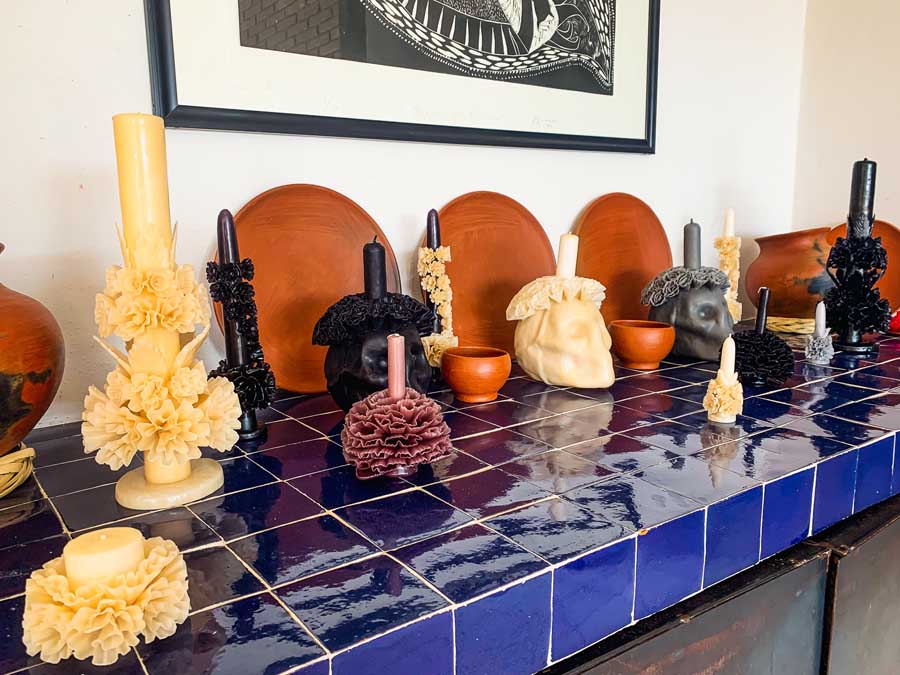
There are more artisan specialty shops in Teotitlan del Valle. Casa Viviana is making incredible beeswax candles from elaborate molds. They are almost too beautiful to burn.
More Thing to Do in Teotitlan del Valle
Another place to learn more about the history and customs of the village is the Museo Comunitario (Balaa Xtee Guech Gulal). While the museum touches briefly on the weaving process, it focuses more on the history and traditions of the region. There are some interesting Zapoteca artifacts that were found close to the village and a little about the Spanish conquest.
Community Museum of Teotitlan del Valle | Find it here: Tecutlan | Daily: 10:00 – 18:00 | Donation: $15 pesos (75¢ USD)
Foodies who love Anthony Bourdain may recognize Restaurante Tlamanalli. Abigail Mendoza and her sisters are famous for their traditional dishes focused on Zapoteca dishes.
Find it here: Ave B Juarez 39 | Daily: 13:00 – 16:00 | Reservations Recommended
El Picacho
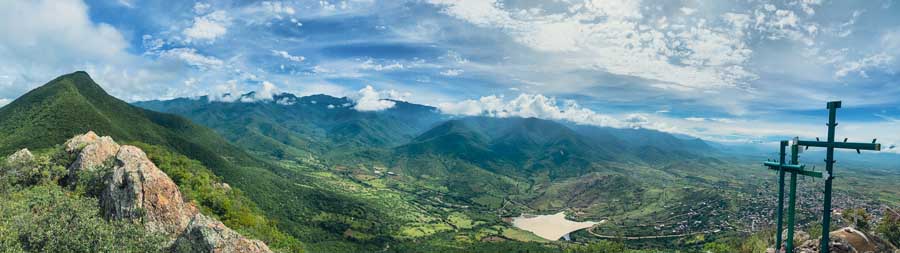
Finally, one of the best trails for hiking in Oaxaca is in Teotitlan del Valle. El Picacho mountain towers behind the village. This area is also the entrance way to the Sierra Norte Mountain region of Oaxaca.
Cerro Picacho is considered to be a sacred place. The community maintains this path, so make sure to purchase an entrance ticket at the Community Museum for 25 pesos. If you don’t have a car, a moto can drop you at the trailhead for around 5 pesos.
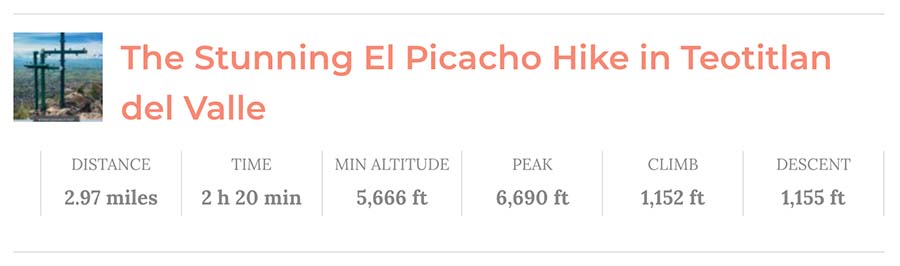
The trail is well-marked and takes around an hour to reach the top. There are three crosses at the viewpoint and this site is particularly a popular pilgrimage on May 3rd for La Fiesta de las Cruzes. Along the path explore caves, savor incredible viewpoints of Tlacolula Valley, and possibly spot some wildlife. I started early in the morning and had the pleasure of seeing deer, rabbits, and many types of birds.
➯ Detailed Oaxaca Travel Guide | How to Spend One Full Day in Cute Teotitlan del Valle
As promised, there is a lot to see in Teotitlan del Valle. The village is so charming, so it can be a great option to base and explore the underrated East Oaxaca Valley.
➜ Browse the best Teotitlan del Valle Hotels and Guesthouses
🚌 Oaxaca to Teotitlán del Valle | Take any bus or collectivo heading in the direction of Mitla or Tlacolula | Exit on the main road to Teotitlán del Valle and flag down a Moto | Average Moto fare to village center: $10 pesos
Tlacolula
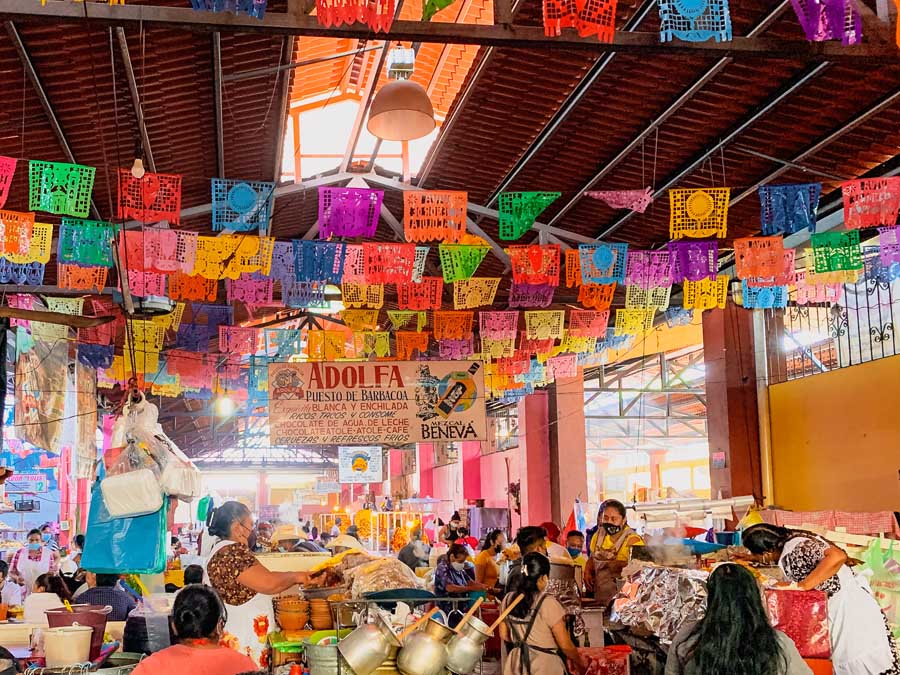
Tlacolula is most famous for it bustling and ancient market. This village has been a trading hub throughout the Zapotec empire. Tlacolula is said to be the oldest and longest running continuous markets in Mesoamerica.
The market runs daily, but the Sunday market is the busiest and biggest day. It is said that on Sunday at least 1,000 vendors come in and set up in the market and along the closed-off streets. The main roads are closed and filled with produce, hardware, animals, and anything else you could possibly think of.
In this popular market in Oaxaca, don’t miss the busy and popular food stalls serving up goat barbacoa. There are a lot of stalls to choose from, but I loved Puesto de Barbacoa “Aurelia.”
On the streets, sample tejate, an ancient Zapotec drink containing toasted maiz, fermented cacao, and formed into a paste. Tlacolula is also famous for its bread, Pan de Cazuela baked with raisins, Oaxaca chocolate, and hints of cinnamon. Visiting the Tlacolula market should be on every Oaxaca foodie guide.
The church is lovely and is free to stroll through. A visit to the Sunday Tlacolula Market is a must when visiting Oaxaca.
🚌 Oaxaca to Tlacolula | Take any bus or collectivo heading in the direction of Mitla or Tlacolula | Tlacolula has a bus terminal with buses to both Oaxaca and Mitla | Average Bus fare: $12 pesos (50¢ USD) | On Sundays the market begins as soon as you hop off the bus
Yagul Archaeological Site
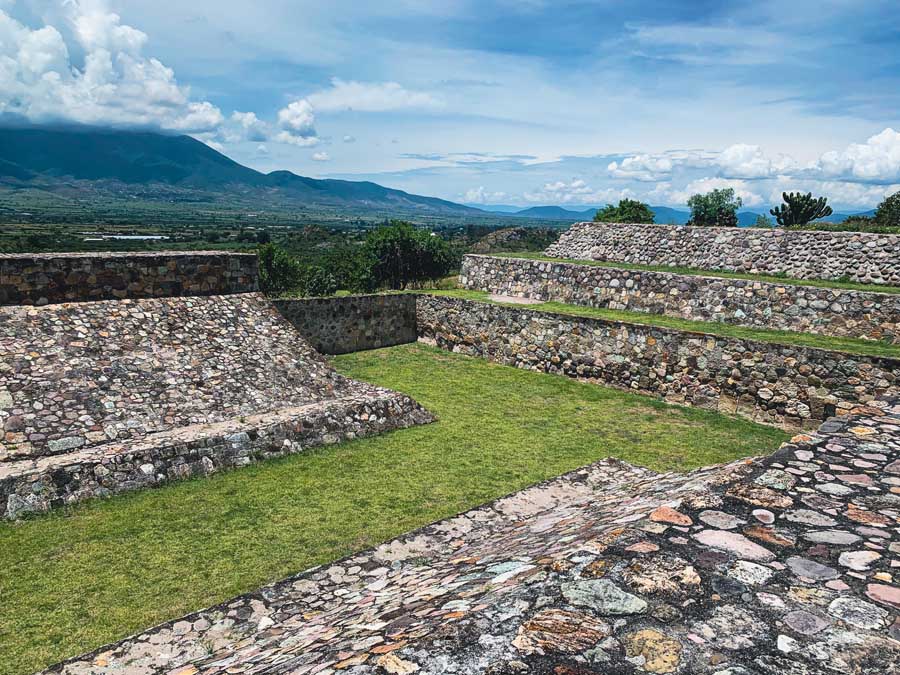
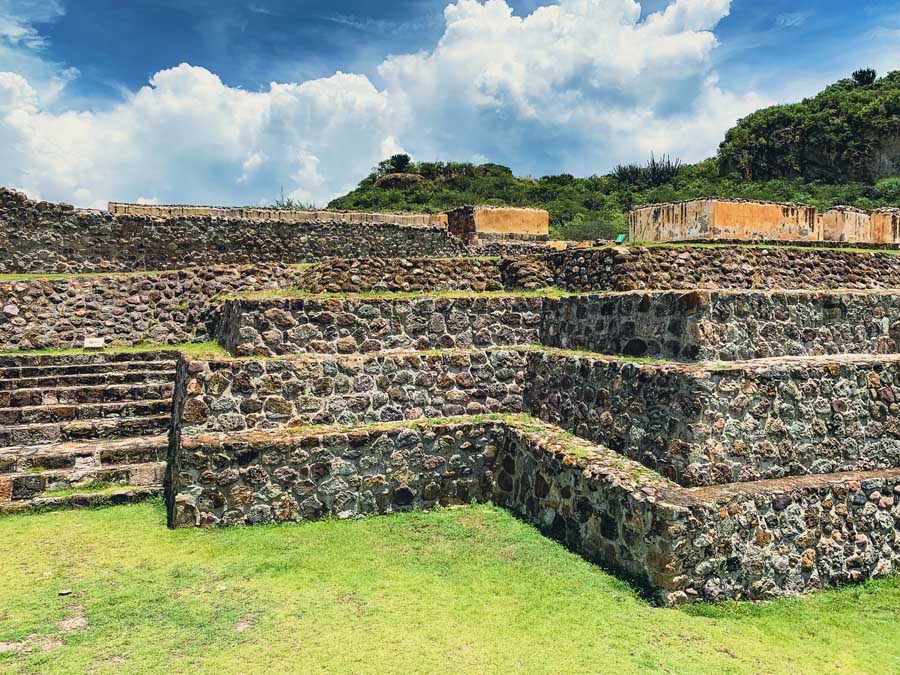
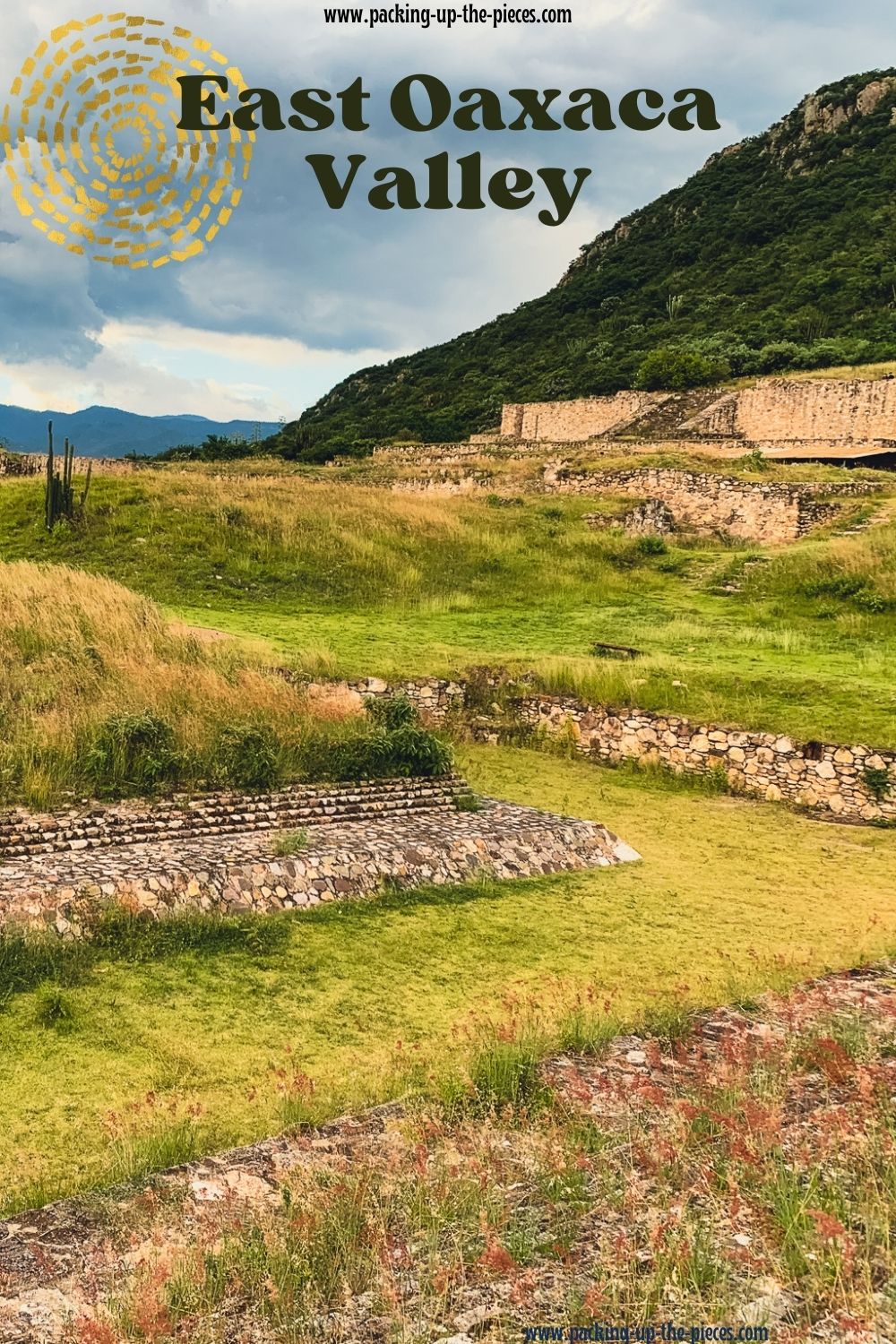
Located just after the Tlacolula village is Yagul, a site most famous for the well-intact Zapotec ruins of a pelota ball court. This ball court is the largest in Oaxaca and only second to the one found at Chichén Itza.
Yagul sees few tourists but is a fantastic place to visit in the East Valley of Oaxaca. There are detailed information boards about the history and significance of Yagul. Look around, there are stellar views of the entire Tlacolula Valley.
Yagul Ruins | Cost: $75 pesos ($3.50 USD) | Hours: Sunday – Wednesday 10:00 -15:00 | Guide requiurd a tour oof the Prehistoric Caves of Yagul and Mitla
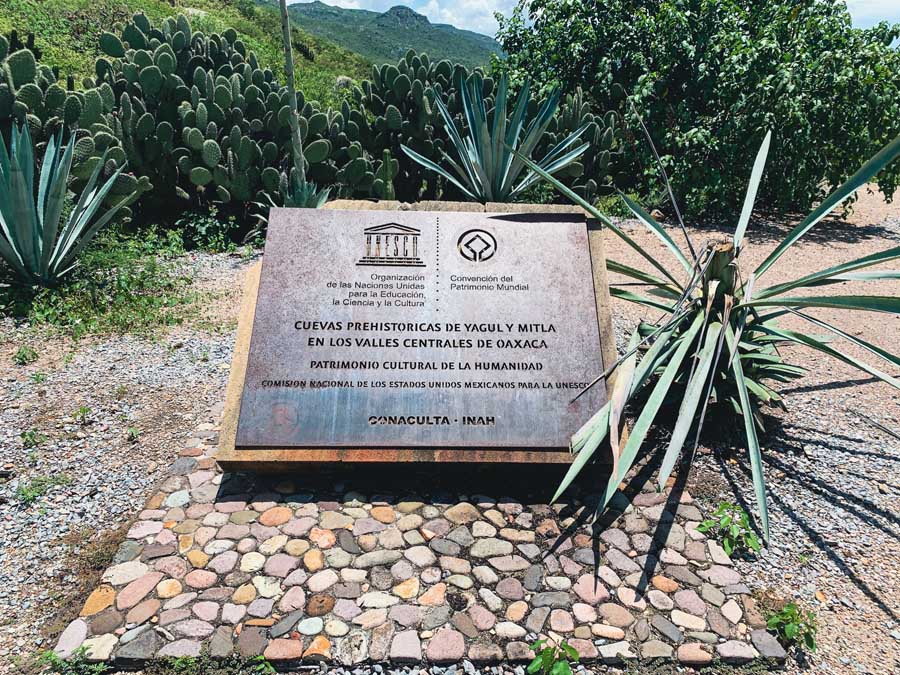
Another site right before Yagul is the UNESCO-recognized Prehistoric Caves of Yagul and Mitla. What makes these caves so special is the art on the rocks. There were also Cucurbitaceae seeds, a plant like a gourd, found strategically in the caves. It is believed that these seeds were cultivated over 10,000 years ago, making it one of the oldest pieces of evidence of our ancestors domesticating plants.
The caves are sacred and must be visited with a guide for an additional fee.
San Pablo Villa de Mitla
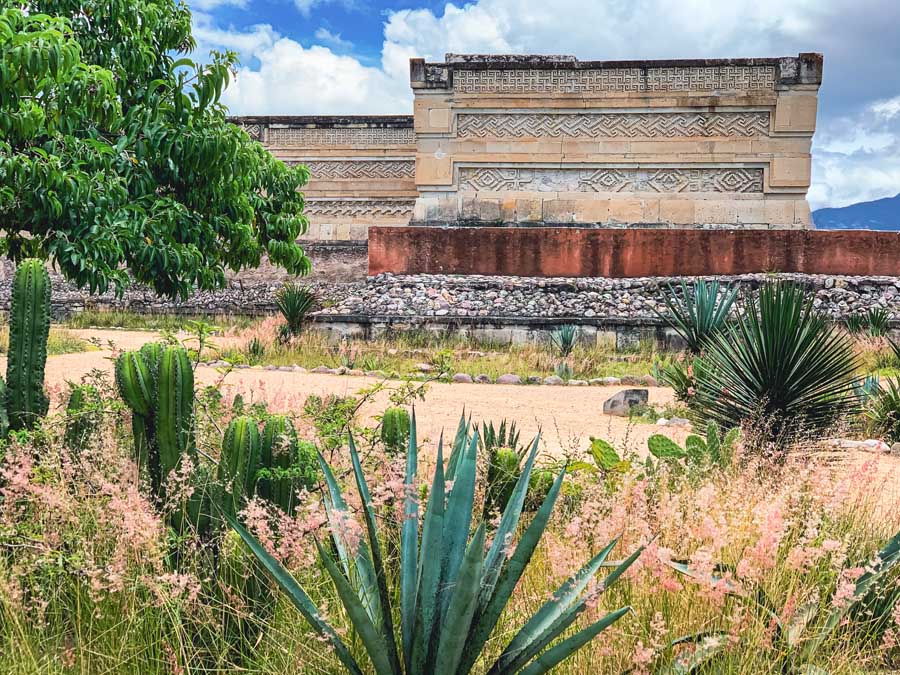
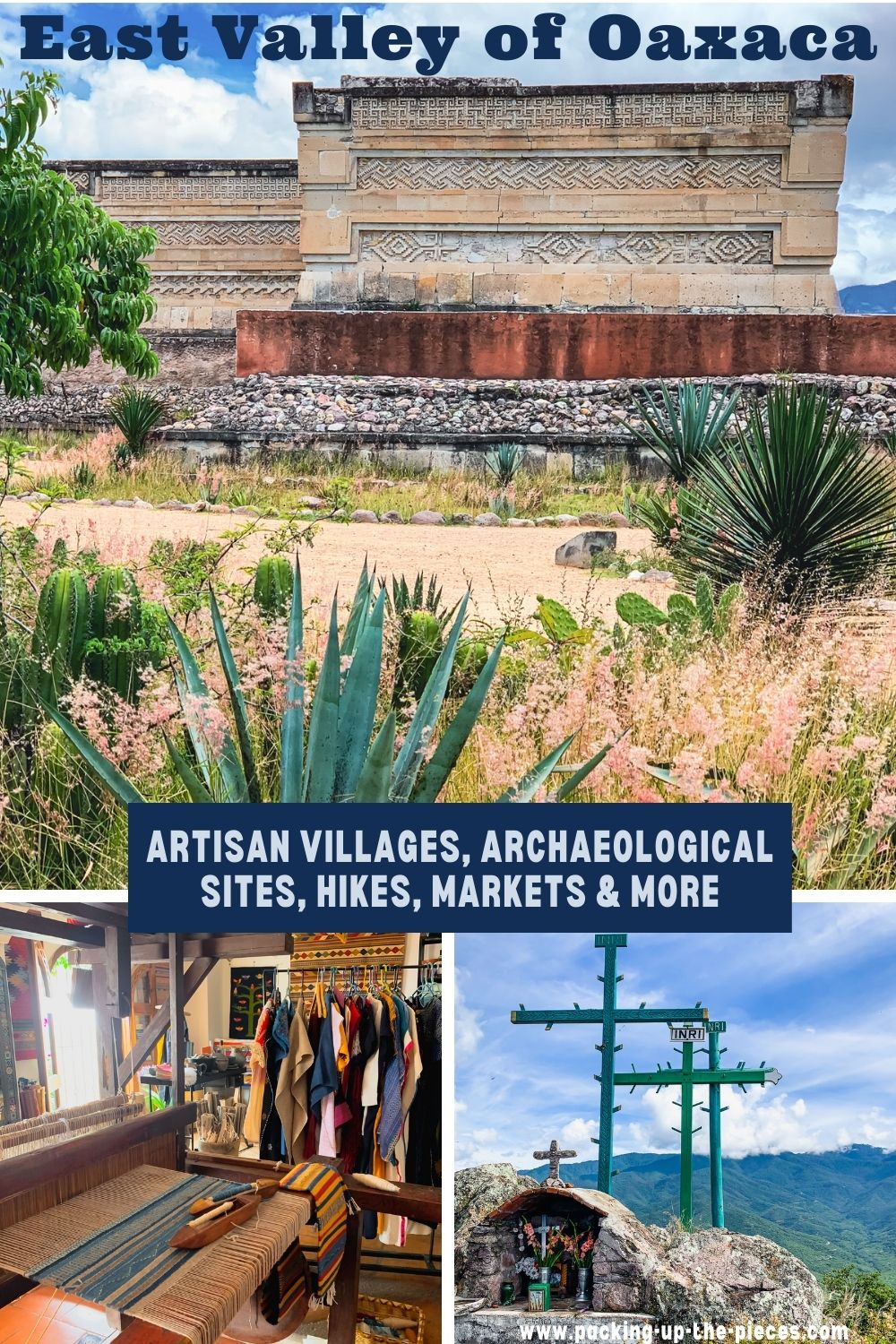
San Pablo Villa de Mitla is an Oaxaca pueblo magico most famous for the Mitla Archaeological Site. The name translates from Zapotec language to “Place of the Dead,” and it is believed to have been used for ceremonial purposes, making it one of the most powerful religious zones in the entire Oaxaca Valley.
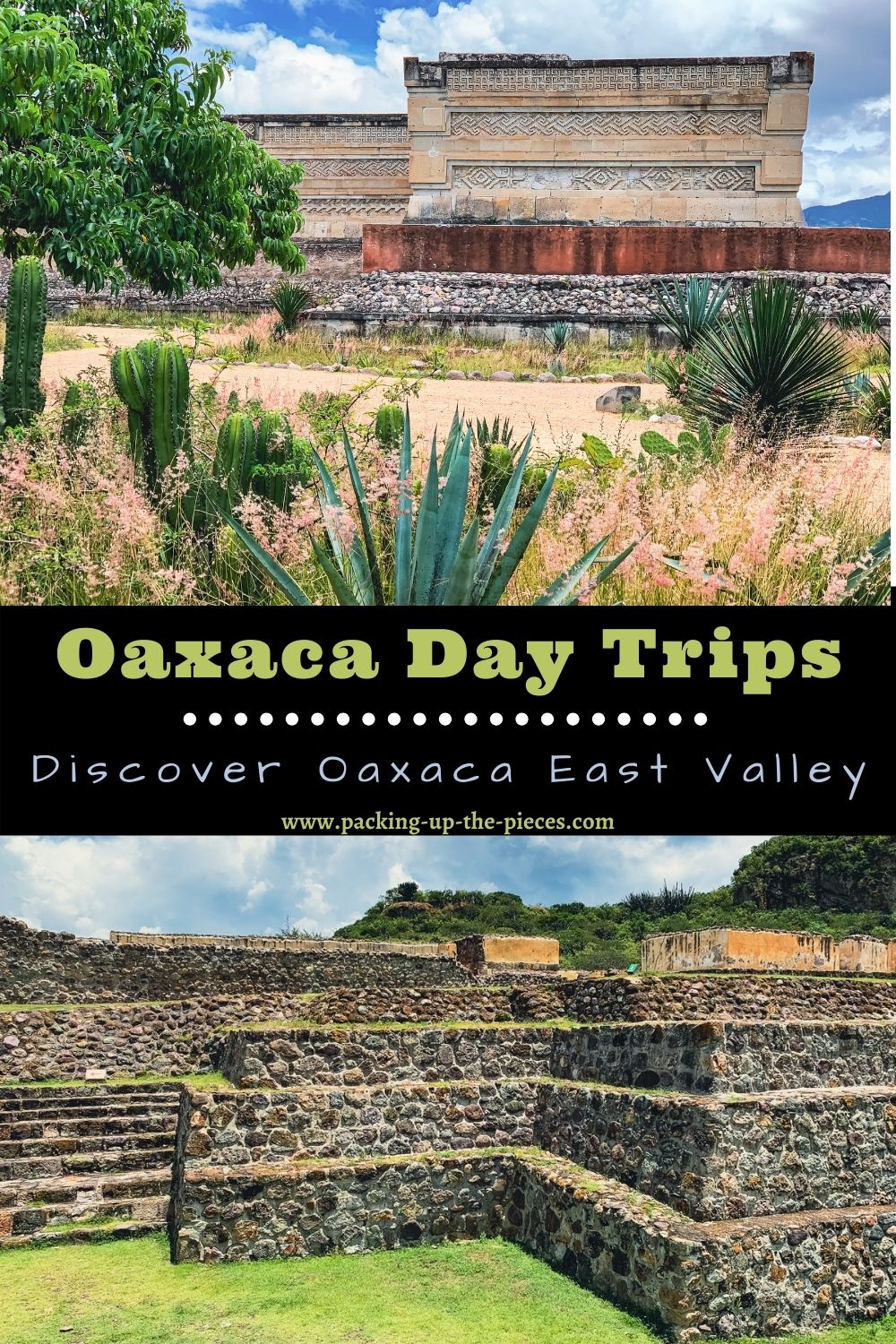
Wander around the site and notice what is super unique are the mosaic patterns that are found all throughout the Mitla Archaeological Zone. Many of the patters are found carved into the exterior buildings. In fact, there are over 150 panels that can be seen with remnants of bright red paint on the stucco buildings.
The site was originally built by the Zapotecs, and would eventually come into reign of the Mixtec culture close to 1,000 AD. During their rule, The Grand Hall of Columns was probably built during the 14th century. This building is special because it boasts six massive monolith stones made of volcanic rock.
Like most Indigenous Sacred Sites, after the Spanish conquest, a church was built on top. The Mitla Archaeological Site is an excellent example where to see Zapotec, Mixteca, and architecture from the Spanish Conquest in the Valley of Oaxaca.
Mitla Archaeological Zone | Cost: $75 pesos ($3.50 USD) | Hours: Wednesday – Saturday: 10:00 – 15:00, Sunday 11:00 – 13:00
More Things to Do in San Pablo Villa de Mitla

While the Mitla ruins are the main draw of San Pablo Villa de Mitla, there are a few more things to do. There is a section of free ruins before the main Mitla Archaeological Zone in town and also the hilltop El Calvario. This crumbling structure sits on top of a small hill and boasts some excellent views of Mitla and the village. Outside of town, there are more Pre-historic caves of Mitla hidden in the hillsides.
Stop in town and appreciate the cute plaza in San Pablo Villa de Mitla. There are benches, vendors selling ice cream, and colorful street art. Along the route to the Archaeological Zone, there are lots of handicraft shops and mezcal tasting rooms.
Hierve el Agua
Most people travel from Oaxaca to Mitla to reach the wildly popular Hierve el Agua located near the small communities of San Lorenzo Albarradas and San Isidro Roaguia. While the petrified waterfall, which names literally translates to “boiling water,” is one of the main Oaxaca attractions and one of the top Oaxaca day trips.
Hierve el Agua had been shut down due to turmoil between the communities and the government with issues of over-tourism. However, the communities are slowly starting to reissue admission to visit “the waterfall” with a cap of 200 daily visitors. Always check with local blockades before taking the dusty ride out the Hierve el Agua and try to arrive early to ensure entrance.
Santiago Matatlan | Santiago Matatlán

Although not technically in the East Oaxaca Valley, nearby is the official “land of Mezcal,” Santiago Matatlan. The road to Santiago Matatlán is right before Mitla and is actually the road that leads to Chiapas State.
✈ Mexico Travel Inspiration | The Best Things to do in San Cristobal de las Casas in Chiapas
Many artisans produce their own mezcal. Most Mezcal tours from Oaxaca include a stop at a Palenque, the actual place where the mezcal is produced. Many of these Palenques are still using ancient techniques.
Mezcal is made from agave plants, more commonly referred to as “maguey” in Oaxaca. From chopping the agave plants, with machetes, cooking the plants underground by fire for 3-5 days, and mashing the maguey using a stone tahona being pulled by a donkey, the traditions used to make mezcal live on. The mezcal ferments and is distilled. A mezcal tour makes you understand and taste the huge labor of love that goes into each glass.
After a visit through the diverse agave fields and a stop at a Palenque, the best part is sampling the mezcal. It’s nice to try different types so that you can differentiate between the over 40 unique types of agave plants that are used to produce mezcal. Make sure to try Pechuga mezcal, which actually uses chicken breast during the distilling process!
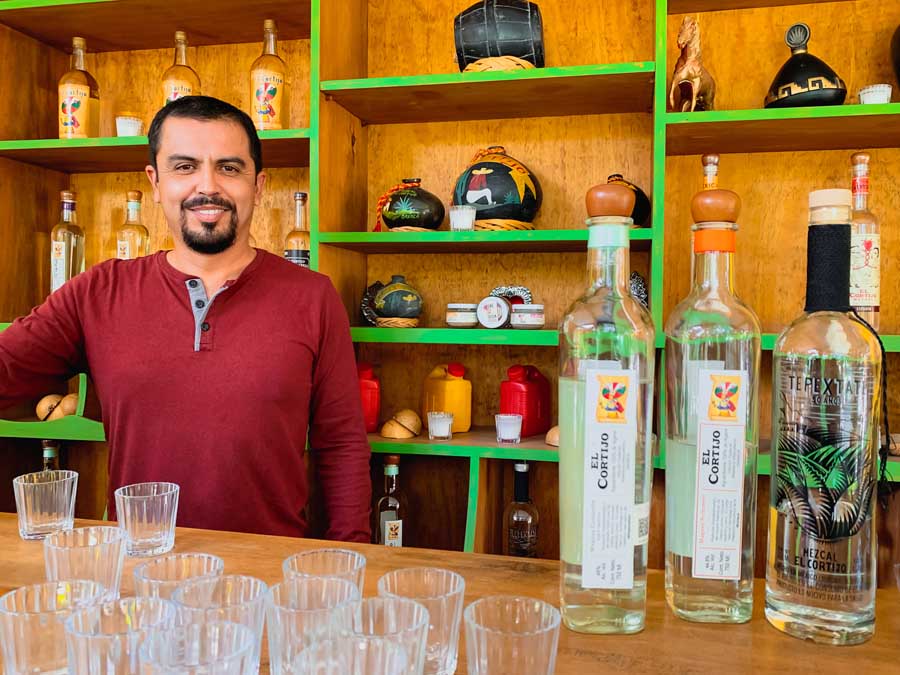

There’s a wide range of producers, but my favorite here in Santiago Matatlan is El Cortijo. The label has been in the family for over 70 years, but the traditions have been passed down over 4 generations. The grandmother’s original artwork still lives on some of the brand’s bottles.
While there are many Mezcal stops on the road from Oaxaca to Mitla, I highly suggest a stop in the actual village of Santiago Matatlán, the “World’s Capital of Mezcal.”
Psst.. El Cortijo has a lively tasting room, or Mezcaleria in downtown Oaxaca. Find it here.
Beyond Oaxaca to Mitla & the East Valley of Oaxaca

So, what about the other Valleys of Oaxaca? The Oaxaca Centrales Valles is spread out over a large area. There is the Etla Valley with picturesque San Agustin Etla and the impressive Centro de las Artes de San Agustín.
Take a stop in the village of Santa Maria Atzompa which has a wide range of artisans selling beautiful pottery, specifically they are known for their beautiful green pottery.
Those who are fascinated with alebrijes, or the colorful spirit animals made of wood should visit San Martín Tilcajete, south of Oaxaca. Another place of interest is Cuilapan de Guerrero, which houses a massive unfinished church. There are many fascinating legends surrounding why the church was never finished, including a brush with the devil himself.
☛ A Detailed Guide to the Best Oaxaca Day Trips
The Lovely East Valley of Oaxaca Highlights | Oaxaca to Mitla

In conclusion the East Valley of Oaxaca is a must to explore on any trip to Oaxaca. From Oaxaca to Mitla alone, find a wide range of artisan villages, natural wonders, and cultural treasures to enjoy. Each village offers unique handicraft items and specializes in culinary treats.
While exploring the East Valley of Oaxaca, stop by the villages of Tule, San Jerónimo Tlacochahuaya, Tlacolula, Teotitlán del Valle, and San Pablo Villa de Mitla. Make sure to appreciate the diverse ruins of Oaxaca in the Tlacolula Valley like Dainzú, Yangul, and Mitla. Each site offers a look into the deep-rooted traditions of the region.
The Valles Centrales region of Oaxaca is diverse and filled with cultural treasures. Try to budget at least two days to discover the rich East Oaxaca Valley. The Oaxaca Valley can be explored via day trips from Oaxaca independently or by tours.
Have you visited Oaxaca? Did you travel in-depth from Oaxaca to Mitla? Is there someplace I am missing in the diverse East Oaxaca Valley that you absolutely loved? Where else do you recommend in Valles Centrales Oaxaca? Let me know in the comments below!

Disclaimer: There’s a chance this post contains affiliate links, and I receive a small (but grateful) portion of the sale. There’s no extra cost to you, and I only promote things that I use and love.


Wow this is a stunning region to travel around! Some of those views are incredible. I’d definitely need to spend a few weeks exploring all of its unique locations.
Oaxaca is incredible. I spent 5 months here and just barely skimmed the surface! I love how each state in Mexico filled with diversity and beauty.
Oaxaca was one of my favourite towns in Mexico. I also explored much if the surrounding area. Thank you for sharing.
It’s special isn’t! There is so much to dig deep into. Thank you for reading ❤️