20 Game-Changing Camino de Santiago Tips for New Pilgrims (My Best Advice After Walking 12 Caminos)
Europe’s top pilgrimage route, the Camino de Santiago, is life-changing. Many pilgrims choose to walk hundreds of miles across Spain for different reasons. Maybe it’s to cope with grief, loss, or heartache. Others walk the Camino de Santiago to celebrate milestones, like getting married or retirement. Some pilgrims think of the Camino as a way to pause, reset, or reflect.
No matter what the reason, the Camino calls to us, and once it does, it’s impossible to ignore the pull to walk.
The journey to the Cathedral in Santiago de Compostela will change you. However, it won’t necessarily be the destination that shakes your soul, but the entire journey to reach it. Each journey starts by putting one foot in front of the next.
Planning for the Camino de Santiago can feel overwhelming or scary, especially for those first-time walkers. After finishing my first Camino, I’ve compiled some of my top Camino de Santiago tips and tricks for new pilgrims. Most of these Camino tips are lessons I learned from my mistakes, or monumental moments that were too powerful not to share.
Since then, I’ve updated this guide after walking over 12 Camino de Santiago routes. I’ve walked popular routes and more remote and little-known routes. Although the routes may differ, my advice stays the same.
Here are my top Camino de Santiago tips and tricks for first-time pilgrims who are about to embark on this journey of a lifetime.
Table of Contents
Disclaimer: There’s a chance this post contains affiliate links, and I receive a small (but grateful) portion of the sale. There’s no extra cost to you, and I only promote things that I use and love.
- Camino de Santiago Tips for First-Time Walkers
- Camino de Santiago Packing Tips
- Camino de Santiago Tips for Sleeping in Albergues
- Tips for Pilgrims Arriving in Santiago de Compostela
- Consider Walking to the End of the World
- Conclusion | Top Camino de Santiago Tips for First-Time Pilgrims
Camino de Santiago Tips for First-Time Walkers

The following Camino de Santiago tips are for those pilgrims planning their very first Camino de Santiago.
1 | Walk the Camino Your Own Way
The best advice I can give is also the simplest: walk the Camino your own way. Yes, there are blogs, guidebooks, videos, and numerous Camino de Santiago resources, but only you can walk the Camino for YOU! There is no right or wrong way to walk the Camino de Santiago.
The best way to walk the Camino is your way!
Many lessons along the Camino de Santiago can be applied to everyday life, and that’s kind of the magic of the Camino. It’s all about incorporating something so powerful and weaving the lessons learned on the journey into our everyday lives.
You are the writer of your own story, so walk the Camino in the same way. Let go of judgments of both yourself and others, drop preconceived ideas or expectations, and create your own journey, both on the Camino and in life.
2 | Choose The Best Camino Route for You

There are many Camino de Santiago routes. In Spain alone, there are nearly fifty possible Camino de Santiago registered pathways. In fact, it’s possible to spot the trademark yellow shell in many places throughout Europe.
My mom and I saw them in the far reaches of Bacharach Germany, and technically it’s possible to walk all the way to or from Jerusalem.
Here are just a few of the most popular Camino de Santiago routes that lead to Santiago de Compostela.
✔ Camino Frances (The Way of St. James) | Standard Distance: 779 km (484 miles) | Average Walking Time: 33 Days | Starting Point: St. Jean Pied de Port France
✔ Camino Portugese Central Way | Standard Distance: 252 Km (157 miles) | Average Walking Time: 10 – 14 Days from Porto, with a possibility to divert on the Variante Espiritual Route | Starting Point: Lisbon or Porto Portugal
✔ Camino Portuguese Coastal | Standard Distance: 280 Km (174 miles) | Average Walking Time: 12 – 14 Days from Porto | Starting Point: Lisbon or Porto Portugal
✔ Camino Ingles | Standard Distance: 116 Km (72 miles) | Average Walking Time: 5 Days | Starting Point: Ferrol Spain
✔ Camino Primitivo | Standard Distance: 321 Km (200 miles) | Average Walking Time: 14 Days | Starting Point: Oviedo Spain
What is the Best Camino Route for First-Time Pilgrims?
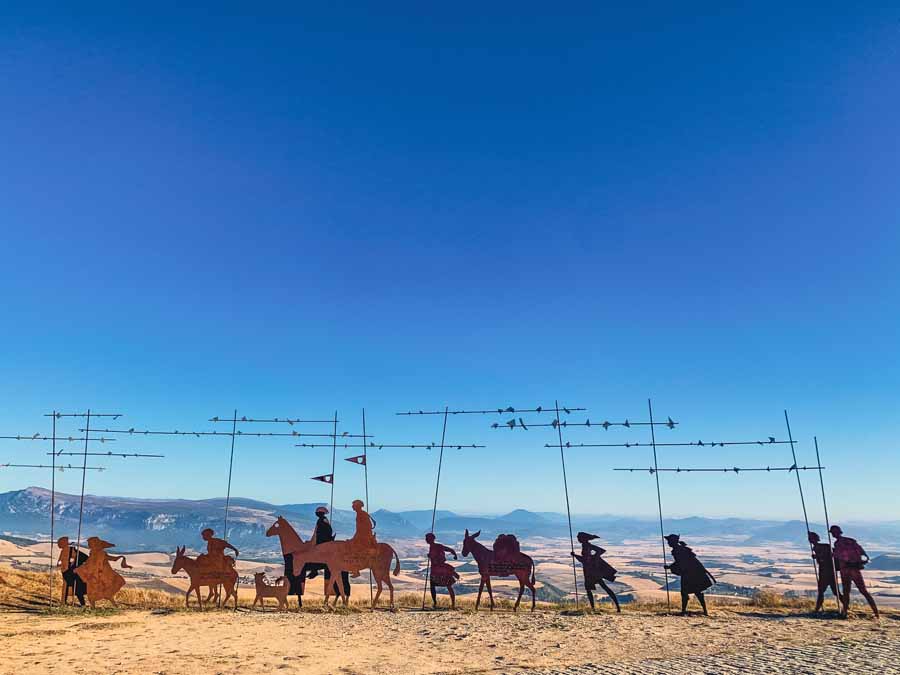
The Camino Frances is the most popular Camino de Santiago route, but it doesn’t mean it has to be the first one you walk. Keep in mind that the Camino Frances pilgrimage route has been walked for centuries, so it does have some of the best infrastructure of any of the Camino routes.
However, since it is a popular way, it can feel busy or crowded, especially for those pilgrims who are seeking more solitude.
The best way to choose a Camino route is to ask yourself what you are seeking on your journey.
If you have time, the Camino Frances is a lovely route. With only a couple of weeks, the Camino Portuguese is also a great option.
The Camino Portuguese Coastal route is one of the flatter routes for those pilgrims who may be worried about their physical limitations.
The Camino Primitivo is a quieter, more mountainous route with lots of ascents and descents.
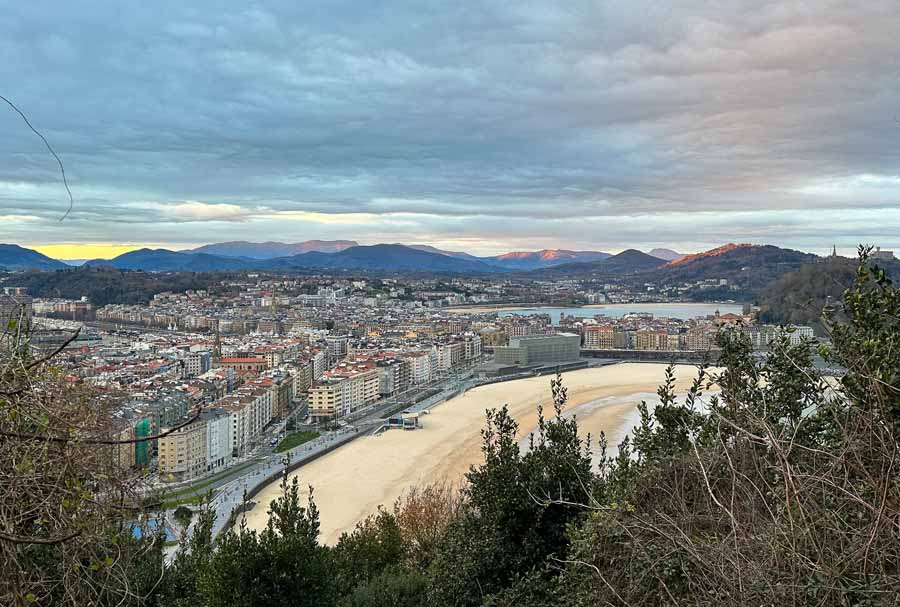
The Camino del Norte is also quite challenging, but it takes pilgrims from the Basque Country and along the stunning north coast of Spain.
For those pilgrims seeking solitude, the Camino de Invierno is a fantastic and more lonely route.
☛ Camino de Santiago Tips | The best Camino de Santiago route is the one that best fits into your schedule, interests, and physical abilities. ThisCamino de Santiago starting point guide is a great place to start planning!
3 | Break in Your Camino Shoes
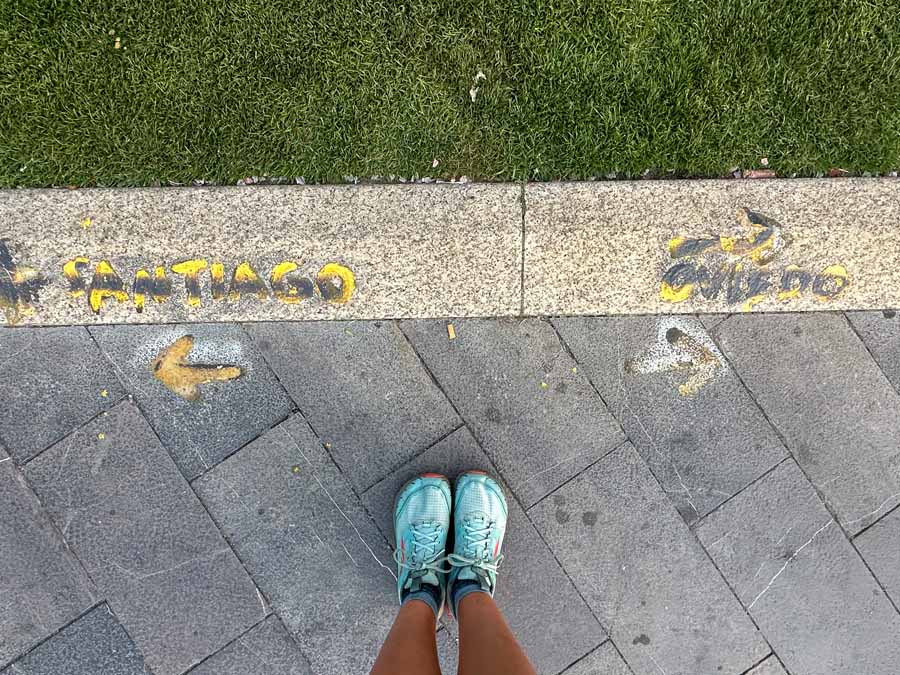
One of the best Camino de Santiago tips is to break in your walking shoes! I walked for a week in my Camino trail running shoes, but made the mistake of not walking on different terrains.
All of the Camino routes include pavement, trails, roads, gravel, and cobblestones, so make sure to walk on as many surfaces as you can while breaking in your Camino shoes.
So, what kind of shoes should you wear to walk the Camino in? This is a huge debate, and again is a personal preference.
☛ Game-Changing Camino de Santiago Tip | Size up on your desired footwear. It’s best to go at least 1/2 or a full shoe size up, as your feet will swell daily from walking. REI Co-op Members can return footwear even after wearing and trying it out. Make sure to test and try your gear, which can be incorporated with training for the Camino.
Best Shoes for Walking the Camino de Santiago
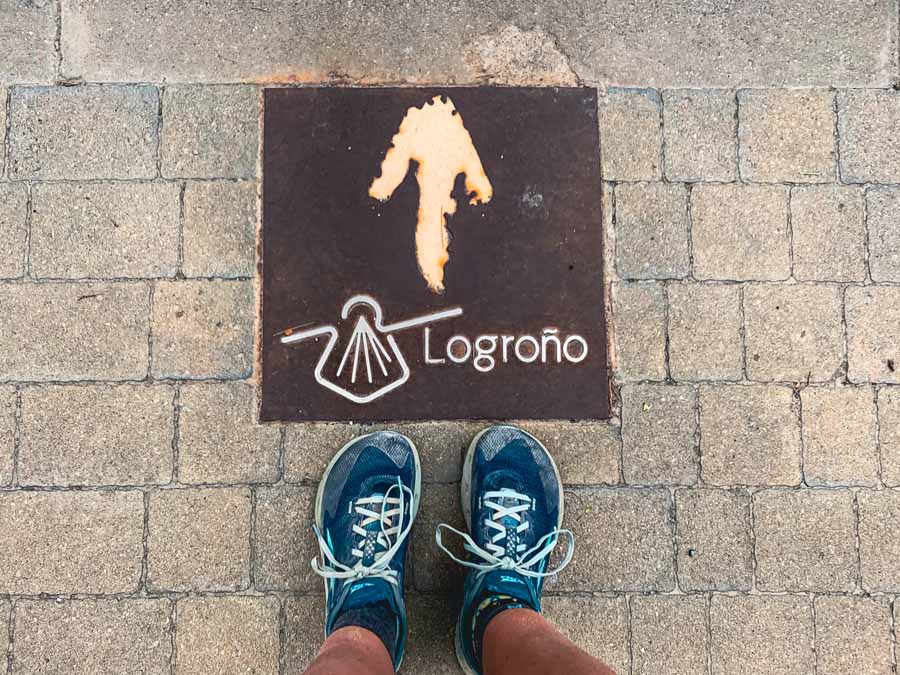
Trail runners are a popular choice for walking the Camino. I have worn a mixture of Altra Trail-Running Shoes, with Altra Lone Peaks being my favorite. I appreciate how lightweight yet supportive they are. Bonus, these trail runners dry quickly. However, they are zero-drop shoes, so they may not be for everyone.
Lots of first-time pilgrims love HOKA Speedgoat Trail-Running Shoes, or those seeking a little more ankle support may prefer something like the Salomon Speedcross Trail-Running Shoes.
I also really love La Sportiva Approach Shoes for more challenging and mountainous Camino routes.
It seems more pilgrims are shying away from wearing hiking boots when walking the Camino. Oftentimes, hiking boots are too heavy, and the high ankle can actually cause Achilles Tendonitis to flare up. However, KEENS are a popular hiking boot for the Camino. Salomon also makes superb hiking boots.
Make sure to bring a pair of sandals to give your feet a chance to breathe. Some pilgrims carry flip-flops for walking around town and to use in the shower. I love my heavier, Chaco Z/1 Classic Sandals, which I actually walked quite a bit in (during the end of summer months).

Those planning on walking a winter Camino will for sure want something with GORE-TEX with a good base for slippery and muddy conditions. Galicia gets a ton of rain during the winter months, and even throughout the year, the weather can be unpredictable.
I walked my winter Camino with Ecco Men’s Biom 2.1 x Country Shoe and was super happy with them.
☛ The best shoe for walking the Camino is the one that works for you.
4 | Embrace Walking the Camino Alone

Many people are afraid to walk the Camino alone, so fearful that they actually decide not to walk the Camino. Please, just go and walk! You will not regret it.
In fact, I believe it is better to walk the Camino de Santiago alone. The truth is, you are never really alone on the Camino. Many pilgrims walk, especially during the summer and even during the spring and fall months.
Travelers who are nervous about walking alone should stick to popular routes like the Camino Frances, Camino Portuguese from Porto, and the Camino Ingles, where you’re more than likely to walk with people you connect with.
Sometimes walking with friends and partners can limit interactions along the journey.
Thousands of pilgrims walk every day, and you will more than likely recognize familiar faces or become friends quickly with other pilgrims. It’s easy to find your “Camino Family,” but it’s just as easy to walk alone in solitude.
The Camino always provides.
Take the leap, embrace walking alone on the Camino.
☛ Camino de Santiago Tips | There are many guided tours available for the Sarria to Santiago route for those uncomfortable planning the journey.
5 | Follow the Trail Markers

The Camino de Santiago routes are fairly well-marked, especially on the Camino Frances. All of the Camino de Santiago routes are marked with the yellow shell on a blue background. The trail markers can be found on buildings, signboards, along the ground, on trees, and in concrete stands.
Oftentimes, there are also kilometers on the signs, which count down how many kilometers to Santiago de Compostela.
The Camino markers are found in the shape of a shell. There is some beauty and thought in these trail markers. If looking at the shell, all routes lead to Santiago de Compostela, but we can look at the analogy of the trail markers in a deeper sense.
The original Way of St. James moves from East to West, just as the sun does every day. Poetically, the sunrise and we are born. We all walk on this path of life, choosing our route, taking detours, carrying baggage, and navigating the ups and downs of the way.
As humans, we are all walking on the same path: life. The sunsets and our time here will, too.
☛ Top Safety Camino de Santiago Tips | Please stay on the marked trails, leave no trace, and have some sort of guidebook or offline map. Many locals and fellow pilgrims are willing to point you in the right direction if you stray from the main trail
6 | Don’t Be Afraid to Take a Camino Detour or Alternative Route
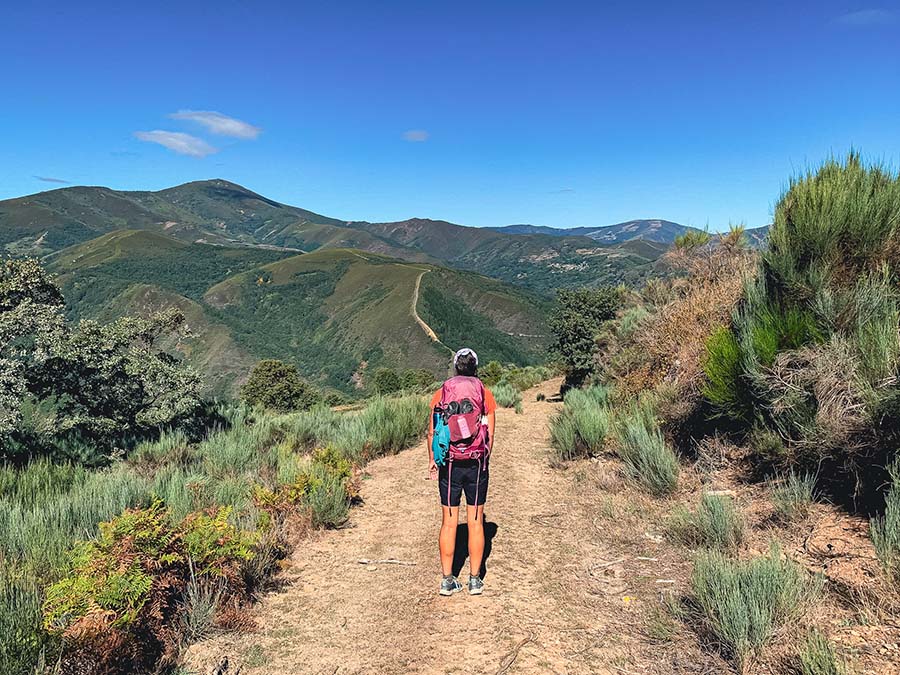
On all of the Camino de Santiago routes, you can find detours off the main way. Most of these alternative Camino routes add a few extra kilometers, but are worth it! Some of my favorite days walking the Camino were small and big detours.
Most of the Camino Frances detours are marked, but make sure to check in with the guidebooks. Since there are fewer pilgrims on the Camino detours, it’s best to partner up and find a walking partner, even if just for the day.
Additionally, there are some fun alternative paths on the Camino Portuguese and Camino de Invierno.
Camino Frances Deviant Routes
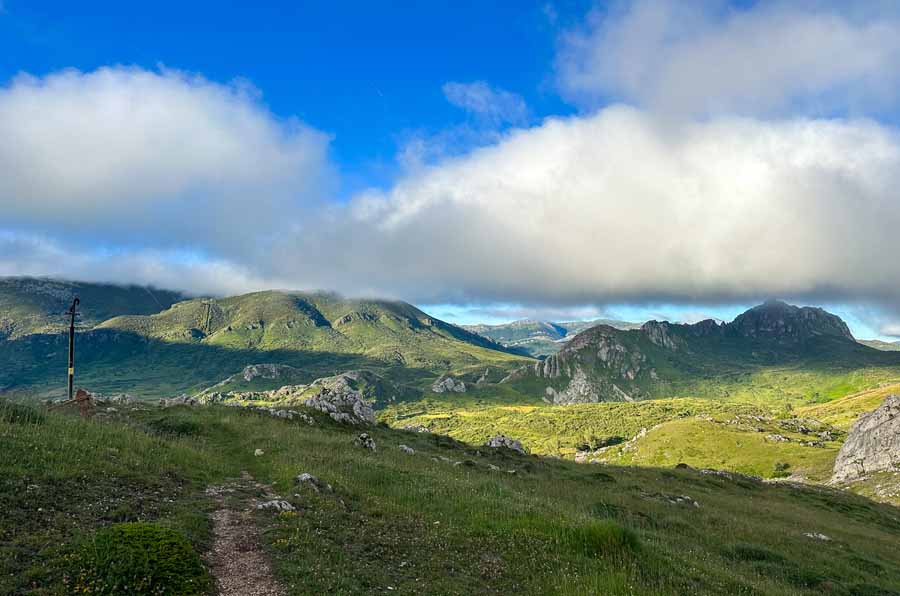
In addition to detours, the Camino Frances has two common divergent routes. This means that you will leave the Camino Frances and walk on a completely different Camino route!
- Camino Frances ➜ Camino Primitivo
- Camino Francés ➜ Camino de Invierno
In León, it’s possible to leave the Camino Frances and head towards Oviedo to walk the Camino Primitivo. The Camino de San Salvador is the route that connects León to Oviedo. The Camino de San Salvador is a more mountainous route that is typically walked over 5 or 6 days. In Oviedo, pilgrims walk the Camino Primitivo to arrive in Santiago de Compostela.
In Ponferrada, pilgrims can choose to divert onto the Camino de Invierno. The Camino de Invierno is also known as the Winter Way, as it originally was utilized by pilgrims looking to avoid the higher mountains entering Galicia via the French Way. Highlights include Las Medulas, the beautiful Ribeira Sacra, and the legendary Pico Sacro. The Camino de Invierno stages are typically walked over 10 to 14 days.
7 | Listen to Your Body

One of the best Camino de Santiago tips is to listen to your body!
If you need a rest day, take it. If you have a concern or pain, visit a local pilgrim hospital. If your knees or back hurt, maybe utilize the backpack transfers. Feel a blister coming? Use preventative care. Never try to push yourself or “walk through” an injury.
Many pilgrim meals come with wine, so make sure to drink plenty of water to stay hydrated. Protect your skin with a quick-dry floppy sun hat and sunscreen. Avoid walking in the middle of the afternoon heat.
The great news is that by unplugging from daily life, you will automatically become more in tune with your body, so listen and respect what it needs. This is the perfect practice to let go of judgments of yourself.
Show Your Feet Some Serious TLC


Your feet are carrying you across the length of Spain and beyond, so make sure to give them the love and recognition they deserve.
Most pilgrims walk an average of 10 – 20 miles a day, on any given Camino route, so give your feet a decent break each day. Stop, rest, and take off your shoes for at least half an hour a day. Breaks should be taken in the shade.
I swear by Merino wool hiking socks, both Smartwool and Darn Tough brands. Whether or not your socks are wet, change your socks once a day! A 30-minute daily break is also a great opportunity to rehydrate and drink water.
If you get a chance, soak your feet in cold water. Some Albergues have foot-soaking pools, or I love the giant one outside of the Historic Center of Logroño! I also utilized rivers and streams at the end of the day to soak my feet.
If soaking mid-day, make sure your feet are completely dry before putting on socks, or switch to a more open hiking sandal.
In the mornings, apply Vaseline, or I personally love Dr. Bronner’s Organic Magic Balm, to your feet before putting socks on. At night, give your feet a quick massage before bed.
☛ Camino de Santiago Tips for Happy Feet | Show them TLC before walking, during walking with a break, and at night with a massage.
Stretch, Stretch, & Stretch Some More
Take time in the morning to do a quick check-in with your body and stretch. If you take a break to rest your feet, a good way to spend 10 minutes of that time is gentle stretching. I also incorporated gentle stretching after my shower and before bed.
Again, listen and be in tune with what your body is asking for!
8 | Camino de Santiago Safety Tips

In general, walking the Camino de Santiago is relatively safe, even for solo female travelers. This is by far Europe’s top pilgrimage route and is frequented by thousands of soul-seekers a day.
As a single woman, I personally never encountered harassment or felt fearful, but it’s best to always exercise caution and be observant of your surroundings. Things can happen anywhere in the world, and the Camino is not immune to safety issues.
One of the biggest safety issues on the Camino is petty theft. For this reason, one of the best Camino de Santiago tips is to keep all your important documents, money, and cards on you at all times. Packing a useful item like a neck pouch, fanny pack, or money belt can come in handy.
I always carry a Swiss Army Knife with me, mostly for all the useful multi-purpose tools it provides, but also just for peace of mind.
Avoid walking at night, not only because of people but also because there are wild animals like bears and wolves along the route. If walking before sunrise or after sunset, make sure to carry a headlamp.
Injuries can always happen, so bring a simple first-aid kit. Things like band-aids, ointments, and more can be purchased and replenished from local Spanish pharmacies and stores. One thing I never leave for any hike without is at least one Emergency Blanket. These small, lightweight items can literally be lifesaving.

Be mindful of the weather. Avoid walking in the excessive afternoon heat and bad weather. Keep an eye on storms that can come through quickly. Take caution when walking over the mountain passes, where the weather can change quickly.
The Meseta section is long, flat, and can be pretty isolated. The Meseta on the Camino Frances stretches between Burgos and Astorga, but it’s not uncommon to see police cars patrolling the route and checking in with pilgrims. I had local police check in on me while walking the Camino Vadiniense during a rainstorm.
If you have a phone card with a SIM card, dial 112 for emergencies.
➯ Hey… don’t forget your Travel Insurance! I love SafetyWing
9 | Don’t Write Off Walking a Winter Camino

A moment of truth. Walking the Camino de Santiago during the winter months was hands down one of my favorite Camino experiences ever. I may continue to only walk during the winter months, as I love it so much!
While it may not be ideal for first-time pilgrims, walking the Camino in winter was exactly what I was seeking. I walked during February and had amazing weather, and I loved my experience.
A winter Camino can be more challenging as there are fewer albergues and services open. However, the Way is so quiet that it’s perfect for those pilgrims who are seeking solitude and a more internal journey. Most nights, I was the only pilgrim in the albergues.
With a winter Camino, you’ll need to alter your packing list to be prepared for colder nights, more rain, and be prepared to carry more water and food. This was my actual Winter Camino packing list.
While there is more planning required, those who walk during the winter months will be rewarded with a quiet and reflective journey.
Camino de Santiago Tips for Packing
Here are some useful packing tips for walking the Camino de Santiago.
10 | One of the Best Camino de Santiago Tips is to Pack Light

The beauty of walking the Camino is that you really don’t need to carry much. There are many things we can learn along the way, and most pilgrims say the Camino begins before we take our first step on the trail.
Packing for the Camino shows us that the more we carry, the more it weighs on us. Just another life-changing lesson from the Camino.
When it comes to packing for the Camino, carry a comfortable backpack for you, walk-in supportive and broken-in shoes, and carry only what you need. Pilgrims have the opportunity to hand-wash clothing along the way every day, so two walking outfits and something to sleep in will be more than enough.
If planning on sleeping in Municipal Albergues, make sure to carry a lightweight sleeping bag or a sleeping bag liner. A reusable water bottle is essential, and trekking poles are useful to help prevent injury.
Can I Transfer My Backpack Walking the Camino de Santiago?

There is an option to send your bag forward every day so that you don’t have to carry the weight of the backpack. Always listen to your body and do what feels right.
Backpack transfers and forwarding services along the Camino typically cost around 7 to 9 Euros per bag per day. This is a personal choice, and there is nothing wrong with utilizing this service, so let go of the guilt and shame if you’re feeling any.
Keep in mind, with the bag services, you must send it to private Albergues as the Public Albergues (Municipal and Xunta Albergues) do not accept bag transfers since they are on a first-come, first-served basis and do not accept reservations.
Popular Camino Luggage Transfer Companies
✔ Jacotrans (Camino Francés)
✔ Caminofacil (Multiple Routes)
✔ Tuitrans (Camino Portuguese)
✔ Pilbeo (Multiple Camino Routes)
✔ Correos (Multiple Camino Routes)
Many of the albergues have bag transfer envelopes at the check-in desk. Simply ask for an envelope, and the volunteers and staff should be able to help.
11 | Carry a Credencial del Peregrino if You Want the Official Compostela
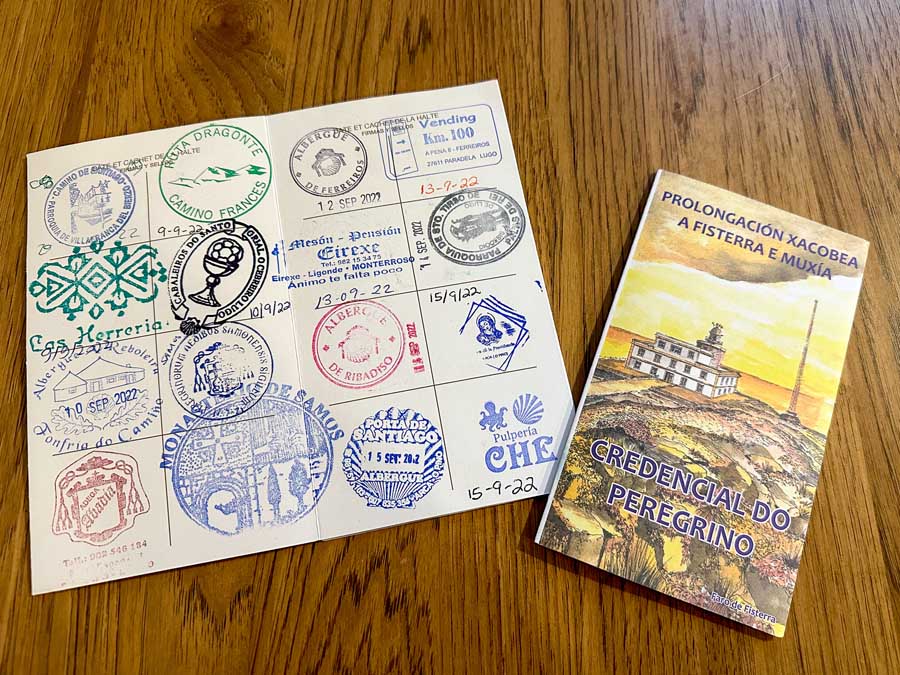
Those pilgrims who want to receive an official Compostela for walking the Camino de Santiago will need a Credencial del Peregrino (Pilgrim Passport). The Credencial is a stamp booklet to collect daily stamps and is mandatory to receive a completion certificate in Santiago de Compostela.
To receive the Compostela for free, the Camino de Santiago must be walked for spiritual or religious purposes. If walking for reasons other than spiritual or religious, the Compostela can be purchased for 3 Euros, making it basically the same as a distance certificate.
Pilgrims must collect at least 2 daily stamps in the Credencial. Stamps can be found at main tourist attractions, cafes, and restaurants, in Albergues, churches, and other points of interest along the Camino.
The most important rule for receiving the Credential is that you must walk 100 continuous kilometers of any route, with the final stage into Santiago de Compostela.
Each Camino route has a booklet, so it’s best to pick up the Pilgrim Passport at the starting point of each route. The Pilgrim passport is typically received after a €3 suggested donation, depending on where you pick it up.
Oftentimes, the Credencial del Peregrino becomes one of the best souvenirs to bring home from the Camino.
12 | Carry a Camino de Santiago Guide Book

One of my best Camino de Santiago tips is to carry a physical guidebook. While it may not be for everyone, I loved checking my next-day route at dinner time. It truly helped me plan my day and make the most of it.
Hands down, John Brierley writes some of the most detailed and best Camino de Santiago guidebooks.
He has updated guidebooks for several Camino routes, including Camino Frances, Camino Portugués, Camino Inglés, Camino de Invierno, and more.
☛ Game-Changing Camino de Santiago Tips | While I love the details of John Brierley’s books, I recommend not following the stages verbatim, especially when it comes to where to sleep
13 | Helpful Camino de Santiago Apps
Here are some great online resources and Camino de Santiago Apps that come in handy, no matter which Camino route you walk.
- Gronze is a popular Spanish Camino website with tons of useful information for multiple Camino de Santiago routes.
- Join the Private Camino de Santiago 2025/2026 Facebook Group for the most up-to-date information. Make sure to check the search tab if you have specific questions. There are also specific Facebook Groups for each route, if you have a specific one in mind.
- Camino Ninja App is a Free Camino App
- Wise Pilgrim is another popular Camino App and charges a fee depending on which route you use.
- Booking.com is an excellent resource for securing private albergues, casas rurales, pensions, and accommodations along all of the Camino routes
- Maps.me is my go-to offline map
- I record all my routes with Wikiloc, and thousands of hikers have recorded daily Camino de Santiago routes.
- Google Translate helps translate any language into Spanish.
👉 Here are all my recommended Camino de Santiago Apps to download before you start walking.
More Camino de Santiago Blog Posts


Camino de Santiago Tips for Sleeping in Albergues
Albergues are simple and budget-friendly accommodations found on all of the Camino routes that have dorm-like sleeping arrangements. (Think bunk beds in a large open space).
Albergues are classified as either a Private Albergue or a Municipal Albergue. Private Albergues are owned by private individuals or groups, whereas Municipal Albergues are run by local governments and are usually run with the help of volunteers. Most of these volunteers are fellow pilgrims and have epic advice.
In the Galicia region, Municipal Albergues are run by the Xunta local government.
Private Albergues take reservations, but Municipal Albergues work on a first-come, first-served basis and oftentimes do not accept reservations. Of course, there are some exceptions on reservations, especially those traveling in large groups.
Here are my top Camino tips for sleeping in the Albergues.
14 | Try Sleeping at an Albergue at Least Once

Shared accommodations may sound scary and unappealing, but the truth is, you should sleep in an Albergue at least once when walking the Camino de Santiago.
Albergues are very social and budget-friendly (typically, Albergues range from €7-€15 a night), and actually ended up being a highlight of my Camino. I utilize both Private and Municipal Albergues and will always seek out an albergue before a private room.
Yes, people can snore. Yes, the pilgrim stench can be a turn-off. But, you will more than likely remember all the people you shared a meal with, told secrets to over a glass of wine, and shared your high and low moments on the road with. Almost certainly, these moments will be shared in an Albergue.
Staying at an Albergue is the perfect way to meet people while walking the Camino de Santiago alone.
☛ Camino de Santiago Tips for Light Sleepers | Make sure to bring a good pair of earplugs and an eye mask if sensitive to light
Some nights you may need a good night’s sleep, or simply some space to reflect, journal, and recover. There are plenty of accommodation options on the Camino, including hostels, casas rurales, pensions, hotels, and apartments.
15 | Should I Pre-Book Accommodations on the Camino?

One of the top Camino de Santiago Frequently Asked Questions focuses on the pre-booking of accommodations on the Camino de Santiago.
Is it best to pre-book accommodation while walking the Camino? Well, that depends.
For me, the adventure was not planning any aspect of my day, just walking to a destination. I walked the Camino Frances in the busy months of August and September, and only once did I not find a bed in the village I wanted to stay in.
For the Camino routes of the Camino Frances, the Camino Portuguese, and the Camino Finisterre and have never booked my accommodation in advance. I usually tend to sleep at Municipal Albergues, which don’t allow reservations. However, it depends on what you feel comfortable with.
☛ Game-Changing Camino de Santiago Tips | Remember, the Municipal Albergues do not accept reservations, so oftentimes there are open beds. Most Municipal Albergues open around noon, so the closer you arrive to the opening time, the better your chances are of finding a bed.
However, on quieter routes like the Camino de San Salvador and Camino de Invierno, it’s best to contact the Albergue the night before to ensure they are open. I also did this for the Camino Lebaniego and Camino Vadiniense, just because many local hikers also utilize the Albergues.
Alternatively, some people like to book their entire journey, which is also great.
Booking.com is an extremely useful app for those pilgrims who want the security of knowing where they are sleeping. Oftentimes, pilgrims like to book the first few nights of their Camino route to get a feel for what to expect and then go from there.
16 | Sleep in Villages Off of the Daily Stages in the Guide Books
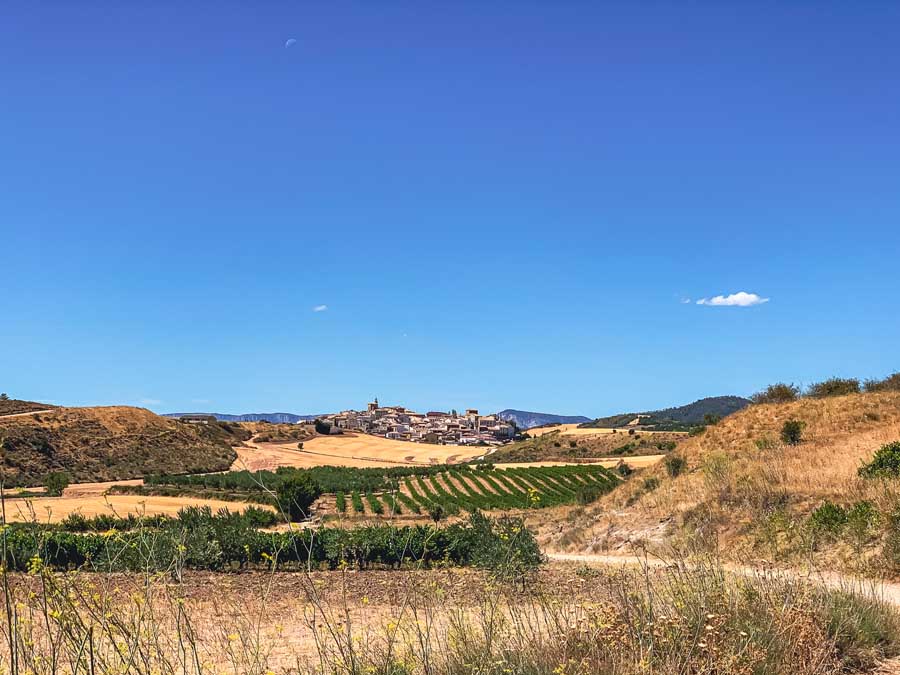
One of the biggest Camino de Santiago tips is to avoid sleeping where the daily stages of the guidebooks end. As much as I loved John Brierley’s book, so many pilgrims followed his exact stages that finding sleeping accommodations in his suggested villages can be a nightmare, especially if they are small villages.
This is where the “bed race” comes in. So many pilgrims are fearful of not finding a bed, so they book out beds in advance for the exact stages. This results in little to no room for pilgrims who are just showing up without reservations. This can make pilgrims nervous and leave super early to race to the Albergues. It can also put pressure on pilgrims to walk fast and skip their daily reflective walk time. It just adds unnecessary stress and unspoken pressure.
To avoid the bed race, I opted to stay in villages that were one or two stops before his daily stages.
For example, the Camino Frances Day 5 daily stage is from Puente la Reina to Estella. That would leave a majority of pilgrims sleeping in Estella. However, I had walked further the day before, so I was already ahead of schedule and decided to stay in Cirauqui, a lovely hilltop village found between Puente la Reina and Estella.
I had no problem finding a bed at Maralotx Private Albergue without a reservation.
I tried to avoid sleeping at the main daily walking stages almost every night. This included not stopping over in large cities like Pamplona, León, and Astorga. However, those who wish to take a rest day will love the facilities and energy of the popular historical cities on the Camino Frances.
Camino de Santiago Tips for Pilgrims Arriving in Santiago de Compostela

No matter what route you choose, all roads lead to the impressive Cathedral of Santiago de Compostela. These are some of my top tips and tricks for pilgrims arriving in Santiago de Compostela.
17 | Reserve A Bed in Santiago de Compostela (Especially During the Summer)
While I did not pre-book any accommodations while walking the Camino de Santiago, due to the rising popularity of the Camino de Santiago, it’s best to reserve a bed in Santiago de Compostela if you plan on staying near the historical city center.
Again, this is just for pilgrims who have their hearts set on sleeping in the heart of the city.
Book a room that allows free cancellation, just in case you get behind or ahead of schedule.


One of the best places to sleep in Santiago de Compostela is the Hospedería San Martín Pinario, and they offer private discounted rooms if you book with them directly (Single room with breakfast €29).
Seminario Menor de la Asunción is a large pilgrim facility (250+ beds) located in a seminary nestled above Bevis Park.
If all else is booked, Albergue de Monte do Gozo is a huge block-style pilgrim complex built on the hillside of Monte do Gozo and is a little over 3 miles from the cathedral, but it is connected to the city with a local bus. There is almost always a room at Albergue de Monte do Gozo.
After multiple Camino de Santiago routes, these are my favorite places to Santiago de Compostela for any type of pilgrim.
➜ Browse All the Best Places to Stay in Santiago de Compostela
18 | The Parador Hotel Offers a Free Pilgrim Meal Every Day

The first ten pilgrims to arrive in Santiago de Compostela each day are offered a free pilgrim lunch from the Hostal Reis Catolicos, which today is a luxurious Parador Hotel. This is a gift as a nod to their deep roots and connection with the Camino de Santiago.
During my winter Camino, I was actually the first pilgrim to arrive in Santiago de Compostela that day! The free lunch vouchers are given away at the Pilgrim Office in Santiago de Compostela each day.
The pilgrim lunch is served at 13:00 each day in the Restaurante Enxebre in front of the Parador Hotel. You must present your voucher issued by the Pilgrim Office to enjoy the free pilgrim meal.
19 | Don’t Skip Through Santiago de Compostela

On my first Camino, I rushed out of Santiago de Compostela without spending any time in the city. Granted, during that moment, I felt the pull to continue walking.
After I finished walking the Camino Finisterre Muxia, I did not return to Santiago de Compostela, and I missed out on so much.
Don’t simply pass this historical city of Santiago de Compostela. While the summer months can be extremely busy, the city truly offers so much to see. The entire Old Town of Santiago de Compostela is a UNESCO World Heritage Site.
Santiago de Compostela is filled with green spaces, museums, delicious tapas bars, and has an energetic, youthful vibe due to the University.
Try to spend at least 2 days in Santiago de Compostela to get a taste of this lively city. Don’t miss these breathtaking viewpoints.
If you have even more time, these day trips from Santiago de Compostela are also worth the effort!
20 | Walk to the “End of the World”
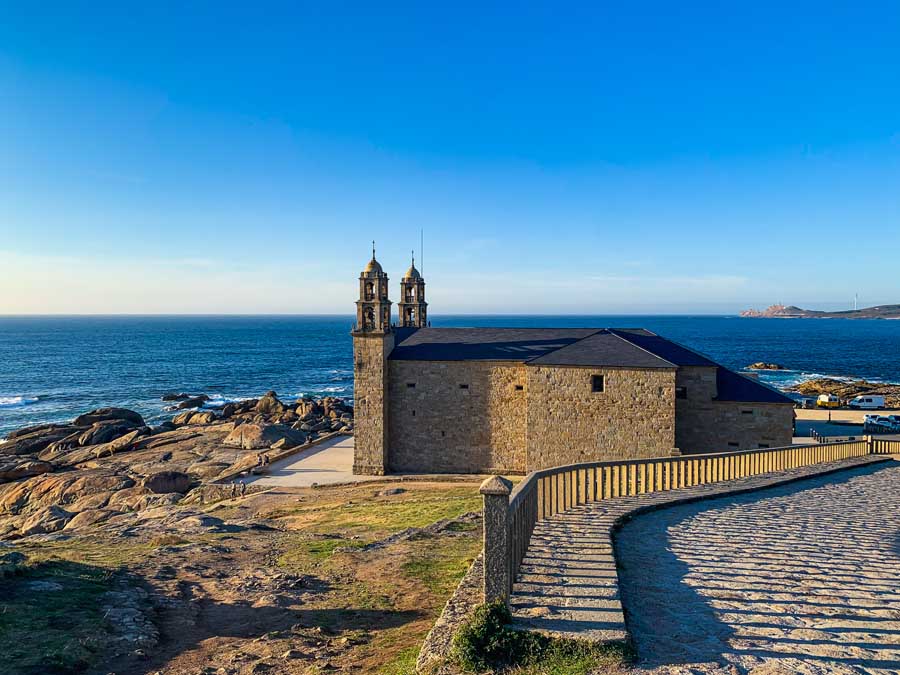
If you have the time and energy, I can’t recommend walking the Camino Finisterre Muxia enough. This Camino route sees fewer pilgrims, passes by picturesque villages, twists through the stunning green landscapes of Galicia, and finishes at the sea.
Yes, the Camino Finisterre ends at the frigid and rocky shoreline of the Atlantic Ocean at either the village of Fisterra or Muxia.
Both ending points of the Camino Finisterre have a 0.0-kilometer marker and are located on the Costa da Morte (Death Coast), so choose the ending that feels right. If you have time, walk to both villages. They are equally special.
If you don’t have enough time to walk to “the End of the World,” it’s fairly easy to visit both places with an organized tour from Santiago. This popular Costa da Morte (Death Coast) tour includes Fisterra, the Ezaro Waterfall, and Muxía.
The Camino Finisterre Muxia takes at least 3 days, and is around 89.5 KM (55.5 miles), but varies depending on which route you walk.
Personally, I loved slowing down and spending time in the authentic village of Cee. From here, it’s possible to see the Ezaro Waterfall or hike the mystical Monte Pindo. I also love ending all my Camino routes in the sleepy fishing village of Muxia.
Conclusion | Top Camino de Santiago Tips for First-Time Pilgrims
In conclusion, these are some of my top Camino de Santiago tips and tricks for first-time pilgrims. This detailed guide includes general tips for walking the Camino, packing tips for the Camino, advice on where to sleep on the Camino de Santiago, and useful advice for pilgrims arriving in Santiago de Compostela.
The Camino de Santiago pilgrim route is a life-changing journey, so hopefully these Camino de Santiago tips will ease any fears or doubts that could be preventing you from walking this sacred path.
Remember, the best way to walk the Camino is to make it your own. Walk the Camino in whichever way you feel called and what works best for you!
As they say on the Camino, Buen Camino, or good journey.
Do you have any more Camino de Santiago tips and tricks that I can add to this list? I would love to hear from you if you are walking soon or have walked recently! Let me know in the comments below!
Pack This Post for Later! Pin It!


Disclaimer: There’s a chance this post contains affiliate links, and I receive a small (but grateful) portion of the sale. There’s no extra cost to you, and I only promote things that I use and love.


Thank you for all this excellent advice and tips on the camino Megs! Your posts are amazing! I’m thinking of doing the camino this year and as a first time pilgrim I had a ton of questions. You answered almost everything that popped into my head and just before my stress level heightened, I’d read through your posts and I’d find the answer! I am truly grateful!
Thank you so much Victoria! Glad to help 💚
Enjoy the journey and Buen Camino!
I grew up on the flat Canadian prairies so walking up and down hills was something I never learned.
The Camino routes are HILLY and with a pronated second toe I suffered after only one day of jamming the toe into the front of the hiking shoe. Lost the toenails on both feet.
Then afterwards I learned that when walking downhill your heel should not extend beyond your knee,,,this allows the body weight to carried on the heel instead of spread across a downward facing foot. This may not be common knowledge but it would have saved me a lot of pain, as did switching to sandals,
Hey Doug,
Uff… I’m so sorry to hear about your injury, but thanks so much for sharing this tip!
What Camino route did you walk?
Megs