
Camino de Santiago Albergues All You Need to Know
Spain’s most popular pilgrimage route is the Camino de Santiago or the Way of Saint James. Numerous pathways twist thousands of kilometers across Spain, Portugal, France, and beyond.
The most famous type of accommodation on the Camino de Santiago is an albergue.
Albergues are basic accommodations for pilgrims walking the Camino de Santiago pilgrim route. These modest lodgings are found on every single Camino de Santiago route, from the most popular route, the Camino Frances, to lesser-known routes like the Via de la Plata.
After walking 10 different routes of the Camino de Santiago, albergues are my preferred place to sleep. I’ve stayed in hundreds of different Albergues across multiple routes. I love the camaraderie, the price point is budget-friendly, and oftentimes, there are treasures like communal dinners or meals by donations.
Each Albergue is different, and there are three main types. Find a mixture of private, public, and donation-based (donative) on every single Camino route.
In this Camino de Santiago Albergues guide find the three main types of albergues and what it’s like to sleep at one. I’ve also included some booking resources, useful things to pack for a good night’s sleep, and general tips. As a bonus, I’m sharing some of my favorite Camino de Santiago albergues of all time.
Here’s all you need to know about albergues on the Camino de Santiago.
Table of Contents
- What is an Albergue?
- 3 Main Types of Camino de Santiago Albergues
- What is it Like Sleeping at an Albergue?
- Do I Need to Sleep in an Albergue When Walking the Camino?
- Do I Need to Pre-Book Albergues in Advance?
- Useful Things to Pack for Sleeping in Albergues
- A Few of My Personal Favorite Camino de Santiago Albergues
- Conclusion | All You Need to Know About Albergues on the Camino de Santiago
What is an Albergue?

Last year, nearly 500,000 pilgrims undertook the journey to arrive at Santiago de Compostela, the supposed final resting place of the Apostle James. If planning this life-changing journey you may be wondering where all these pilgrims sleep.
Albergues are simple and budget-friendly accommodations found on all of the Camino pilgrimage routes in Spain and beyond. Albergues have dorm-like sleeping arrangements… think bunk beds in a large open room and basic, yet necessary facilities.
Albergues are quite similar to a hostel. Many offer kitchen spaces to help cut down on food expenses. Oftentimes, there is a designated laundry area to hand-wash clothes, or sometimes you may be lucky to find a washing machine and even luckier to find a dryer.
Centuries ago, pilgrims attempting the pilgrimage across Spain would be fortunate to spend a night or two in a pilgrim hospital. Today, the Camino de Santiago albergues are quite modern and clean. They provide budget-friendly accommodation with a fun social aspect to pilgrims walking to Santiago de Compostela.
The average price of an albergue can range anywhere from donation-based to over 20 Euros a night.
In my humble opinion, I believe every pilgrim should try to sleep in an Albergue at least one night. It can be a special way to appreciate the spirit of the Camino. If it’s not for you, that’s okay, too!
The Pilgrim Credencial and Sleeping in Albergues
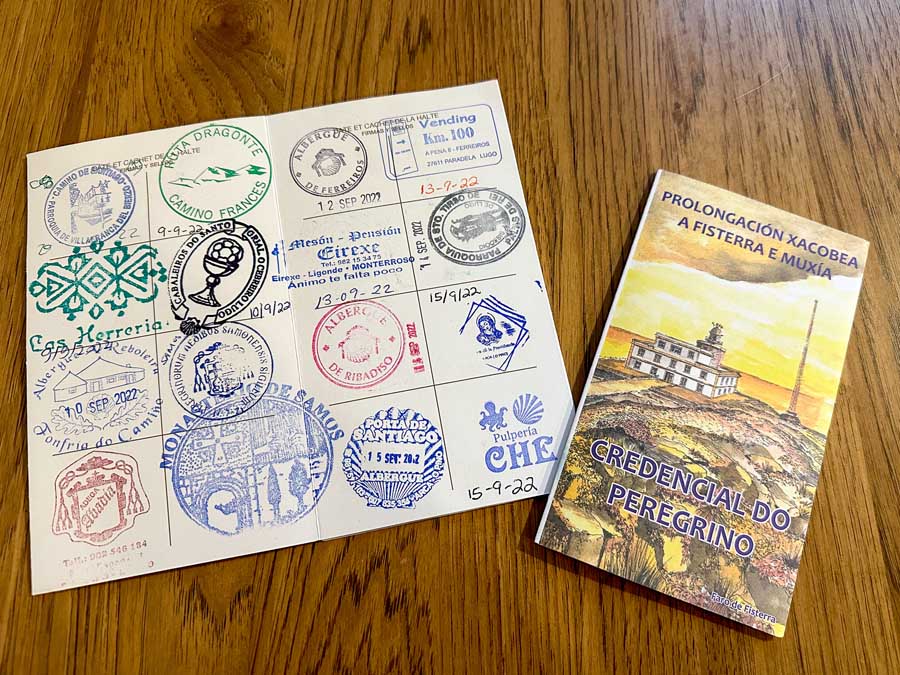

Some albergues require a Pilgrim Credencial, a passport-like document that is stamped along the way. The credencial not only allows access to sleep in public albergues but also provides discounts to various points of interest.
Pilgrim Credencials are required to receive the official Compostela certificate in Santiago. Pilgrims must have one stamp per day in the “Credencial del Peregrino” and 2 stamps per day on the last 100 kilometers.
Stamps are found at albergues, hostels, cafes, restaurants, churches, museums, shops, and almost anywhere! Some places along the Camino also offer discounts for pilgrims with proof of a credencial. The credencial can provide discounted rates at churches, cathedrals, museums, and more.
The Credencial del Peregrino can be picked up at numerous Camino de Santiago starting points. Some ask for a 2€ donation while others are free or sell the credencial for an average of 3€.
No matter where you sleep on the Camino de Santiago, there will more than likely be a stamp for your pilgrim credencial!
3 Types of Camino de Santiago Albergues
On all the Camino de Santiago routes, albergues are typically Private Albergues or Municipal Albergues.
Some albergues are also donativo, which means they run off of the donations given by pilgrims.
1⎟Municipal Albergues on the Camino

Municipal Albergues are run by local governments and/or religious organizations. Municipal Albergues are oftentimes staffed with extremely helpful volunteers. Most of these volunteers are fellow pilgrims who have walked the Camino de Santiago and can provide useful tips.
Municipal Albergues work on a first-come, first-serve basis. Municipal Albergues do not accept reservations. If using luggage transfers along the Camino de Santiago, it’s worth noting that Municipal Albergues do not accept luggage transfers. This is because they can not guarantee a bed with no reservations.
Typically, Municipal Albergues are no-frills accommodation. They are simple, yet provide everything you need. Most Municipal Albergues do not provide sheets on the beds. If planning on utilizing these accommodation options you will need a sleeping bag, liner, and/or a travel blanket. Some do require you to purchase a disposable bed liner (typically 1€).
Psst.. notice in Galicia that many of the Municipal Albergues include Xunta. The Xunta de Galicia is a local government that runs the autonomous community of Galicia. The local government owns and operates the Municipal Albergues in Galicia.
You will need to show your pilgrim credencial in order to sleep at a Municipal Albergue. These albergues are strictly reserved for pilgrims walking the Camino de Santiago.
A majority of these albergues have strict curfew restrictions. Many albergues shut their doors at 22:00 and usually have a light-timer for lights out shortly after. They also require pilgrims to depart the Albergue typically at around 8:00. In theory, this is to assist pilgrims in trying to get a good night’s sleep.
2⎟Private Albergues on the Camino

Private Albergues are owned by private individuals or sometimes religious or charity organizations. There is a chance that the Private Albergues you are sleeping at are run by fellow pilgrims who fell in love with the way and wanted a way to give back and stay connected.
Some pilgrims prefer Private Albergues since they allow reservations, accept backpack transfers, and do not have curfew restrictions.
Private albergues are especially appealing in larger cities for those looking to experience the nightlife (think those delectable tapas scenes)!
Private Albergues are more like hostels because they accept all travelers, not just pilgrims. Many offer a stamp for the pilgrim credencial, but the pilgrim passport is not required to sleep there.
Typically, Private Albergues offer a little more “luxury” than Municipal Albergues. For example, you may have a curtain around your bunk or a plug-in to charge your devices inside your sleeping space.
Almost all of the private accommodation options provide sheets and warm blankets.
Many Private Albergues still have the Camino spirit. Many private albergues along the way are catered to pilgrims. It’s common for these places to offer pilgrims meals, especially those that are isolated in small towns on main routes.
3⎟ Donativo Albergues on the Camino

Some of my favorite Camino de Santiago Albergues are donativo. This means they rely on donations for sleeping there.
Donativo does not equate to free; rather, it is expected that you will leave a donation for your stay and services received. A pilgrim I met along the Camino San Salvador said it best, but I will simply paraphrase it.
“Our brothers and sisters walk the Camino before us and gift us to sleep in a bed and eat here, so we provide the same gift for tomorrow’s pilgrims.”
Of course, always leave what you feel is fair. The best donations come from the heart and with the intention of benevolence.
A good rule of thumb is to leave a donation depending on how much things cost along the way. So take into consideration the average night of a stay at an albergue, pilgrim meal, laundry services, etc. Depending on the services, leave what you feel is fair.
In general, I am typically “blown away” by donative albergues and oftentimes leave more than I had planned.
What is it Like Sleeping at an Albergue?

Albergues usually have bunk beds in a large sleeping dormitory, like a hostel. There are communal bathrooms. If you are sleeping at a parroquial (religious-based) most oftentimes sleeping arrangements and bathrooms are separated for men and women. However, this isn’t always the case, especially during the high-season.
Some Camino de Santiago albergues are very rustic, while others are more elaborate. Each albergue has its own personality, just like many of the pilgrims walking to Santiago.
Some Albergues have basic kitchen facilities, but sometimes it’s not possible to cook onsite. The Xunta Municipal Albergues are famous for having beautiful kitchens, but oftentimes no kitchen utensils or cooking pots and pans.
Many albergues offer communal pilgrim meals for a fair price. Lunch and dinner pilgrim meals usually consist of a two-course meal, water or wine, bread, and, if you’re lucky, a dessert.
Travelers who have slept at hostels while traveling will feel right at home in albergues. In fact, a majority of the albergues I’ve slept in have surpassed my expectations. It’s also fair to say I’ve been exhausted and I humbly accept and appreciate the space I sleep in for the night.
Albergues are quite lively and are a great way to meet people along the way, especially for pilgrims walking alone. For solo pilgrims, I highly suggest sleeping in an Albergue at least once to socialize and bond with others along the way.
The Downside of Albergues

Albergues are different, and while some can be spacious, others can be small and feel a little cramped. There is truth in the “pilgrim stench,” especially from hand-washing laundry. In small rooms, it definitely can be more noticeable.
You will encounter those who snore. For me, it’s part of the Camino, but for others, it can be a deal-breaker. It is miserable to wake up and try to walk 10 -30 Km a day when you had no sleep the previous night. I get it.
Besides the snoring, Albergues can just be loud in general. People may pack up at absurdly early hours and even quiet rustling is noisy.
A modern bother is technology. Many don’t silence their phones and the early mornings can sound like a dreadful orchestra of alarm clocks.
It can be hard for some people to get a good night’s sleep in an Albergue, especially those who are “light sleepers.” I am very fortunate to sleep hard, so I don’t have any issues getting a good night’s sleep.
Yes, people WILL snore. Yes, the pilgrim stench can be off-putting. You will be annoyed at some point by all the noises. But look past the bad, and you will more than likely remember all the amazing moments. Your mind will drift to the people you shared a meal with, told secrets to over a glass of wine, and shared your high and low moments on the road with.
Almost certainly, these moments will be shared in an Albergue along the way.
Do I Have to Sleep at an Albergue?

When walking the Camino de Santiago, Albergues aren’t for everyone, and it’s okay to sleep in whatever accommodation feels right to you. Some nights, it might be the only option, especially for those who like to sleep off-stage or take a detour.
Some nights you may need a good night’s sleep, or simply some space to reflect, journal, and recover. There are plenty of accommodation options on the Camino including hostels, casa rurals, pensions, hotels, and private apartments.
It is not mandatory to sleep in an Albergue to be a pilgrim.
➜ Many pilgrims like to book and search rooms on Booking.com
Is it Necessary to Pre-Book Albergues in Advance?

One of the most common Camino de Santiago FAQ is do you need to pre-book accommodations on the Camino de Santiago?
Well, that depends.
For me, I never pre-booked albergues on the Camino Frances or the Camino Portuguese. I simply woke up, walked, listened to my body, and slept where I wished. I walked the Camino de Santiago with the word surrender. This allowed me to just let each day unfold.
I walked the Camino Frances in the busy months of August and September. Since I did not make any reservations, I found myself gravitating to the Municipal Albergues. I was very fortunate to walk comfortably and never encountered a full municipal albergue.
However, some people like to book their entire Camino de Santiago route, which is also great, too. Booking.com is an extremely useful app for pilgrims who want the security of knowing where they are sleeping each night.
Oftentimes, pilgrims like to book the first few nights of their Camino route to get a feel for what to expect and then go from there.
Camino de Santiago Season & Booking

Another thing to take into consideration is the season when walking the Camino. Many albergues can fill up during the high season of May, June, August, September, and October. This is especially true for the Camino Frances, Camino Portuguese, and the Camino del Norte (with limited accommodation on stages).
Many pilgrims wish to book ahead to ensure they have peace of mind while walking. Others may not like the lack of flexibility. This is a personal choice and you must do what feels best.
Walk the Camino your own way and decide what works best for you.

I’ve also had the privilege to walk a Winter Camino. This is truly my favorite time of year to walk the Camino, especially when the weather is nice. (I lucked out with fantastic weather in January).
However, winter is the offseason, and many albergues close and shut down for a much-needed rest. During the winter season, I would message or text the albergues a few days out to ensure they were open and I had a place to stay.
Some pilgrims walking a winter Camino may feel more reassured to pre-book accommodation during this season.
Camino de Santiago Route & Booking

Some lesser-known Camino de Santiago routes require pre-booking. For example, walking the Camino Lebaniego and Camino Vadiniense, I had to book in advance. There is limited infrastructure, so you must book (or message) a place or risk not having a place to sleep.
Many of these villages, especially on the more mountainous routes, are isolated. Sometimes the villages are so small there are no restaurants or stores. These places don’t usually keep large quantities of food in stock, so calling ahead is essential. At some sleeping stages, you must request a meal or go without.
This was also the case on the Camino San Salvador.
For me, the lesser-known routes are the most adventurous and I love walking them. They won’t be for everyone as they do require a little more advanced planning.
Useful Things to Pack for Sleeping in Albergues

Albergues are very simple. Pilgrims who plan on sleeping in Albergues when walking the Camino should have a few essential items in their backpacks.
➯ Hey… don’t forget your Travel Insurance! I love SafetyWing
Camino de Santiago Albergues Sleeping Essentials
As I lean towards sleeping in Municipal Albergues, I could not have walked the Camino without a sleeping bag. Municipal Albergues don’t provide free towels either, so if you plan on relying on the Municipal Albergues, you will need something for sleeping, a towel, and shower sandals.
Municipal Albergues typically have no sheets on the beds. Some Albergues provide disposable liners, or have the option to pay for them (€1). Personally, I couldn’t get over the amount of waste this created every single day. Be mindful that some places enforce the use of liners.
Depending on the season, you will need to carry a sleeping bag or an ultralight sleeping bag, especially if sleeping in the Municipal Albergues. This depends on when you walk the Camino, how cold you sleep, how much weight you wish to carry, and which Camino route you choose to walk.
Personally, I carried this ultralight sleeping bag. For me, it’s perfect and I was never cold, but it was a big investment.
Some pilgrims prefer to only carry a silk liner. Sea to Summit makes this lightweight blend of silk and cotton liner (at only 5 oz). I sleep cold, even during the summer, so a sleeping bag liner isn’t a good fit for me. For added warmth, some pilgrims swear by bringing a down travel quilt. They are quite expensive but those who use them, love them.
Many of the Albergues have extra blankets available during the fall and winter, but that can also be a gamble. They tend to get washed infrequently, so as a rule of thumb, I tend to lean away from using the community blankets at albergues.
If you plan on sleeping in private rooms and hotels the entire way, you more than likely will not need a sleeping bag.
Sleeping is such a personal choice, so it’s best to test out the gear and be honest with how you will sleep best. After walking 11 Camino routes, this is my standard Camino Packing List for Women.
☛ Camino de Santiago Tips for Light Sleepers | Make sure to bring a good pair of earplugs and an eye mask. This is a great Blackout Sleeping set

The showers in Albergues are communal and used by every pilgrim sleeping there. For this reason, it’s best to use a basic sandal in the shower. Some pilgrims prefer a basic flip-flop sandal. Other pilgrims need more support and use durable hiking sandals.
Do note that many albergues do not provide towels or require a fee to rent a towel. It’s nice to bring a quick dry towel when sleeping in Albergues.
One more thing about Albergues. They are attracting people from all walks of life across the world. This is an opportunity to meet new people and expand our journey and our beliefs.
Many people are walking the Camino for different reasons, from healing to soul searching to celebration. Let go of judgments and show empathy and kindness.
A Note on Bed Bugs on the Camino de Santiago
Yes, there can be bed bugs along the Camino de Santiago routes, but they are not limited to only Camino de Santiago Albergues. No place, no matter how clean it is, no matter how expensive it is, it is NOT immune from bed bugs.
Some people carry a bed bug spray that can be picked up at the local pharmacies. Personally, I’ve never used a chemical spray. In my experience, the best way to avoid bed bugs is to prevent them.
✔ DO NOT put your backpack or clothing on the bed for any reason.
✔ Keep your backpack a good distance from the bed and other pilgrim’s backpacks.
✔ Check your mattress. Oftentimes, bed bugs can leave behind a reddish coloring on the mattress. This is an official source on how to best check for bed bugs.
A Few of My Favorite Camino de Santiago Albergues
These are my top three Camino de Santiago albergues I’ve had the pleasure to sleep in.
1 | Albergue Bendueños
- Albergue Location: Bendueños
- Camino Route: Camino San Salvador
- Donativo Albergue (Parroquial)
- Pilgrim Beds: 8
- Open: March – October with Albergue doors opening at 15:00
- Pilgrim Credencial Required: Yes
- Reservations Accepted: Yes
- Contact Points: Sandra | benduenosalbergue@yahoo.es | +34 674 671 706
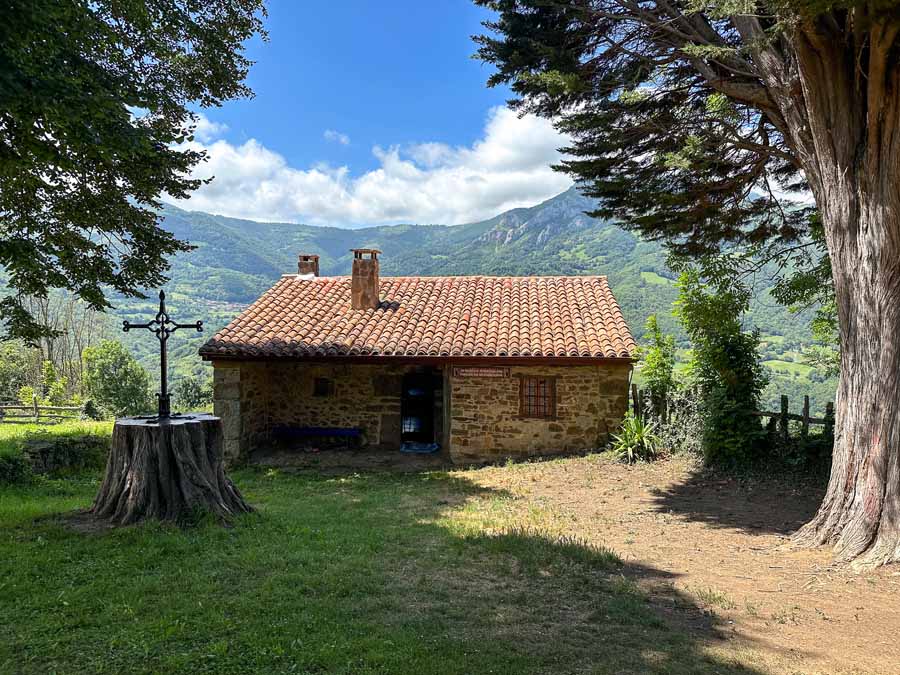
The Albergue Parroquial Virgen de Bendueños is a spectacular donativo albergue found on the Camino de San Salvador. It’s a short detour off of the way, but it is so worth it.
This small Albergue boasts a stunning location tucked away in the Asturias Mountains. Sandra is one of the most caring hospitaleras who goes above and beyond to cater to pilgrims. There is a fridge stocked full of food and drinks and she makes a delicious meal for dinner. The Albergue is also located next to a church that you can ask for the key to explore.
Remember, places like these survive not only by the incredible hospitaleros who run them but also by the donations of pilgrims who walk the way.
2 | Albergue A Reboleira


- Albergue Location: Fonfria
- Camino Route: Camino Frances
- Private Albergue
- Pilgrim Beds: 50 Bunk Beds / €13 / private rooms available
- Open: Early April – October
- Pilgrim Credencial Required: No
- Reservations Accepted: Yes
- Contact Points | Email: alberguefonfria@yahoo.es | Official Facebook Page
- Book Private Rooms at A Reboleira here
Albergue A Reboleira has one of the best meals out of all the Camino Frances Albergues.
This was one of my favorite Albergues on the Camino Frances.
This amazing Albergue is extremely clean, run by a super inviting family, has plenty of green space, and is a haven in Galicia for pilgrims. The bunk room is spacious with separate bathrooms inside the room.
Those who don’t want to sleep in the Albergue can also opt for one of the private rooms. There are many options.
Don’t miss the cold water fountain right out the front door. This was one of those places where I slept on the Camino Frances that sticks in my mind and brings a smile to my face.
There is an onsite bar, but the pilgrim dinner takes place in a traditional Galician stone hut. The grand hut can fit 100 hungry pilgrims.
The community meal is based on local cuisine, which is sourced from neighboring pastures. Usually, the pilgrim dinner consists of a huge plate of beef stew, rice, and red wine. Dessert is the Torta de Santiago, a traditional almond cake found in this region of Spain.
Breakfast is also available from the cafe in the morning.
3 | Albergue Publico de Cabañes (La Casuca del Perdon)

- Albergue Location: Cabañes
- Camino Route: Camino Lebaniego
- Private Albergue
- Pilgrim Beds: 14 Bunk Beds / €15
- Open: March – November
- Pilgrim Credencial Required: No
- Reservations Accepted: Yes
- Contact Points | Email: lacasucadelperdon@gmail.com
Albergue Public de Cabańes is located right next to a church and tucked away in a small village at the foothills of the incredible Picos de Europa. This simple albergue sticks in my mind for its amazing hospitalerio, Micky.
The facilities are simple, but it’s really about the views and the overall hospitality of the space. Albergue Publico de Cabañes has hot showers, simple beds, Wi-Fi, and a nice outdoor space. Laundry services are available by machine for a small fee. There is no access to a kitchen, so the shared dinner is a must.
Again this albergue is located next to the village church, simply ask for the key to go explore.
There are no bars or restaurants in Cabañes, but our hospitalerio was a fantastic chef! Communal dinner is 10€ and includes wine, bread, a starter, a second, and dessert. It was one of my best meals on the Camino Lebaniego! He made us a lentil soup out of mushrooms he had foraged from the forest earlier that day.
The Albergue also offers breakfast in the morning for a fee of 5€.
Honorable Mentions

Although I haven’t slept at these Camino de Santiago Albergues, they are always among pilgrim’s most memorable places to stay.
➜ Albergue De Peregrinos Casa Da Fernanda is a popular donativo albergue that always pops up on everyone’s top list. This lovely albergue is known for its delicious food and warm hospitality. (Camino Portuguese between the stage of Barcelos and Ponte de Lima)
➜ Refugio Gaucelmo is a lovely donativo albergue in the special village of Rabanal del Camino sponsored by the British chapter of Friends of the Camino. One highlight is the afternoon tea. (Camino Frances)
➜ Albergue San Nicolas is in the heart of the Meseta in a restored building that is now a donativo albergue. This rustic albergue has no electricity and offers the “washing feet” ritual to tired pilgrims. (Itero de la Vega, Camino Frances)
Conclusion | All You Need to Know About Albergues on the Camino de Santiago

In short, this is an overview of all you need to know about Camino de Santiago Albergues. Albergues are budget-friendly almost dorm-like accommodations for pilgrims walking the Camino de Santiago.
Albergues are common sleeping places for pilgrims walking the Camino de Santiago pilgrimage route. This guide helps explain these typical pilgrim accommodations and helpful tips for booking and sleeping at Albergues. I’ve included useful things to pack if planning on sleeping in Albergues and some of my favorite albergues of all time.
Have you walked the Camino de Santiago? Did you sleep at Albergues along the way? Do you have an amazing Albergue experience or place you stayed? Let me know in the comments below!
Pack This Post for Later! Pin It!

Disclaimer: There’s a chance this post contains affiliate links, and I receive a small (but grateful) portion of the sale. There’s no extra cost to you, and I only promote things that I use and love.