
Picos de Europa National Park Ultimate Guide & Best 5 Day Road Trip Itinerary (2026)
There’s a chance you may have never even heard of the incredible Picos de Europa National Park in Spain. Perfectly nestled in the middle of the scenic north coast of Spain, these rugged and diverse mountains are less than 15 miles from the Bay of Biscay.
The tallest mountain peak in the Picos de Europa is Torre de Cerredo, which sits at just about 8,700 feet, but numerous limestone peaks make up the Picos de Europa National Park. The three mountain ranges of the Picos include the Western (Cornión), Central (Urrieles), and Eastern (Ándara).
The Picos de Europa National Park (Parque Nacional de los Picos de Europa) is also unique as it is made up of the three autonomous regions in Spain: Cantabria, Asturias, and León (Castilla & León). This National Park in Spain stretches over 250 square miles.
While popular, the Picos de Europa National Park still feels like a “hidden gem” and remains a favorite of hikers, rock climbers, hut-to-hut trekkers, and those looking to get a little off the beaten path in Spain.
It’s not just hikers who can enjoy the beauty of the Picos de Europa. Find charming villages, views of jagged mountain peaks, speedy cable cars, lovely alpine lakes, and a unique culinary scene.
This under-appreciated National Park in Spain actually doesn’t feel very “Spanish” at all.
With the Picos de Europa National Park being spread across three different regions, it can be hard to plan a visit. Each region has a wealth of information about its section of the national park, but the tourist information centers can lack details on the neighboring regions of the park.
This Picos de Europa itinerary includes how to visit all three unique regions over 5 days!
Follow along with this diverse Picos de Europa guide and road trip itinerary with the best places to visit in the Los Picos de Europa, Spain.
Table of Contents
- How to Get to Picos de Europa National Park
- Best Time to Visit Picos de Europa National Spain
- Picos de Europa Itinerary Day by Day
- What to Do After Visiting Picos de Europa National Park
- Conclusion | A Taste of Picos de Europa National Park
Disclaimer: There’s a chance this post contains affiliate links, and I receive a small (but grateful) portion of the sale. There’s no extra cost to you, and I only promote things that I use and love.
How to Get to Picos de Europa National Park
I’ve visited the Picos de Europa once by renting a car, another time by using public transportation and taxis, and once by walking from the sea to the foothills of the mountains. All are great options depending on what you are seeking from your experience.
One of the easiest access points to reach the Picos de Europa is the bustling port town of Santander. This city is the capital of the Cantabria region and has an airport (Santander Airport SDR). Santander has a well-connected bus terminal and train station. Many of the car rental agencies are found next to the Estación de tren Santander.
The Picos de Europa gateway mountain village of Potes is only a scenic hour and a half drive from Santander. The city has a ton of charming tapas restaurants and is a great place to start any Picos de Europa road trip.
If visiting the Basque region in Spain, Bilbao has an international airport (BIO). Bilbao is well-connected to San Sebastian, which is located directly on the Bay of Biscay and is undoubtedly a food destination in Spain.
Another popular way to get to the Picos de Europa National Park is from Oviedo in the Asturias region. Oviedo is a bustling city with an important Cathedral and hilltop Pre-Romanesque Churches.
If departing from Oviedo, it’s best to reverse this Picos de Europa itinerary and head first to the village of Cangas de Onís, which is only an hour and a half from Oviedo. Buses run by ALSA also connect Oviedo to Cangas de Onis.
Due to the diversity and sheer size of the park, the best way to utilize your time in the Picos de Europa is to rent a car. It is becoming standard for car rental agencies in Spain to ask U.S citizens for an International Driving Permit, so it’s best to have one before arriving in Spain.
☛ Psst... Public transportation is sporadic and usually runs to limited destinations. These services are usually only available from Holy Week and June to mid-October
Alternative Ways to Get to the Picos de Europa, Spain
Spain is famous for its many Camino de Santiago pilgrimage routes. Camino routes twist all across Europe and end in Santiago de Compostela, in front of the Cathedral.
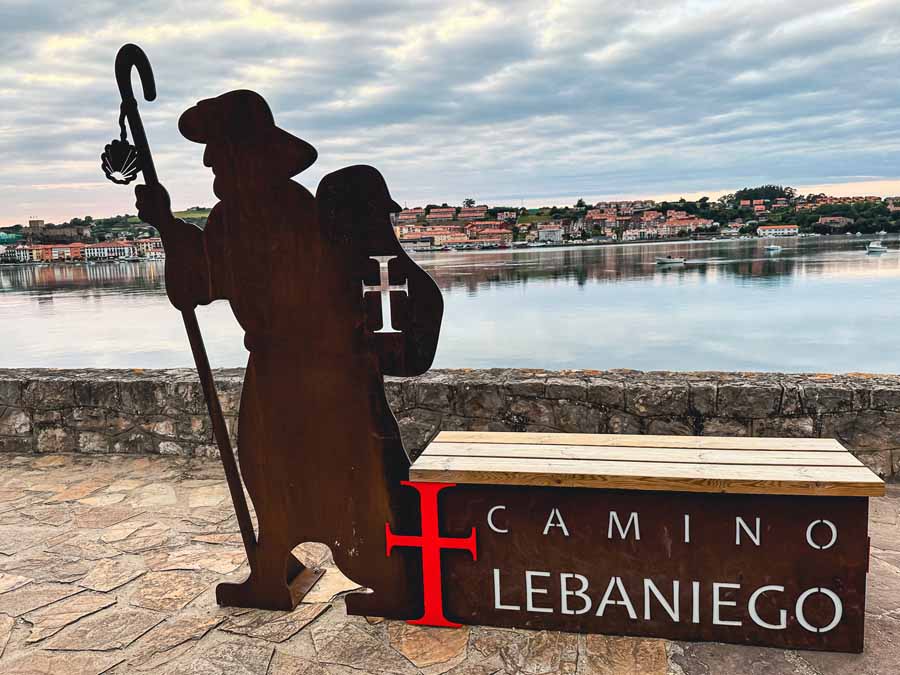
There is a Camino route that diverges from the Camino de Santiago Norte Way. From the seaside village of San Vicente de la Barquera, follow the North route from the coast to the village of Muñorrodero, where the route has an option to follow the Camino Lebaniego.
The Camino Lebaniego twists through the mountains and tiny hamlets only to arrive at the Monastery Santo Toribio de Liebana just after the medieval village of Potes.
🥾 Camino Lebaniego | San Vicente de la Barquera – Monastery Santo Toribio de Liebana (near Potes) | Distance: 44.7 Miles (71.9 KM) | Duration: 3 – 5 Days | Difficulty: Challenging with mountainous terrain

This Camino is beautiful and challenging, but worth every step when you walk to gaze at those first views of mountains at the foothills of the Picos de Europa National Park.
This alternative way to reach the Picos de Europa is challenging and best suited for experienced hikers. Like all Camino de Santiago routes, it’s important to pack light and follow the arrows.
The pilgrimage site of the Monastery of Santo Toribio de Liebana is significant because it is said to hold the sacred relic of the original wood of the True Cross (Lignum Crucis). Pilgrims have been walking the Way of Lebaniego for over 500 years to gaze upon the remains of a section of the wooden cross.
Best Time to Visit Picos de Europa National Park
Many areas of the Picos de Europa National Park are open year-round. With its proximity to the ocean, the park’s weather can be surprisingly temperate. However, some areas of the park are hard to access and can be closed due to weather conditions.
The peak season or high season in the Picos de Europa is from July to September. During this time, almost all of the trails are open, and the crowds are plentiful. This national park is extremely popular with Spanish domestic tourists during the summer months. Many Spanish locals head to northern Spain and the mountains to escape the blazing summer heat of the south.
July and August can be unbearable with crowds, and accommodation can be harder to find (and WAY more expensive).
In contrast, during the off-season, some of the trails may be hard to access, and you may encounter some road closures. It does snow in the high mountains of the Picos de Europa, so some mountain refuges can close. It is not advised to hike in the high mountains during the off-season unless you are trained and have proper equipment.
During the shoulder months of May, June, October, and even early November are perfect times to visit the Picos de Europa National Park dependant on the weather.
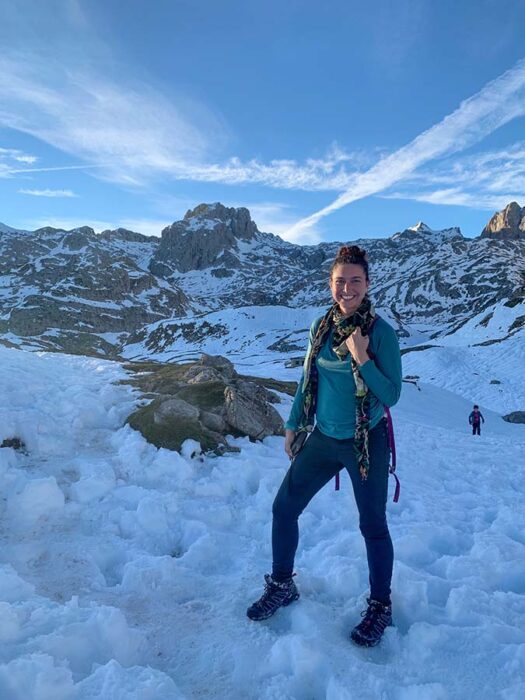
Believe it or not, I took this Picos de Europa road trip in the first week of November. In some areas, I encountered a light dusting of snow, but nothing too drastic to deter a visit. Many of the mornings started with overcast skies, but I was usually fortunate enough to enjoy sunny afternoons.
► Always check the weather conditions and stay up to date with current data by visiting the official website of the Parque Nacional Picos de Europa
Picos de Europa Road Trip Itinerary Day by Day
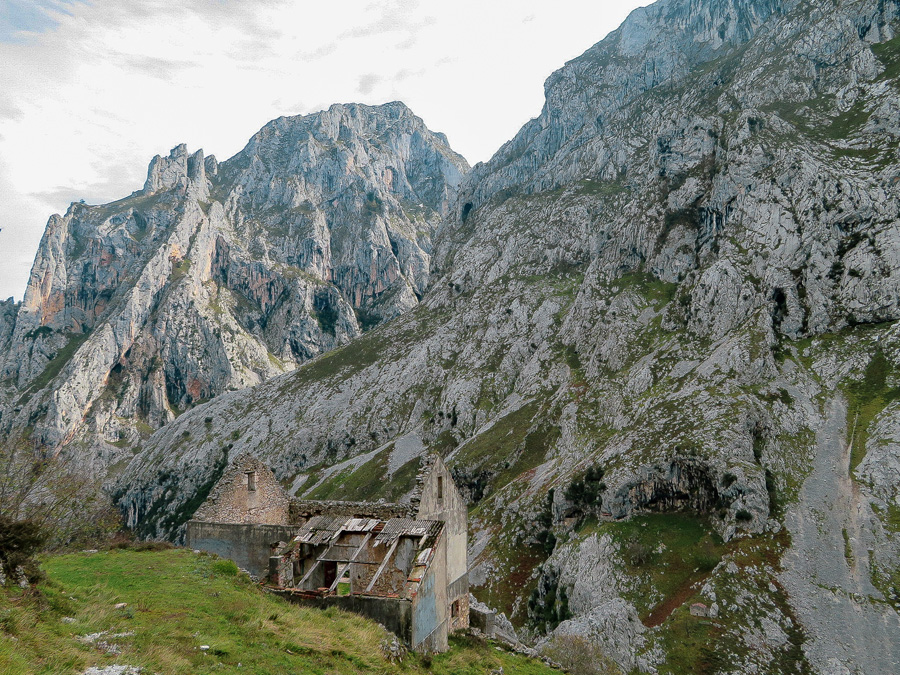
This five-day Picos de Europa guide starts from Santander and visits all three autonomous communities of the national park. This is only a brief overview of a 5-day Picos de Europa National Park road trip.
I’ve also included some ideas and places to visit if you wish to spend more than 5 days in the Picos de Europa National Park. I’ve visited the Picos de Europa numerous times and have added worthwhile hikes and places to see if you have more time.
- Day 1 | Depart Santander | Visit Potes | Take the Cable Car at Fuente Dé
- Day 2 | Visit Beautiful View Points | Day Hike at Ruta del Cares
- Day 3 | Lagos de Covadonga | Explore Around the Lakes | Sleep in Cangas de Onís
- Day 4 | Las Arenas de Cabrales & Cheese Tasting
- Day 5 | Depart Las Arenas de Cabrales & Return car to Santander
Picos de Europa Road Trip Day 1 | Santander to Potes & Fuente Dé

Let’s begin this epic “taste of the Picos de Europa road trip.” Remember, this itinerary can be reversed for those departing from Oviedo and has options to spend more than 5 days in the park.
It’s best to pick up a rental car as early as possible. From Santander, it’s under a 2-hour drive to Potes. I picked up my car by 11:00, but I wish I had picked it up as early as possible
There were few cars to choose from with my last-minute road trip, but a mini-cooper whipped through the mountains better than I thought. However, I did encounter snowy roads in one area that were a little problematic for this car.
‼️There are multiple car rental agencies located right at the main train station in Santander, and those who can drive a manual car will find cheaper rates!
Leave the train station and exit Santander. The road is quite easy to follow and passes through small villages and windy mountain roads. Be mindful, as there were some rock fragments I had to dodge as I began my ascent up to the village of Potes.
Santander Train Station to Potes: Around 70 miles | Under 2 hours
Potes
Arrive at Potes, a fantastic medieval village in the Cantabria region of the park. Explore the twisting cobblestone streets and the lovely village.
Located in a stunning valley, wander across beautiful bridges that straddle the Quiviesa and Deva Rivers. Either spend the afternoon soaking in activities in the city or drop off your luggage and head to Fuente Dé.
Potes to Fuente Dé: 15 miles | 25 minutes
Teleférico de Fuente Dé


Visit the picturesque village of Fuente Dé. The main attraction here is to take the almost 2,500-foot climb to the top of the mountain. Most travelers visit Fuente Dé to ride up the cable car or to hike.
The cable car allows visitors to savor the impressive Central Massif views, and the top of the cable car is at an elevation of 6,079 feet (1,853 m). The Fuente Dé cable car zips to the top of this mountain in under 4 minutes!
There is a large parking lot at the foot of the Teleférico de Fuente Dé (cable car), along with two hotels: the luxurious Parador de Fuente Dé and Hotel Rebeco.
Find a restaurant at the top of the cable car for those looking to simply savor those incredible views of jagged peaks. Keep your eyes peeled for Chamois, which is a goat-like, almost antelope-like animal.
More Information on the Fuente Dé Cable Car

The cable car is one of the most popular places to visit in the Picos de Europa National Park, so it’s best to pre-book tickets. During the high season, pre-booking tickets is essential. Online tickets must be purchased at a minimum of 24 hours in advance.
High Season: July, Daily: 9:00 – 19:00 / August, Daily: 8:00 -19:00 | Last Departure runs 15 minutes before closing | High Season Adult Ticket: Round-Trip €30 / One-Way: €17 | Reserve Tickets Online Here
The Cable car in Fuente Dé is typically closed on December 24, 25, & 31, January 1 and 6.
Fuente Dé & Hiking Routes

The official cable car website offers a few hiking routes that are reachable from the drop-off of the cable car. The two most popular hiking routes from Fuente Dé are the challenging high mountain Horcados Rojos trail and the popular Ruta Puertos de Aliva.
One of the most popular ways to visit Fuente Dé is to ride up the cable car and then hike down via the PR-PNPE 24 Puertos de Áliva trail. This trail is long but fairly easy as it descends the mountainside. Appreciate the high mountain views, meadows, and as the trail makes its final descent, forests filled with oak and beech trees.
End in the village of Espinama or loop back to the parking lot.
🥾 Puertos de Áliva Trail from Top of Fuente Cable Car | PR-PNPE 24 |Distance: 9 miles (14.5 KM) to the parking lot | Duration: +/- 4.5 hours | Official Path Information
If hiking down from the Teleférico de Fuente Dé, make sure to have plenty of time and carry enough water. Those planning on hiking from the Teleférico should plan on spending the entire day in Fuente Dé.
Sleeping in Potes & Night Activities

I slept in Potes as the village has a bustling tapas and nightlife scene compared to the nearby remote mountain communities. Although the population is under 1,500 people, the medieval streets become filled with eager visitors out enjoying the nightly tapas scene.
Don’t forget that the Spanish culture eats late, and many restaurants won’t start serving dinner until around 21:00.
You may start to notice multiple signs for “Sidra” bars. These cider bars are a trademark of the Asturias region, but nearby villages have started offering these popular watering holes.
A great place to sleep in Potes, close to the heart of Old Town, is the Hostería Picos de Europa. Find friendly owners, comfortable yet modern rooms, and on-site parking (a huge bonus), all within walking distance of the charming streets of Potes.
Additionally, there are the top-rated Hosteria Sierra del Oso and the popular Casa Cayo.
*Option to Spend an Extra Night in Potes


Potes is one of those places where it would be easy to spend at least two nights. If you spend all day at the Fuente Dé Cable Car, you miss the many sites of the village and nearby highlights.
With a full day in Potes, it’s possible to visit the Monastery of Santo Toribio de Liebana and the surrounding hiking trails. Visit the Torre del Infantado, which also houses a small museum. Stroll along the river path, and maybe even visit the village of Mogrovejo.
Those who want less of a village feel and more of a remote stay could opt to sleep in the surrounding Liebana Region.
Picos de Europa Road Trip Day 2 | Epic Viewpoints to Ruta del Cares
On Day 2 of this Picos de Europa itinerary, try to get an early morning start. There are a few epic viewpoints en route to the incredible day hike of Ruta del Cares.
The Ruta del Cares will take at least 6 -8 hours round-trip, so waking up with the sunrise is important!
San Glorio (Deer Statue)
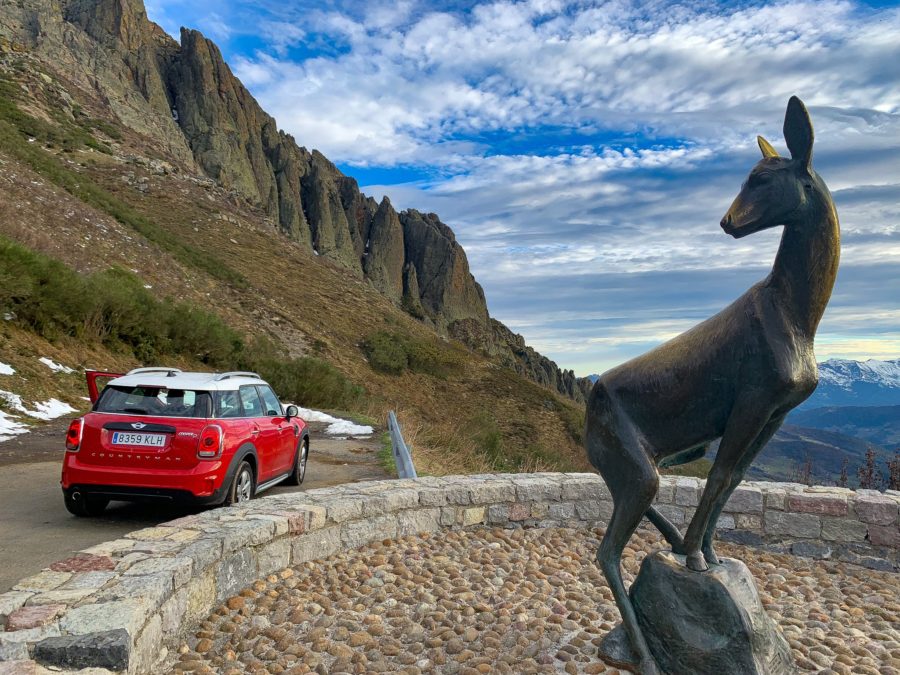
This nice little viewpoint is a great place to get out and stretch your legs. This is where the autonomous communities of León and Cantabria meet. Take a few photos and head just a few miles further down to Oso Pardo, which offers even more sweeping views.
Potes to San Glorio: 15 miles | half an hour
Monument to Oso Pardo / Collado de Llesba (Bear Statue)
The views of the mountains from Oso Parado are absolutely stunning. The friendly man who owns the Hostería Picos de Europa told me this was his favorite viewpoint in all of Cantabria, and I had to agree.
There are a few hiking trails nearby, but due to time restraints, I only enjoyed the epic views before heading toward Caín de Valdeón.

On foggy days, it’s best to skip these two viewpoints, as there will be nearly zero visibility.
Mirador del Corzo to Monument to Oso Parado: 3.5 miles | under 10 minutes
Next, take the twisting and turning roads to the small hamlet of Caín de Valdeón. The village of Caín de Valdeón is one of the starting points for the most popular hike in the Picos de Europa National Park, the Ruta del Cares.
Monument to Oso Parado to Caín de Valdeón: 25 miles | 1 hour
Day Hike at the Ruta del Cares | (PR-PNPE 3)
The Ruta del Cares, or the Cores Gorge, may be the most popular and famous day hike in the Picos de Europa National Park. This trail is an out-and-back route that follows the Rio Cares along a stunning gorge, engulfed by rugged limestone mountains.
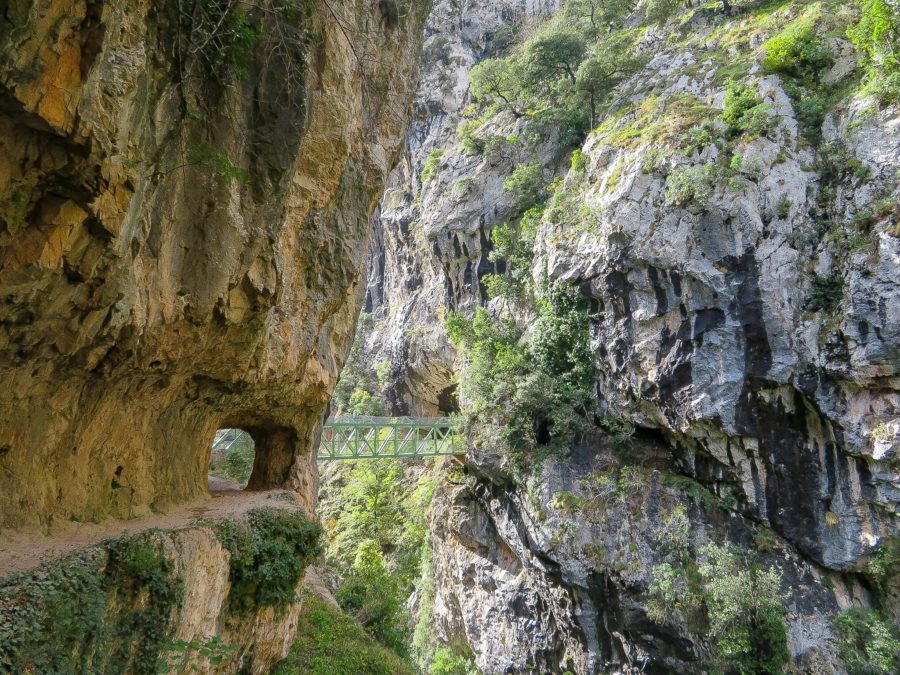
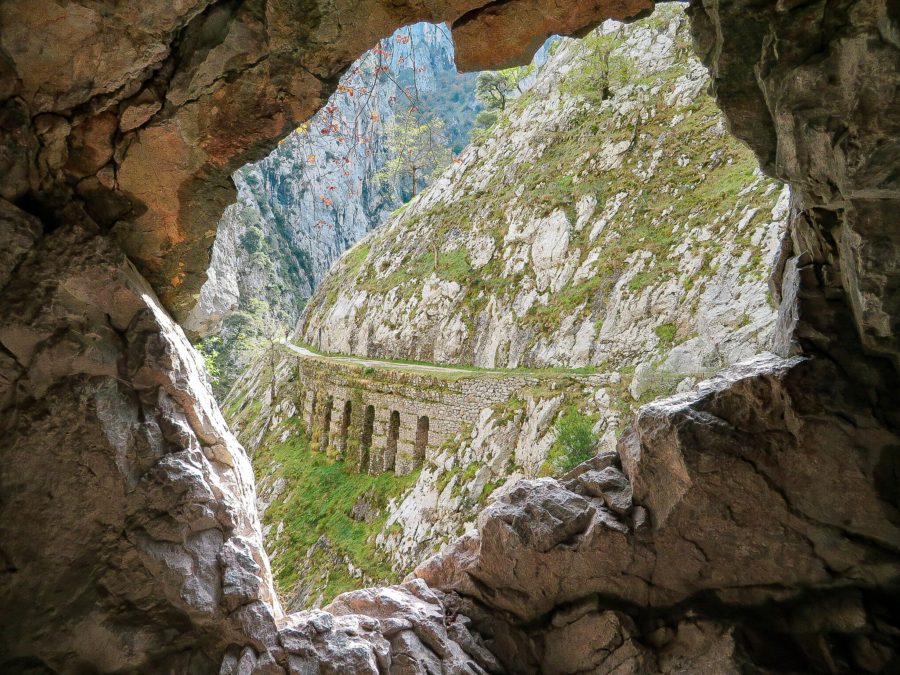
The Cares Gorge hike is 12 km each way (around 7.5 miles). This epic gorge hike includes paths that cut through small caves and cross bridges. The Ruta del Cares trail runs between the two villages of Caín de Valdeón (León) and Poncebos (Asturias).
The Ruta del Cares trail is extremely well-marked but can offer up its own set of challenges. Many sections of the path have no guard rail, and it can be mind-boggling to look down at the depths of the canyon. There are sections of the gorge that reach depths of nearly 2,000 meters (6,562 ft).
The trail is flat, but there are a few parts of the trail that have steeper inclines. Overall, I would say this trail is fairly easy, but allow 3.5 hours to reach Poncebos and another 3.5 to return. It is also possible to call a taxi to return you to your car, but I don’t necessarily recommend that.
There are a few parts of the trail that go through caves and tunnels that have been built into the mountainside, so it’s best to carry a headlamp and a well-stocked day pack with plenty of water (in a refillable bottle).
The Ruta del Cares is by far the most popular and trekked trail in the Picos de Europa National Park.

Starting the Cares Gorge Route in Caín
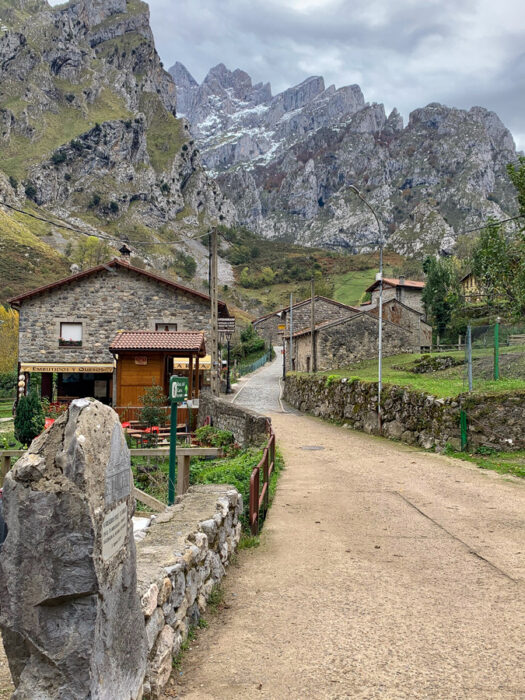
Personally, I liked starting the Ruta del Cares trail from Caín de Valdeón. Driving from Potes, you will be blessed with two great viewpoints of the Picos de Europa mountains. The windy road deters some drivers, but the road is beautiful and sees little traffic. Also, with a car, it’s easier to park right next to the trailhead.
With fewer people starting the Cares Gorge from Caín de Valdeón, it’s easier to snag a great parking spot.
Finally, the most scenic and adventurous part of the Cares Gorge trail is closer to Caín. So, if you can’t make it all the way to Poncebos Asturias, you get to experience the best part of the trail!
Utilize the parking lot in front of Hostal La Ruta and enjoy a beverage upon return
Where to Sleep on the Day of the Ruta del Cares Hike
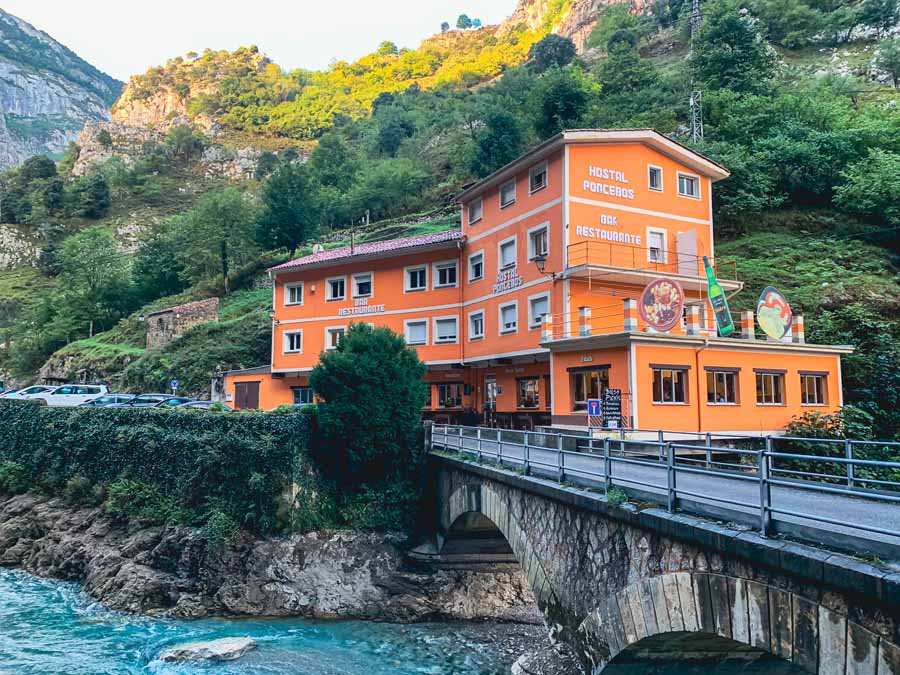
Depending on how you wish to hike the Ruta del Cares Gorge, there are a few different sleeping options.
1 | Take the 7.5-mile hike to Poncebos and spend the night. I love sleeping at Hostal Poncebos. Poncebos has numerous hiking trails, and it’s easy to visit or hike to Bulnes, one of the most remote villages in the Picos de Europa.
*This would be another great option to add an extra day to this Picos de Europa itinerary.
2 | Do the round-trip (out and back) version of the Ruta del Cares trail and sleep in the adorable village of Caín de Valdeón.
La Casona de Palmira is a popular hotel. Budget travelers may wish to sleep at the Hostal La Ruta or the Albergue de Caín.
3 | If looking to get closer to the next destination of Cangas de Onís, spend the night in the sleepy village of Oseja de Sajambre at Hostal La Cuna del Sella
➜ Browse all the Best Places to Stay in the Picos de Europa Spain
Picos de Europa National Park Day 3 | Epic Drive to Cangas de Onís & Lagos de Covadonga

In the morning, if leaving from Caín de Valdeón, this will be one of the longest stretches in the car. However, the views around Oseja de Sajambre are absolutely stunning, so it makes it that much better.
Arrive in Cangas de Onís and drop off your stuff, or head straight to the beautiful Lagos de Covadonga. The Covadonga Lakes are one of the most popular places to visit in the Picos de Europa National Park in the Asturias region.
Caín de Valdeón to Cangas de Onís: 43 miles | 1 hour and 45 minutes
Lagos de Covadonga (Covadonga Lakes)

Lagos de Covadonga comprises two lovely alpine lakes: Enol Lake (Lago Enol) and Ercina Lake (Lago Ercina). Near the Lakes of Covadonga find a restaurant, and during the high season, a helpful tourist information center.
As a conservation measure, the road from the Covadonga Sanctuary to the Lakes of Covadonga is closed to unauthorized travelers (including tourists). This measure is usually only in effect during the high season until the end of October.
☞Check the up-to-date road regulations here.
If visiting during the high season, there are buses run by Alsa from Cangas de Onís to Lagos de Covadonga. Additionally, there are taxi and shuttle services, too. It is best to purchase your tickets in advance during the high season.
If visiting the Picos de Europa National Park during the “off-season,” the road from Cangas de Onís to the lakes is an adventure in itself. The winding road up to the parking twists and turns and offers incredible views. The main parking lot for the lakes is referred to as the Buferrera.
Cangas de Onís to Lagos de Covadonga: 13 miles | 35 minutes
Upon arrival, there are plenty of things to see around the Covadonga Lakes. Many families are usually picnicking and wandering the nearby trails. An enjoyable trail is a casual stroll along the PR-PNPE 2 Los Lagos (2 hours).
Keep in mind that it is not possible to swim in the Covadonga Lakes, as they are protected!
Buferrera Mines
Extremely close to the Lagos de Covdonga are the Buferrera Mines. They are temporarily closed, but it’s permitted to walk around the outside of them. They are worth a quick gander.
Chapel of the Good Shepherd

In the opposite direction of the Covadonga Lakes, it’s possible to venture towards a few trails and open pastures. Sitting in the middle of the meadow pasture lies the tiny Chapel of the Good Shepherd. This small monument offers some incredible views of the mountains.
If you continue on the path, it’s also possible to visit the Mirador del Rey. This simple viewpoint has nice views of the mountains, but no views of the lakes.
Buferrera to Mirador de Ordiales | PR-PNPE-5


For those looking for a more challenging, but stunning path, follow the signage to Buferrera Ordiales. This hiking trail was one of my favorites in Picos de Europa National Park.
On this path, I was able to walk past free-range horses, spot more Chamois, and did not pass a single soul. Since it was November, I went up as far as I could until I needed proper snow gear.
‼️ Update, I loved this hike so much that I went back in September to hike to the viewpoint of Ordiales

You will need a full day to hike to the Mirador de Ordiales and back down. The out-and-back hike is challenging and takes hikers up 5,741 feet (1,750 meters). However, the rewards are some of the best views in the entire Picos de Europa National Park.
At the top viewpoint of Mirador de Ordiles is a tribute to Pedro Pidal, the Marqués of Villaviciosa, and the first to climb Naranjo de Bulnes (Pico Urriellu).
🥾 Buferrera to Mirador de Ordiales | PR-PNPE 5 | Out & Back Trail | Distance: 14.5 miles (23.3 KM) | Duration: +/- 4 hours to reach the viewpoint and +/- 2 hours down (6.5 Hours in total for me) | Official Trail Information
Visit the Santuario de Covadonga

After exploring the Lagos de Covadonga, take the curvy road back towards Cangas de Onís. Look for the viewpoint to snap some great photos of the pink Basílica de Santa María la Real de Covadonga.
It is possible to visit the Sanctuary of Covadonga for free. On-site, find a few points of interest, like the Holy Cave, the signature pink Basilica, and the museum.
Covadonga Sanctuary | Find it here: Lugar Covadonga, 33589 Covadonga | Free Admission, except the museum has a fee | Hours: 8:00 – 20:00, but avoid visiting during mass | Official Website
Cangas de Onís

Cangas de Onís is a cute little mountain village in the heart of the Asturias region of the Pico de Europa, Spain. There are plenty of things to do in Cangas de Onís, making it an ideal place to stay.
If you spent a full day hiking around the Covadonga Lakes, you may choose to spend an extra night in Cangas de Onis.
Visit a Cider Bar

This is the place to make sure to try out the “Sidra,” or cider house/ bar. It’s crazy, but the region of Asturias has over 80 major cider mills and produces 80% of all cider in Spain.
Asturias cider culture is unique to the region, and one of the best ways to experience it is at a cider bar. Here, it’s all about the pour! Ciders are typically poured from a tall height to create bubbles. These bubbles allow the true flavor of the cider to shine through. This is why only a few “sips” are poured at a time.
To ensure the flavor of the cider, many cider houses have little machines that replicate the process. Make sure to experience at least one cider house in Asturias.
The cider here tastes different than the Basque cider you’ll find near San Sebastian in the hillside village of Astigarraga.
Old Roman Bridge
Another popular place to visit in Cangas de Onís is the Old Roman Bridge. Walk along the cobblestone path and enjoy the surrounding mountains from the old bridge.
Where to Stay in Cangas de Onís

In the center of it all, Pension Reconquista offers simple rooms with lovely little balconies! Enjoy a morning coffee with the beautiful mountains in the backdrop. The owners are warm and very accommodating. This little hotel is close to the bridge and within a few minutes’ walk of some of the best cider bars in Cangas de Onís.
Cangas de Onis is a popular place to base when visiting the Picos de Europa National Park. There are tons of different accommodation options for all types of travelers and budgets.
Hotel Santa Cruz is a popular option near the center of the village, along with Hotel Los Lagos Nature.
➜ Browse all the Cangas de Onis Accommodation Options
Picos de Europa National Park Day 4 | Cangas de Onís to Las Arenas de Cabrales
On Day 4 of this Picos de Europa itinerary, it’s only a short drive to the next destination of Las Arenas de Cabrales. This would allow ample time to explore Cangas de Onís and have a relaxed morning.
Cangas de Onís to Las Arenas de Cabrales: 19 miles | 35 minutes
*Optional Hike Ruta Río Casaño

On the road between Cangas de Onís and Las Arenas de Cabrales is the small village of Canales. Look for the Hotel Alto de las Estazadas. If you follow the road, before the small hamlet of La Molina is a tiny parking lot for the Ruta Rio Casaño. No outside cars are allowed in La Molina.
This trail is lovely and boasts a small beach area, mossy rocks, an enchanted forest, and stone houses typical of Asturias. As the way follows the river, look for cute waterfalls, and some spectacular views of the surrounding limestone mountains.
This is an out-and-back trail, so it’s possible to turn around when you want. I think the larger waterfall is a good place to turn around.
🥾 Rio Casaño Waterfall | Round-trip Distance: under 5 Miles | Duration: +/- 4 hours | Here’s my map
Las Arenas de Cabrales

Las Arenas de Cabrales is a small village located at the foothills of the Picos de Europa National Park in the Asturias region. There are plenty of gear shops, restaurants, cafes, and a nice pathway along the river.
From here, again, it’s possible to reach the other Cares Gorge trail, but this itinerary covered it from the other access point of Caín.
Sample Cabrales Cheese
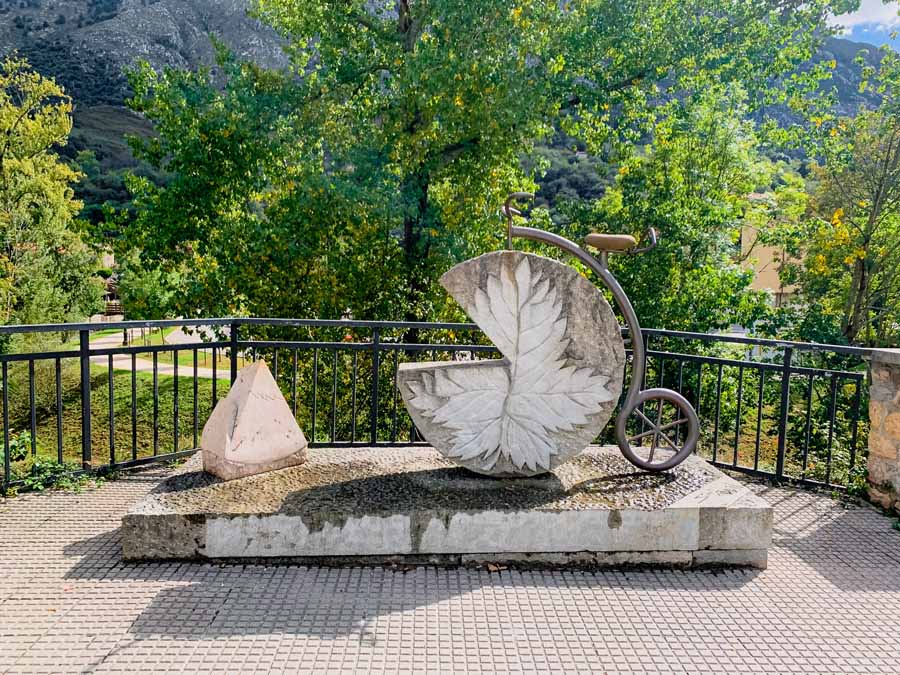
Las Arenas de Cabrales is most famous for its cheese, Cabrales Cheese. This cheese is unique to the Asturias region and is registered as a Protected Designation of Origin (PDO). It’s a strong Spanish blue cheese that is aged in the nearby limestone caves.
There are a few ways to sample it. Either visit a local tienda and purchase the cheese there. The Cueva del Queso de Cabrales offers guided tours of an aging cave that also includes a tasting. Another way to sample the cheese is at Quesería Vega de Tordín, which showcases more of the animals and milking process.
Visit More Small Asturian Villages in the Picos de Europa
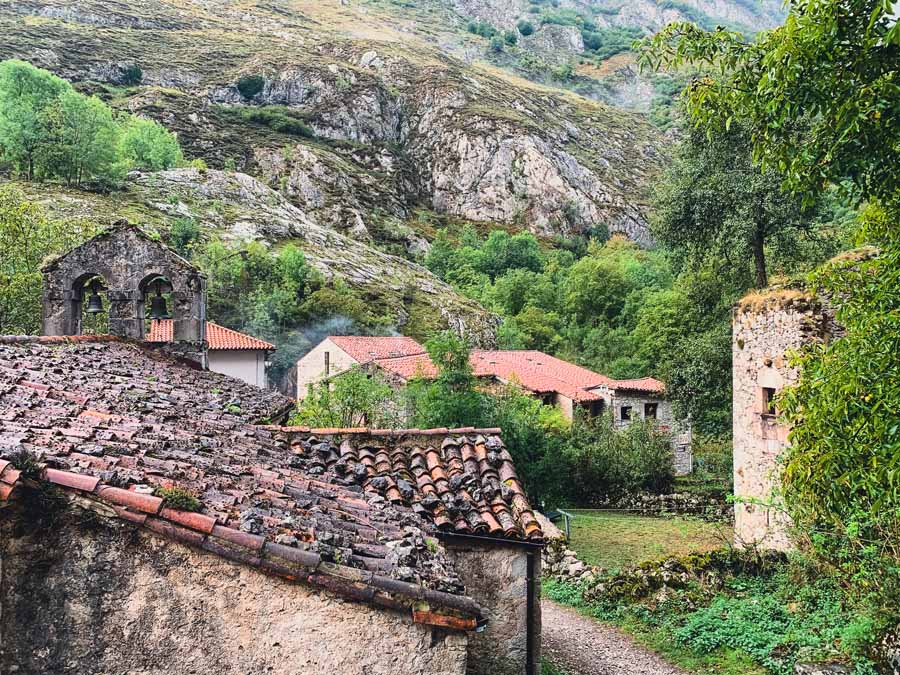
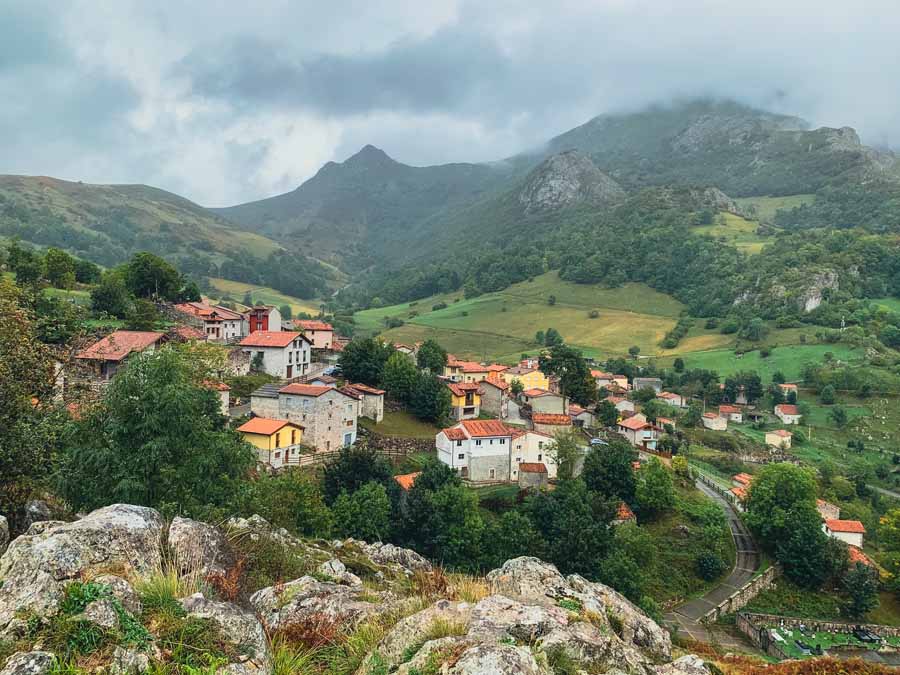

If you didn’t visit Bulnes, now’s a great time. There is no road to reach Bulnes, so you must either ride the Bulnes funicular or take the narrow La Canal del Texu hiking trail up. The access point to Bulnes is in Poncebos.
Las Arenas de Cabrales is just down the road and well-connected with Poncebos via bus or taxi.
Another option is to visit Sotres, the highest elevated mountain village in the Picos de Europa. At an altitude of 3,445 feet (1,050 m), the small village is inhabited by only 130 people.
It’s possible to drive or take the bus to Sotres, but if you’re already in Bulnes, this is a great hike that includes Sotres. If planning on doing this hike to the four villages, you’ll need a full day.
Where to Stay in Las Arenas de Cabrales
Hotel Rural El Torrejon is one of the most popular places to stay. Hotel Picos de Europa is also another highly-rated place to stay.
Las Arenas de Cabrales is more of a village with plenty of restaurants, cafes, shops, and a tourist information center. However, it would be possible to sleep in Sotres if seeking something a little quieter.
➜ Browse all the best places to stay in Las Arenas de Cabrales Spain
Leave Picos de Europa National Park & What to Do Next
On Day 5 (or more if you stayed extra nights here and there), it’s sadly time to leave the incredible Picos de Europa National Park. However, there are a few spots that you could enjoy before returning the car.
As I picked up my car in Santander, I also returned it there.
San Vicente de la Barquera

San Vicente de la Barquera is truly a gem found on the coastline in Cantabria. On a clear day, the incredible Picos de Europa mountains sit in the backdrop of this seaside village.
San Vicente de la Barquera is found on one of the many Camino de Santiago routes. The medieval town has a 13th-century castle and some of the original gates. Like most towns on the Camino de Santiago, there is an iconic church filled with history.
There are plenty of tapas bars and restaurants serving up the freshest fish and seafood.
Las Arenas to San Vicente de la Barquera: 27.5 miles | 45 minutes
Santillana del Mar
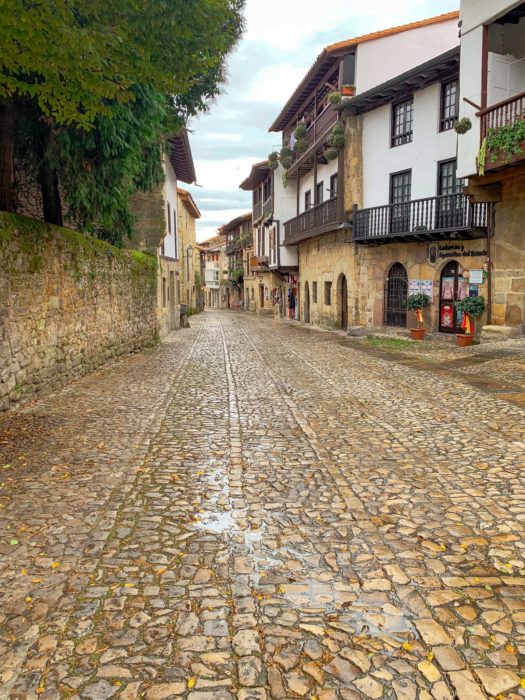
Another village to visit after San Vicente de la Barquera is Santillana del Mar. Yes, I know, Santillana del Mar is quite touristy. However, it’s still a great place to get out and stretch your legs.
This city is also known as the “City of Three Lies,” since it does not have a Saint, is not flat (llana), and is not directly on the Sea (Mar).
Las Arenas to Santillana del Mar: 47.5 miles | a little over an hour **only a 25-minute drive from San Vicente
The village can feel a little “sold out” to tourism, but if you go in with an open mind, the streets are extremely picturesque. Maybe it was because I visited in the off-season, but I really could appreciate the architecture with no crowds.
Due to its touristy nature, maybe try not to eat here, as the food can be really hit or miss.
In my opinion, I preferred San Vicente de la Barquera to Santillana del Mar, but if not in a rush, you could spend a little time in both.
Santillana del Mar is only a 30-minute drive in the direction of Santander.
Return the Car to Santander

Leave the village and return the car to Santander. If you haven’t yet, now that you have no car, spend the night in Santander and enjoy a night of wine and fresh seafood at tapas joints!
Santillana del Mar to Santander: 20 miles | Half an Hour
A Taste of Picos de Europa National Park
In short, this Picos de Europa guide includes a detailed day-by-day itinerary to get a taste of the Picos de Europa National Park. This Picos de Europa road trip crosses all three autonomous communities that make up the diverse, culturally rich Picos de Europa National Park.
This Picos de Europa itinerary is jam-packed with a wide range of activities from riding a cable car to day hikes, and highlights lovely viewpoints and cultural traditions.
Have you been to the Picos de Europa in Spain? Did you fall in love with this spectacular region in northern Spain? Is there a place in this Picos de Europa guide that’s not included on the itinerary that you loved? Let me know in the comments below!
Pack This Post for Later! Pin It!


Disclaimer: There’s a chance this post contains affiliate links, and I receive a small (but grateful) portion of the sale. There’s no extra cost to you, and I only promote things that I use and love.


Wow, looks incredible! I have never heard of Picos de Europa, although I have been to Oviedo before. I will definitely explore more in the North of Spain in the future, thanks for this fantastic itinerary!
Thanks Toni!! Northern Spain is so incredible! I hope to get back and explore more of it in the near future, too! 🙃
Strange, but I have not heard of Picos de Europa National Park before. It looks like interesting place well worth traveling to. Thanks for bringing it to my attention and also a detailed itinerary with accomodation options!
It still is a little hidden gem tucked away in Spain! Thanks for reading!
I’ve been considering visiting this region for a while, thanks to a recommendation from a friend. It looks truly stunning, and perfect for a keen hiker like myself. I love the idea of exploring the mountains by day and tucking into a tapas and a few sidra by night.
Ahhh, yes! Miss those sidra bars. Happy hiking! 🥾
This area of Spain has been on my list for over a year – can’t wait to head up to the north!
Hi Megs, Love this article…sooo informative! I wish I had 4 days to experience it all, but sadly not. I wonder if you might be able to suggest a one day scenic driving itinerary through the Picos de Europa enroute from either Santander or Oviedo to Leon? I already have FOMO thinking about all the beautiful sights I won’t be able to see, but hoping you might be able to suggest a scenic route even if it’s a long day. Would appreciate your input. Thanks
Thanks Donna, I sent a reply via email! Thanks for reading and enjoy the Picos
Hi there, I note that you were there early November. Would you happen to know how the situation is like in early December? Will it be too cold/the weather conditions not ideal to visit the national park?
Hey Jules! I did go in early November and there was some snow in the mornings that did make certain roads in the higher mountains a little slick. Luckily, when the sun came up it all melted off the road. I am not honestly sure about December since the mountains always have a mind of their own. However, in most cases, the areas closer to the coast and not so inland like Cangis de Onís may be more temperate, but still pretty wet. If you decide to go I’d love to hear how December in the Picos was!
Your post is very informative. We’re planning a 4-5 day tour through the region and your writing really helped us in crafting our itinerary. Keep up the good work, Megs! And keep wandering.
Thank you so much Robert!🙏
I truly loved the Picos and know you will, too!! The area is so unlike any place else in Spain.
Enjoy 🏔
Hi Megs, Love this article…sooo informative! I wish I had 4 days to experience it all, but sadly not. I wonder if you might be able to suggest a one day scenic driving itinerary through the Picos de Europa enroute from Oviedo Would appreciate your input. Thanks
Hey Ashley-
So sorry for the late reply. I was just in Spain walking the Camino Frances and I did revisit the Picos on my way out, but didn’t take my laptop. From Oviedo, it’s very easy to reach Cangas de Onis, where it’s possible to visit the roman bridge, cider bars, Lagos de Covadonga, the popular viewpoint Mirador de La Reina, and the Basilica de Santa Maria la Real de Covadonga and the nearby Sanctuary of Covadonga. This is a great one day access from Oviedo and can be done with or without a car. 💙
I’m not sure if you would drive back to Oviedo, but you could also continue into Las Arenas de Cabrales, which is a small town that has access to smaller mountain villages like Ponceboes, Bulnes, Sotres, and even the Cares Gorge! I’m planning on writing a detailed guide for all my new info and hikes! 🏔
Happy Travels
Hello Megs
Massive thank you for your brilliant itinerary! We had a fantastic few days in the Pico’s, the highlight being the gorge walk!!! You helped us make the most of our few days in the mountains. Hope your travels are still going well! Keep blogging! BW Ruth
Thank you so much Ruth! The Picos de Europa National Park is one of my favorite places in Europe. So glad you got to enjoy it, too!
Hi just wanted to say a huge thanks for the Picos de Europas tour. We followed it recently and loved it so much we actually returned back to the Picos again having left! If you have the opportunity an extra day or so in Potes is good to allow more time on Fuente De walks. We stayed at the excellent Camping la Viorna. Also recommendation to start Ruta del Cares from Cain is perfect, Ruta Hostel is basic but great.
Thanks once again for a great itinerary in this lesser known area.
Thanks Paul! That’s so great and thanks for the feedback and suggestion!
I have also returned to the Picos twice now and may return again next month.
They really are a special place 🏔
Hi Megs, Thanks for this informative travel itinerary. We would like to follow your route and spend two days in Potes and are planning on going mid March. What are your thoughts on weather then? I saw that you went in Nov. so we where thinking March is also not a peak time and may be a good time to visit.
Hey Christie-
I think you will love two days in Potes!
I am here in Spain right now (January/Feb) and it has been unusually warm and dry. The weather will always be unpredictable.
Keep in mind that the buses will typically run in the Picos de Europa during Easter weekend which this year (2024) falls at the end of March. Enjoy the Picos de Europa, it is one of my favorite places in Spain. 🙂
Megs
Thank you so much for this post! I’m visiting Northern Spain for the first time but only had a few days and I am so happy that I stumbled on this blog post. It really is helping me make the most of my time there and I appreciate the many hiking suggestions!
You’re welcome! I love the Picos de Europa and the area seems to keep pulling me back each time I visit Spain. This itinerary follows my first trip which is a great taste of the Picos de Europa National Park and all three regions. Enjoy your time! 🥾
What an excellent and informative post!!! Thanks for the sharing !!!
I am planning a motorcycle trip from my home in Portugal to N. Spain in a few months and loved your beautiful and thoughtful blog. I wanted to thank you !!!
Thanks so much Kenny!! Enjoy your journey! 🏍️
Megs
Thanks so much for this great information, using your itinerary when I go in a couple weeks!
Thanks, Kenzie!
Enjoy the Picos de Europa! It’s one of my favorite places in Spain 😊
Megan we will be visiting Spain in November and will only have one full day in Picos de Europa. We are avid hikers and are hoping to do one epic hike in the park. It appears the Ruta del Cares day hike is what is recommended? Do you agree? If so, I need your help with routing. Here are the options I’m considering, do you have a recommendation;
– leave car in Leon and take a taxi to Asturias, spend night in Asturias and hike back to car in Leon (one way on the trail rather than out/back
– exact same thing as above but opposite – leave car in Asturias and hike from Leon the next morning.
– OR do the entire out/back but ensure we start at the ‘best’ end of the trail in case we don’t have time to finish the entire thing, we can turn back early and not miss the most stunning parts of the trail.
At the end of our hike we have to drive to Bilbao for the night.
Thank you in advance for your advice.
Hey Traci-
Thanks for reaching out.
I would agree that the best day hike in the Picos de Europa in November would be the Ruta del Cares. On a clear day, you’ll have incredible views of the mountains without having to risk hiking into the depths of the high mountains in the off-season. However, the mountains are prone to heavy fog, snow, rain, and the elements. Having one day in this window season can be tough and unreliable, the mountains have a mind of their own.
As for driving, if you have to make it back to Bilbao at the end of the night I suggest using Poncebos as your base. That is still almost a 2.5-hour drive with the first hour being through the twisty roads of the mountains. Leaving the car in Caín de Valdeón (Leon) would make the drive back to Bilbao over 4 hours as it’s deeper into the mountains. These roads are narrow and can have large stones so I don’t suggest driving them in the dark.
I also think Poncebos would be a good option because, in the case of bad weather, you could take the funicular up to Bulnes and walk around or take a cheese cave tour in Las Arenas de Cabrales. Or simply eat a traditional meal and sample the cider of the region. If you have nice weather, you can venture on the Ruta del Cares and turn around when you feel called! It’s such an epic hike, but with bad weather, the hike wouldn’t be as enjoyable.
I just returned from my third trip from the Picos de Europa, and there are tons of great hikes in the lower mountains, too! Around Potes and the Camaleño valley find some beautiful hikes and villages like Lebeña and Mogrovejo. There are literally hundreds of hiking routes between the high and low mountains.
Enjoy your trip and I hope this helps!
Megs
Thank you for this wonderful itinerary and write up. Did you do this same itinerary or one close to it when you took public transportation? I would be very interested in understanding what/where I can access with relative ease using buses and taxis. Thank you Megs! Love reading your travel blogs!
Hey Beth!
Thanks for your comment! So, with public transportation, I would stick to one area of the Picos de Europa and focus on the nearby hikes and excursions.
For example, you could go to Cangas de Onis (Asturias) and reach both Lagos de Covadonga and the Covadonga Sanctuary, or choose the challenging hike to the Mirador de Ordiales. Cangas de Onis has a few small villages nearby to explore and lots of places to sample sidra.
If you really want to hike, I would suggest Las Arenas de Cabrales (Asturias) or Poncebos. You can access many of the beautiful mountain villages in Asturias, hike the Cares Gorge, and visit Bulnes. You can access many hikes from Poncebos either on foot, by bus, funicular, or try to share a taxi (more expensive). Poncebos is one of the easiest places to access the high mountains.
Alternatively, Potes (Cantabria) is an easy option to explore the Picos de Europa. There is a bus that runs infrequently between Potes and Fuente De where you can take the cable car and hike in or around the mountains. This is a great way to experience the high mountains, but the weather here can change abruptly. If focusing on hiking, I would maybe suggest sleeping near Fuente De in one of the nearby villages. I stayed at Tourist Hostel Briz in Espinama and had a nice visit, even though I had to cancel some of the hikes in the high mountains due to the weather. I also loved a day trip to the small village of Mogrovejo (walked there from the Monastery in Potes).
If you have more time, you could plan on utilizing public transportation between the three main hubs, but sometimes they run so infrequently or require a transfer to a larger city, so travel time between the different regions of the park can be tedious.
If you have three days and want a nice taste of the foothills, the Camino Lebaniego allows you to walk from the coast to Potes. From there you could walk or hop a bus to Fuente De to experience the high mountains.
Hope this helps, and enjoy the Picos!
Megs
Thanks! Great information. I am looking for information on the Arco de Europa, a 60-ft. limestone natural arch somewhere in the park. Do you know of it? Thanks.
Hey Rich, so sorry for the delayed response. I know there is a large arch along the Ruta del Cares, closer to the Poncebos side of the trail. I am not sure if that is the arch you are looking for. There is a famous arch in Cantabria known as the Ojos del Diablo, but I don’t think that is the one you are refering to.
I’ve attached an image here of the one on the Ruta del Cares.
Megs