
20 Most Common Camino de Santiago Frequently Asked Questions (FAQ) & My Best Answers
The Camino de Santiago is one of Europe’s most famous pilgrimage routes and is often called a journey of a lifetime. There are numerous Camino routes, paths, and ways, but all roads lead to the Cathedral de Santiago de Compostela. The famous Cathedral in Spain is the alleged final resting place of the Apostle St. James.
Some people plan for years for this soul-shaking journey. Others feel called to walk, and within a few days, they are on their way. That’s the magic of the Camino de Santiago, everyone is simply walking their own way, choosing their own adventure.
With something new and exciting, there can be lots of questions. In all the Camino forums and groups, there are common recurring Camino de Santiago Frequently Asked Questions (FAQ).
The Camino de Santiago FAQ ranges from the most popular Camino routes to packing lists and more.
The Camino de Santiago is a multi-day pilgrimage, and it can be nerve-wracking to start the journey. When trying something outside your comfort zone, there is always going to be a range of emotions, from excitement to fear and “all the feels.”
From standard route questions about albergues to Camino budgets, these are the top Camino de Santiago frequently asked questions.
Table of Contents
- General Camino de Santiago FAQ
- Tips for Packing for the Camino de Santiago
- Where to Sleep on the Camino FAQ on Albergues & Accommodations
- Camino de Santiago FAQ on Budget
- More Unique Camino de Santiago FAQ
- One More Note…..
- Conclusion | Top Camino de Santiago FAQ
General Camino de Santiago FAQ
Here are some of the most frequently asked questions about basic Camino de Santiago information.
1 | Which Camino Route is Best for First-Time Pilgrims?

Hands down, the Camino Frances, or the Way of St. James, is the most popular Camino de Santiago route. Each year, more than 50% of pilgrims walk the Camino Frances. However, this doesn’t mean it has to be the first route you walk.
Pilgrims seem to gravitate to the Camino Frances route because it has one of the best infrastructure systems compared to alternative Camino routes. The Camino de Santiago French Way, has been walked for centuries, so the path is trotted and worn.
There are tons of Albergues on the Camino Frances, restaurants, cafes, and historical sights. The Camino Frances is extremely well-marked.
The second most popular Camino de Santiago route is the Camino Portuguese. There are numerous routes like the Camino Portuguese Central Route or the Coastal Way both of which can include the Camino Variante Espiritual.
While the Camino Portuguese starts as far south as Lisbon, Portugal, many pilgrims begin their journey from Porto. The Camino Portuguese Coastal route is also one of the flattest paths, making it appealing for those worried about the physicality of the journey.
Some pilgrims are seeking solitude and more isolation. Since the Camino Frances is such a popular route, many pilgrims opt for more solitude on different Camino routes like the Camino Norte or the Via de la Plata, and the Camino de Invierno.
Of course, things like how much time you have to walk and your personal physical abilities will ultimately affect which route you choose.

There is no “right” first Camino de Santiago pilgrimage.
☛ Camino de Santiago Tip | Choose the Camino route that best fits into your schedule, interests, and physical abilities
2 | What are the Most Popular Camino de Santiago Routes?
The three most popular Camino de Santiago Routes are as follows:
- Camino Frances (The Original Way of Saint James)
- Camino Portuguese (Central & Coastal, specifically from Porto)
- Camino Inglés (English Way)
As these are the most popular Camino de Santiago routes, they can also be the most crowded.
3 | Where Does the Camino de Santiago Start?

Some say the Camino de Santiago starts as soon as you leave your house. Those looking to walk the Camino de Santiago can start just about anywhere they wish on the route they choose to walk.
These are the most popular Camino de Santiago starting points on all the routes. It is becoming more common that most people don’t have time to walk for weeks, which is why there is a surge of pilgrims only walking the final 100 Km of the many Camino de Santiago routes.
Top 5 Most Popular Camino Starting Points
- Sarria Spain (Camino Frances)
- Porto, Portugal (Includes all routes of the Camino Portuguese)
- Tui Spain (Camino Portuguese Central)
- Saint-Jean-Pied-de-Port France (Camino Francés)
- Ferrol Spain (Camino Inglés)
Almost 40% of pilgrims start the Camino de Santiago from Sarria (Camino Frances) or Tui (Camino Portuguese), which marks the final 100 Km for the two most popular Camino de Santiago routes.
4 | What are the Credencial and Compostela?

Those pilgrims who wish to receive an official Compostela for walking the Camino de Santiago will need a Credencial del Peregrino. The Credencial is a booklet that works like a pilgrim’s passport. Each day, collect stamps in the Pilgrim Passport, or the Credencial.
Upon arrival into Santiago de Compostela present the Credencial to the Pilgrim Welcome Office to receive a completion certificate or the Compostela. The original Compostela is written in Latin.
Pilgrims must collect at least 1 daily stamp in their Credencial. Stamps can be found at every single Albergue and typically every accommodation on every single Camino route. Sometimes stamps can be attained at main tourist attractions, cafes and restaurants, cathedrals and churches, and points of interest along the way.
Each Camino route has its own Credencial del Peregrino booklet, so it’s usually possible to pick up the Credencial at designated places at the starting point of your Camino route. Don’t worry, if you don’t start from an “official starting point” there are other places and chances to pick up a booklet.
Many albergues, churches, and tourist information centers have credencials or can point you in the right direction to find one.
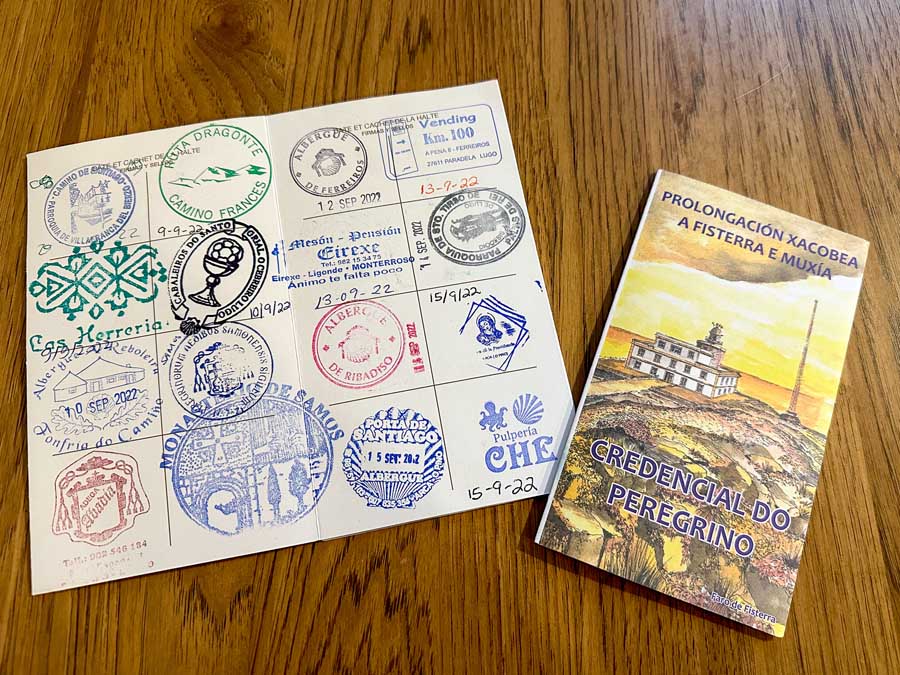
The standard donation to obtain the Credencial del Peregrino booklet is €2 or €3
Be mindful that the last 100 kilometers on any Camino de Santiago route requires 2 stamps per day. The good news is that there are a lot more places offering stamps. I even got a stamp from a vending machine at the 100 Km marker on the Camino Frances!
As more pilgrims begin to walk, the rules are starting to change. Make sure to check in with up-to-date requirements on stamps and walking guidance. This is the Cathedral’s official release on the Credencial.
The Credencial del Peregrino will be one of your most beloved souvenirs of the Camino de Santiago. I always try to get as many stamps as possible to work as a souvenir of my journey.
☛ Camino de Santiago Tip | The Credencial del Peregrino allows pilgrims to receive discounted entrance fees for different attractions and museums. This is especially true for the many Camino de Santiago Cathedrals on the routes
5 | How Long Does it Take to Walk the Camino de Santiago?

Well…. that depends on which Camino de Santiago route you choose. Also, will you finish the Camino de Santiago route in one long walk, or break it up over multiple trips? Anything is possible.
Most pilgrims walk an average of 12 -18 miles per day (20 – 30 Km). This usually equates to about 5 – 7 hours of moving time. The days on the way will be longer due to breaks, lunch, stops, and simply enjoying the journey.
Popular Camino de Santiago Routes with Average Distance & Duration
- Camino Frances (Way of St. James) | Distance: 779 km (484 miles) / 33 Days
- Sarria (Last 100 Km of Camino Frances) | Distance: 115 Km (71 miles) / 5 Days
- Camino Portuguese (Central from Porto) | Distance: 252 Km (157 miles) / 10 Days
- Camino Portuguese (Coastal from Porto) | Distance: 280 Km (174 miles) / 12 Days
- Tui (Last 100 Km of Camino Portugués) | Distance: 120 Km (75 miles) / 6 Days
- Camino Inglés (English Way) | Distance: 120 Km (75 miles) / 5 Days
- Camino Primitivo (Original Way) | Distance: 320 Km (200 miles) / 14 Days
- Camino del Norte (North Coastal Route) | Distance: 830 Km (515 miles) / 35 Days
- Via de la Plata (Silver Way) | Distance: 1,000 Km (621 miles) / 42 Days
- Camino Invierno (Winter Way) | Distance: 267 Km (166 miles) / 11 Days
There is no right or wrong way to walk the Camino. Some pilgrims walk much slower while others move faster. Also, some pilgrims choose to take rest days where they take planned downtime in cities and towns. On rest days, pilgrims opt not to walk the entire day.
Other pilgrims tack on Camino detours, which can add extra miles. There are also divergent paths that offer the chance to join different Camino routes. Always listen to your body.
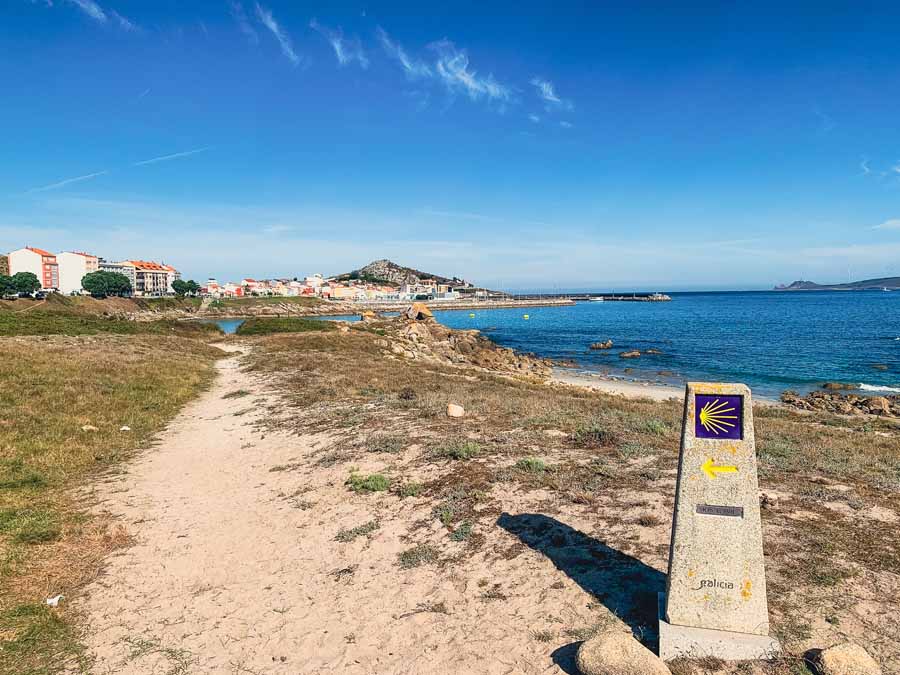
If you have the time and resources, don’t miss a chance to walk the Camino Finisterre Muxia to the “End of the World.” This route starts from the Cathedral in Santiago de Compostela and continues to the Death Coast.
The Camino Finisterre typically takes 3 – 5 days and is an additional 90 Km (56 miles). The Camino Finisterre can end in Fisterra or Muxia. There is also a day walk that connects these two very different coastal villages.
6 | Do You Have to Be Religious to Walk the Camino de Santiago?
No, the Camino de Santiago can be walked for any reason. There is no permit or religious requirement.
The Camino can be walked for personal reasons, to heal, to celebrate, to mourn and grieve, to pause, or to reflect. You do not need to be Christian, religious, or affiliated with any kind of organization to walk the Camino.
For many, the Camino de Santiago is a spiritual journey or an intentional pause.
In order to receive the Compostela for free, the Camino de Santiago must be walked for spiritual or religious purposes. If walking for other reasons, the Compostela can be purchased for 3 Euros. This is basically receiving the Distance Certificate, which most pilgrims choose to purchase anyway.
7 | When is the Best Time to Walk the Camino de Santiago?

The Camino de Santiago can be walked any time of the year. Be mindful that if walking during the off-season, you may have to choose different routes and accommodation will be more scarce. You may also not run into many pilgrims, so it can be pretty lonely and isolating… but maybe that’s what you are seeking.
The most popular time to walk the Camino de Santiago is from April (Easter) to October. This is when most pilgrims choose to walk, as many Albergues, restaurants, and points of interest are open. This also coincides with the busy, or high season.
Easter week (Semana Santa) is an extremely busy time for local Spanish people to walk. It will be essential to book places to sleep in advance.
Summer months in Spain can be extremely hot. Keep that in mind when walking through arid spots that have little shade and tree coverage, like the Meseta on the Camino Frances.
During the winter months from November to March, many pilgrim accommodations can be closed. However, there will be alternative places to stay along the way. During the off-season, private accommodations will be significantly cheaper than during high season.
In my opinion, walking during the winter months is one of my favorite seasons to walk the Camino. Prepare physically with a heavier winter packing list and mentally for a quieter and reflective walk.

During winter, there can be snow. On some routes, mountain paths will be closed, like the famous Napoleon route from Saint-Jean-Pied-de-Port France to Roncesvalles Spain. Expect for coastal routes to be extremely rainy and wet, but green. This is also true for the entire region of Galicia, which has rainy winters.
There are pros and cons of walking the Camino de Santiago during high and low season.
8 | Is it Safe to Walk the Camino de Santiago as a Solo Female Traveler?
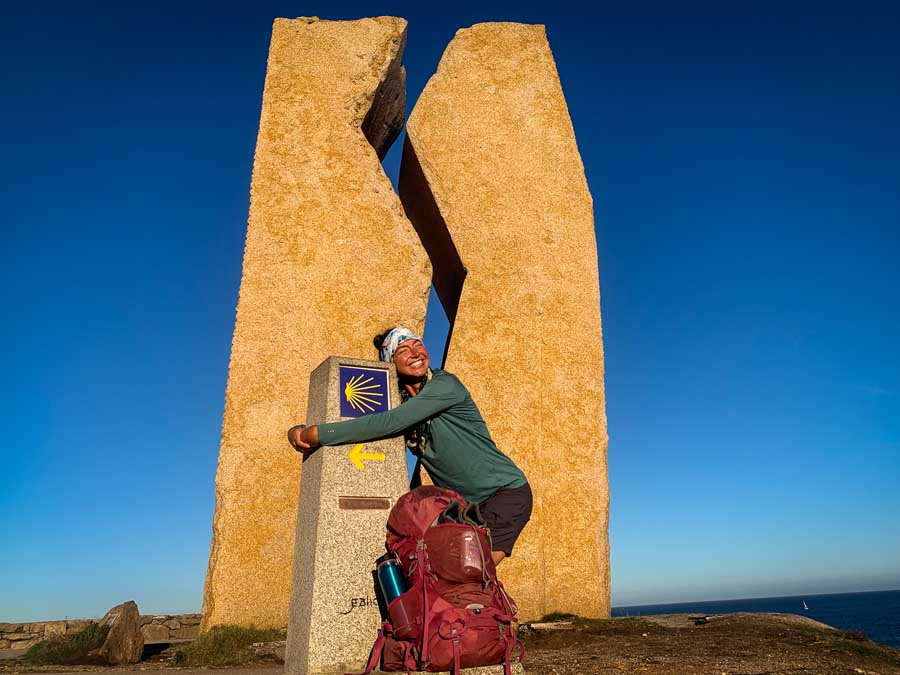
In life, there are risks in everything we do. With that being said, serious crime is not an immediate threat or issue when walking the Camino de Santiago. However, the Camino is not immune to misfortunes.
I walked the Camino de Santiago as a solo female traveler and never had an issue. I was not subject to any threats or any form of harassment. Of course, always listen to your gut, follow your intuition, and be mindful of your surroundings, especially if consuming alcohol. Avoid leaving any drink unattended.
One of the biggest safety issues on the Camino is petty theft. For this reason, try to keep all your important documents, money, and cards on you at all times. Packing a useful item like a neck pouch, fanny pack, or money belt is a good idea. Never leave your valuables unattended.
I always carry a Swiss Army Knife with me, mostly for all the multi-purpose tools, but it can also provide peace of mind.
Avoid walking at night, not just because of people, but because there are wild animals like bears and wolves living in the wilderness. If walking before the sunrise or after the sun sets, carry a headlamp.
Many women walk the Camino de Santiago alone. In fact, I saw more solo female walkers than solo men walking. Like anywhere you travel, be aware of your surroundings.
9 | What Should I Pack for the Camino de Santiago?

The beauty of walking the Camino is that you don’t need to carry much. Less is more. It’s advised to try not to carry more than 10% of your body weight in your bag.
When it comes to packing for the Camino, carry a comfortable backpack, walk-in supportive and broken-in shoes, and bring only what you need. As you walk, you may find that you end up giving away items that you aren’t using.
Good hiking socks are essential for any Camino packing list. Your feet are the most important piece when walking the Camino! In my opinion, it’s best to carry Merino wool hiking socks to help keep feet dry while allowing them to breathe.
A reusable water bottle is essential and trekking poles are useful to help prevent injury. I always carry a simple first-aid kit with at least one Emergency Blanket. It’s always better to be prepared and Emergency Blankets can be life-saving.
If planning on sleeping in Albergues, bring a lightweight sleeping bag or a sleeping bag liner. Although expensive, some pilgrims swear by also packing a warm down comforter to pair with a liner. Some of the Albergues don’t provide towels, so a lightweight, quick dry towel is also necessary for sleeping in Albergues.
There is a chance to hand-wash and dry clothing. Two walking outfits are more than enough. I tend to lean towards lightweight clothing that has a dual purpose and is quick-drying.
A Buff adds an extra layer during cold mornings and assists with bug and sun protection. Many pilgrims prefer a baseball cap or a quick-dry floppy sun hat.
Your shoes and backpack are the two most important gear items, so find what works best for your body. I prefer walking in Altra Lone Peak Trail Runners, and an Osprey backpack has always been my companion on every Camino route.
Where to Sleep on the Camino de Santiago
The following questions focus on Camino de Santiago FAQ around where to sleep and albergues.
10 | Do I Need to Sleep in an Albergue?

No, you do not need to sleep in an Albergue when walking the Camino. However, one of my best Camino de Santiago tips is to sleep in an Albergue at least once. It showcases the true spirit of the way and creates a kind of camaraderie.
Albergues are the most common places to sleep on the Camino de Santiago. Albergues are kind of like pilgrim hostels that usually have large open sleeping spaces filled with bunk beds. Bathrooms are shared and there is usually a communal space and a kitchen.
Albergues are very social and are one of the best places to meet pilgrims. You are never alone in an Albergue. 😉
However, we are human and sometimes we need space.
Unique Types of Accommodations on the Camino de Santiago
- Hostels can be found throughout Europe and have shared rooms and bathrooms
- Casa Rural are equivalent to a bed and breakfast and offer meals
- Pension are simple budget hotels that provide a private room and usually include breakfast
- Hostales should not be confused with Hostels. Hostales are no-frills hotels that have basic facilities
- Paradors are fantastic and unique hotels found across Spain that are formerly historically significant buildings that have been immaculately restored. For example, the Hostal Reis is the first pilgrim hostel in Santiago de Compostela, but now a luxury stay in the main plaza.
11 | Do I Need to Pack a Sleeping Bag for the Camino de Santiago?
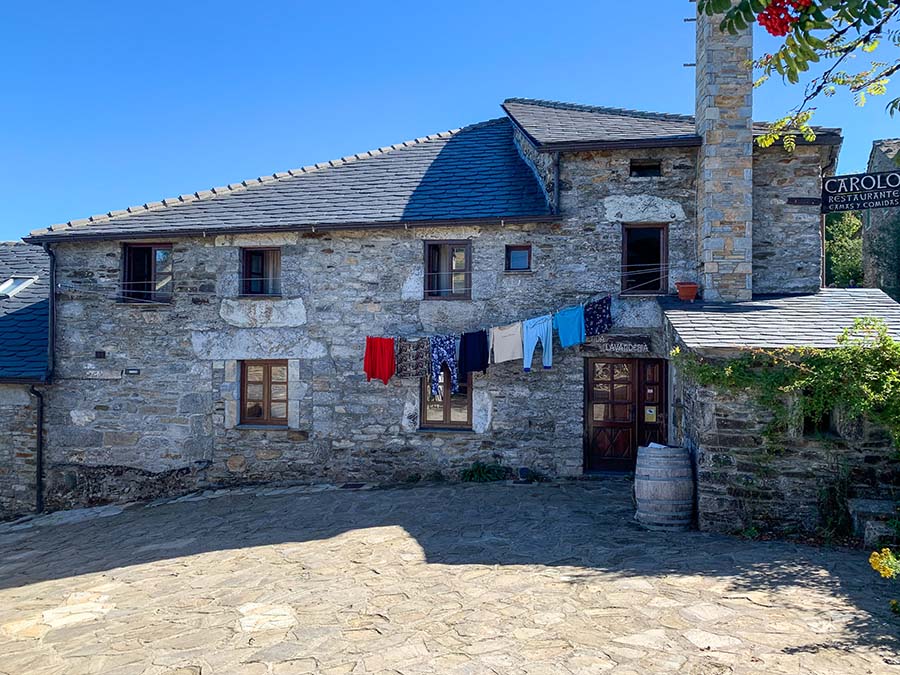
If planning on sleeping at the Municipal Albergues (Public) and Religious-affiliated Albergues, you will need to carry either a sleeping bag or a liner for the beds. Municipal Albergues do not provide sheets, so a lightweight sleeping bag or sleeping bag liner is a must-pack item.
Some pilgrims like to travel with their own travel sheets.
The sleeping bag vs. liner debate can only be answered once you decide what season you walk and how you sleep.
For the colder shoulder season months, I recommend at least a lightweight sleeping bag. Since COVID, fewer Albergues are providing extra heavyweight blankets. If you sleep cold, some suggest a warm down comforter.
For a super lightweight option, the Sea to Summit Spark Sleeping Bag is a great option. I walk with this sleeping bag during all four seasons.
If walking during the summer months, or if you sleep hot, a liner could suffice. Even walking in August, I utilized my sleeping bag more than I thought I would.
12 | Do I Need to Prebook Accommodation on the Camino de Santiago?

This is probably the most frequently asked Camino de Santiago question.
Pilgrims can be very concerned about where to sleep at the end of the day. I get it. After walking 15 miles, it can seem like 3 more miles to the next village is impossible. In the worst-case scenario, there are always taxis, buses, and public transportation options that can transfer you between towns.
Personally, I did not book any Albergues when I walked any of the main Camino routes. I even walked during the busy months of June, August, and September. Each day I woke up, walked, listened to my body, and stopped when I felt like I should.
Not reserving an accommodation each day gave me the opportunity to let the magic of each day unfold before my eyes.
There will always be a bed. It may not be in the albergue you had hoped for or even the town you wanted to stay in, but there will always be a place to sleep.
Some people prefer to book their entire Camino journey, which is also great, too.
A good rule of thumb is to book the first few nights of your personal Camino route to get a feel for what to expect and then go from there.
The Camino de Santiago is becoming busier, and many more people prefer to book in advance.

Walk the Camino your own way and decide what works best for you.
On every Camino de Santiago route, there are different accommodation options from hostels, pensions, guesthouses, hotels, and apartments.
➜ Booking.com is an extremely useful app for pilgrims who want the security of knowing where they are sleeping each night.
Remember that Municipal Albergues do not allow reservations. The Public Albergues should be one of the first places to check in a town if you don’t have a reservation. Remember that not all towns have Municipal Albergues.
Some of the lesser-known routes also have limited reservations or don’t have staff on-site. This is typically common on more mountainous routes like the Camino San Salvador, Camino Leganiego, and Camino Vadiense. Many of these albergues are found in small communities without services, so you must also book meals in advance to ensure they have enough food.
13 | What is the Average Cost of Albergues on the Camino de Santiago?

The best thing about sleeping in Albergues is that they are very budget-friendly. Most Albergues range from €8 to €20 a night per bed.
Typically, Municipal Albergues are cheaper than Private Albergues. Many of the Municipal Albergues do receive funding from the government or private investors, which helps curb expenses. The Municipal Albergues are also only reserved for pilgrims walking the Camino de Santiago.
In the region of Galicia, most of the public Albergues are run by the Xunta (government). All of the Xunta Municipal Albergues in Galicia are €10 a night. Do take note that the Xunta Albergues all have beautiful kitchens, but most do not supply a single cooking vessel or utensil. The items were removed during COVID and never returned, which is a huge bummer and a waste of resources.
Public Albergues are more like hostels and range in price depending on season and location. In major cities during high season, the cost of Albergues can rise significantly and be harder to find. Remember that public albergues are open to all travelers and not just pilgrims.
There are also donativo albergues that rely solely on donations. Some of my favorite albergues on the Camino have been donativo, like Bendueños on the Camino de San Salvador. Donativo does not equate to free, but rather you are paying the expenses of future pilgrims, like those who have walked before you, have done for you.
14 | Are There Bed Bugs on the Camino?
Yes, there can be bed bugs along the Camino de Santiago routes, but they are not limited to the Albergues. No place, no matter how clean it is is not immune to the possibility of bed bugs.
Some people carry a bed bug spray that can be picked up at pharmacies or spray their clothes and personal items with Permethrin before they depart. Personally, I prefer to avoid sprays with chemicals,
One of the best ways to avoid bed bugs is to prevent them.
Travel Tips for Preventing Bed Bugs
✔ DO NOT put your backpack or clothing on the bed for any reason
✔ Keep your backpack a good distance from the bed and other pilgrim’s backpacks
✔ Silk liners can help prevent bug bugs
✔ Check your mattress. Oftentimes, bed bugs can leave behind a reddish coloring on the mattress. This is an official source on how to best check for bed bugs.
How to Handle Bed Bugs on the Camino
✔ If you notice bites pack up all your items like your sleeping bag/liner, and clothing you slept in, and put them in an air-tight plastic bag. If you don’t have immediate access to a washer, let the bag sit out and bake in the sun. Wash all the items on warm, and dry thoroughly on HIGH heat.
💬 Real Talk | I had bed bugs once on the Camino route and did not have immediate access to a washer. I kept all my compromised items double-bagged in a black plastic bag and anytime I took a break during the day I would set the bag in the hot sun. As soon as I was able to access a washing machine, I washed all my items, dried them in the drier on high, and had no issues.
15 | Can I Camp on the Camino de Santiago?
This is one Camino de Santiago FAQ that comes up again and again.
Technically, wild camping is illegal in Spain. It is possible to camp in designated campsites, but oftentimes camping sites are few and far between. On the Camino Frances, there are very few official designated campsites.
Ditch the extra weight of camping gear and help support the local Albergues and businesses that rely on pilgrims.
Albergues are extremely affordable and have many services like cafes, restaurants, laundry facilities, and more.
Camino de Santiago Budget FAQ

Here are some of the top Camino de Santiago FAQ about money.
16 | How Much Does it Cost to Walk the Camino de Santiago?
Personally, I spent around 30 – 40 Euros per day walking the Camino Frances. Most days I was well under that budget, but I always travel on a budget.
I slept in an albergues every night and ate one pilgrim meal a day. I did not cook in the albergues, but did have a lot of lunch picnics and snacks so I bought groceries and snacks.
Below is the budget of my first week on the Camino Frances in 2022.
🥾 Saint Jean Pied de Port France to Najera Spain | 7 Days | 125 Miles (201.5 KM)
| Expense | Euros (€) |
| Sleeping | Private & Municipal Albergues | €67 |
| Restaurant | Cafes, Pilgrim Meals & Tapas Bars | €100 |
| Groceries | Snacks & Picnic Items | €46 |
| Donations | €3 |
| Entrance Fees for Attractions | €5.50 |
| Laundry | €1.50 |
| Pharmacy | €10 |
| Total | €233 |
My first week on the Camino de Santiago cost me €233 for 7 days. That means each day I averaged around €33. Some days I spent more and some days I spent less.
I walked the Camino Frances in 31 days, which means it took me less than 5 weeks to walk the Camino Frances. I spent around 1,000 Euros for my entire journey on the Santiago de Compostela. This does not include my flight from the USA to Spain.
Since then I have walked a Camino de Santiago each year and even during 2024, my expenses were around the same amount.
17 | How Much Cash Should I Carry on the Camino de Santiago?

I never used my credit card while walking the Camino de Santiago. I always used Euros, which I pulled out from ATMs with my debit card along the way. I never had a problem finding an ATM along the Camino de Santiago. It is not necessary to carry a lot of cash on hand.
Typically, I would pull out €300 max at each ATM withdrawal and then stop en route when I needed to replenish my funds.
There are some places that accept credit cards, especially in the larger cities.
Remember, keep your money on you with a Neck Pouch or Fanny Pack. Never leave valuables unattended in the Albergues
More Specific Camino de Santiago FAQ ‘s
Here are some more Camino FAQ that don’t really fit in any other category.
18 | Can I Walk the Camino de Santiago With a Dog?

Would you believe me if I said this is one of the most common Camino de Santiago FAQ?
Many people are close to their animals and want to include their dogs on the Camino de Santiago. The bottom line is that it is possible to bring along your pooch, but most people do not recommend walking the Camino in this way.
Service dogs are allowed in Albergues, but Emotional Support Dogs and companion animals are not allowed in most. This can make walking the Camino quite difficult and a lot more expensive. You must find and pre-book accommodation and search harder to find places that allow dogs.
Additionally, walking the Camino is a gift of self-love. It is an act of filling your cup. Oftentimes, while caring for a dog, it is easier to stray from your purpose (healing, grief, celebratory).
I did meet people walking the Camino who did bring their dogs, but they did mention that accommodation issues were one of the biggest challenges. However, there are plenty of people who have walked the Camino with their four-legged friend.
If you do decide to walk with your dog, make sure it is fit enough and that it can walk longer distances each day. Care for their paws and ensure that they have enough food to complete the journey. Walk early to avoid the afternoon heat and take plenty of water breaks.
Be mindful of their paws on hot and rugged surfaces. There is more concrete and pavement than you think on the Camino.
You know your dog best.
APACA & the Camino

In Galicia, you may notice stickers with dogs and the APACA. This is the Association for the Protection of Animals of Camiño and they are raising awareness of abused and mistreated animals along the way. They also help with lost dogs and try to help adopt stray and abandoned dogs.
APACA provides helpful resources and tips if you are considering walking the Camino with a dog, including vets and accommodation options.
The APACA also created a fun Canine Credential. Dogs can also get stamps in their credential and receive an official Canine Compostela at the Pilgrim Center in Santiago de Compostela.
19 | Are There Camino de Santiago Walking Tours?
Yes, there are companies that help with Camino de Santiago tours.
Be mindful that most guided tours of the Camino de Santiago only include the last 100 km from Sarria to Santiago. They also typically cater more for self-guided walks with accommodation and route planned in advance.
➜ 7 Day self-guided Camino de Santiago tour from Sarria to Santiago
➜ 8 Day Camino de Santiago from Tui to Santiago de Compostela
There are also Camino tour companies that offer planned itineraries. These tours take care of all the “behind-the-scenes stuff,” like luggage transfers and booking beds. SantiagoWays is a popular Camino company along with Camino Ways and Ultreya Tours
One More Note…
Once the Camino de Santiago calls to you, there really is no way to brush it aside. It’s time to put one foot in front of the next and walk. Oftentimes, people are their hardest critics, and we judge ourselves the hardest.
20 | I’m Too [Fill in the Blank] to Walk the Camino

This is one of the biggest reasons people don’t walk the Camino de Santiago. “I’m too old… I’m too fat… I’m too out of shape.”
The magic of the Camino is that you are enough. Always.
The Camino is for everyone. If you are out of shape, then maybe walk shorter days. If you are worried about carrying the extra weight of the backpack, send it to your next location, and don’t walk with the extra weight. If you are worried about your age, well… you aren’t getting any younger than you are at this moment.
Of course, always know your abilities and limitations. Those who are “out of shape” can start walking daily and see the effects that simply walking outside has on the body, mind, and soul. Spending time in nature every day is seriously the best medicine.
I have never met one single person who regretted walking the Camino de Santiago. There is always some lesson or medicine that the intention of walking provides.
Never think that you are too “whatever” to walk the Camino. Trust the way and all that it provides.
Conclusion | Top Camino de Santiago FAQ
These are some of the top Camino de Santiago frequently asked questions. These Camino FAQs include Camino route overviews, what to pack for the Camino, tips for sleeping in albergues, and touches on how much to budget to walk the Camino de Santiago.
There will always be questions, but most of the answers will be found along the way!
Do you have a Camino de Santiago FAQ that isn’t on here? Let me know in the comments below!
Pack This Post for Later! Pin It!


Disclaimer: There’s a chance this post contains affiliate links, and I receive a small (but grateful) portion of the sale. There’s no extra cost to you, and I only promote things that I use and love.


