
The Ultimate Porto Pilgrim Guide for Planning & Walking the Camino Portugués (2026)
The Camino Portugués route is the second most popular Camino de Santiago route to walk. Last year, around 36% of all pilgrims arriving in Santiago de Compostela walked the Camino Portuguese routes of the Central, Coastal, and Litoral. Each year, this number continues to rise steadily.
The Camino Portuguese route starts from Lisbon, but almost all pilgrims opt to start in Porto. Portugal’s second city is ideal for starting the Camino Portuguese Way, with a strong pilgrim infrastructure, a Pilgrim Office, an international airport, and numerous public transportation options.
The Camino Portuguese is a fantastic alternative pilgrimage route for those who don’t have the time to complete a longer Camino route like the Camino Frances. The Camino Portuguese can typically be completed in 10 days to two weeks, depending on the route and distance walked each day.
This complete guide is for pilgrims planning to walk the Camino Portuguese from Porto. In this comprehensive pilgrim guide, find where to start in Porto, significant spots for pilgrims in Porto, where to sleep in Porto, things to see and do, and handy places to grab last-minute supplies.
Here’s a comprehensive Porto pilgrim guide for those planning to start the Camino Portugués route from Porto, Portugal.
Table of Contents
- Why is the Camino Portuguese Significant?
- How to Get to Porto Portugal
- Points of Interest for Porto Pilgrims
- How Long Should Pilgrims Spend in Porto?
- Last Minute Supplies & Gear Shops in Porto
- Places to Stay in Porto for Pilgrims
- Things to See in Porto
- Where to Start the Camino in Porto
- Three Different Routes to Leave Porto on the Camino Portugués
- Alternative Starting Points from Porto on the Camino Portuguese
- Overview | Pilgrim’s Guide to Porto Portugal
The Significance of the Camino Portuguese
The Camino Portugués has one of the most significant historical cities on any Camino route, Padrón. Padrón is around 25 Km from Santiago de Compostela and is found on one of the final stages of the Camino Portuguese.
Padrón is so important to the Camino de Santiago pilgrimage for two reasons. It was here that Saint James arrived in Spain to spread the gospel. He was sent to current-day Galicia, Spain, to preach Christianity in a deeply rooted Pagan belief system.
The second and more well-known story about Padrón is this was where the stone boat that was carrying the Apostle of Saint James’ body landed back in Spain. James the Apostle had returned to Jerusalem, where he was beheaded.
He was the first disciple to be martyred, and his loyal disciples left with his body to find a safe place to bury him. The “stone boat” carrying his body was tied up to a mooring post in Iria Flavia near current-day Padrón.
The mooring post can still be seen at the Church of Santiago Apóstolo de Padrón.
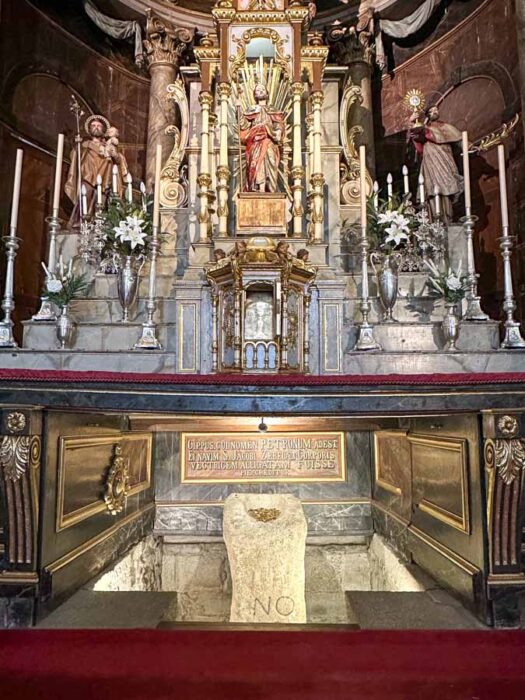
The legends continue of how his body was eventually buried and hidden, only to be discovered in the 9th century. It was at this time that his body was said to be moved to a tomb underneath the Cathedral of Santiago de Compostela.
Ultimately, this is the reason the Camino de Santiago is a pilgrimage route. Pilgrims follow the way of Saint James to seek healing and clarity, and for some to seek forgiveness of their sins. Others are looking for answers or closure. Each person walks their own journey.
Pilgrims have been walking for centuries to stand at the tomb of St. James. All roads lead to Santiago de Compostela. However, some modern-day pilgrims reach Santiago de Compostela and feel inspired to walk to the Ocean and stand at the “End of the World” on the Camino Finisterre Muxia. Their journey ends at the seaside at either the village of Finisterre or Muxía.
Another significant route can be found on the Camino Portuguese. The Espiritual Variante is a deviant route from Pontevedra on the Portuguese Way. Those interested in the journey James took after death on the stone boat can follow the same alleged route. However, the Spiritual route is incredibly special and worth the walk, no matter what your beliefs or reasons for walking are.
The official term for moving Saint James’ body via the stone boat is referred to as the traslación. Those walking the Camino Espiritual can take a boat from Vilanova de Arousa on the final day of the alternative route to Padrón.
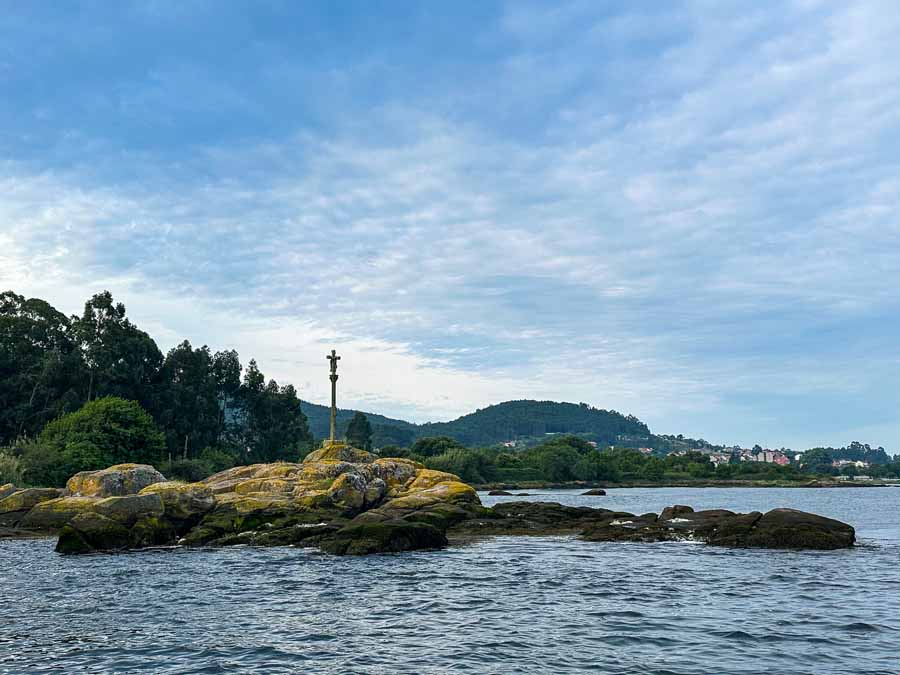
Follow the 17 stone crosses via boat through the Ría de Arousa to the River Ulla and walk the final way of the Apostle James. The Way of the Cross is the only official maritime path on any Camino de Santiago route.
As you can see, the Camino Portugués is a significant Camino de Santiago route.
How to Get to Porto Portugal
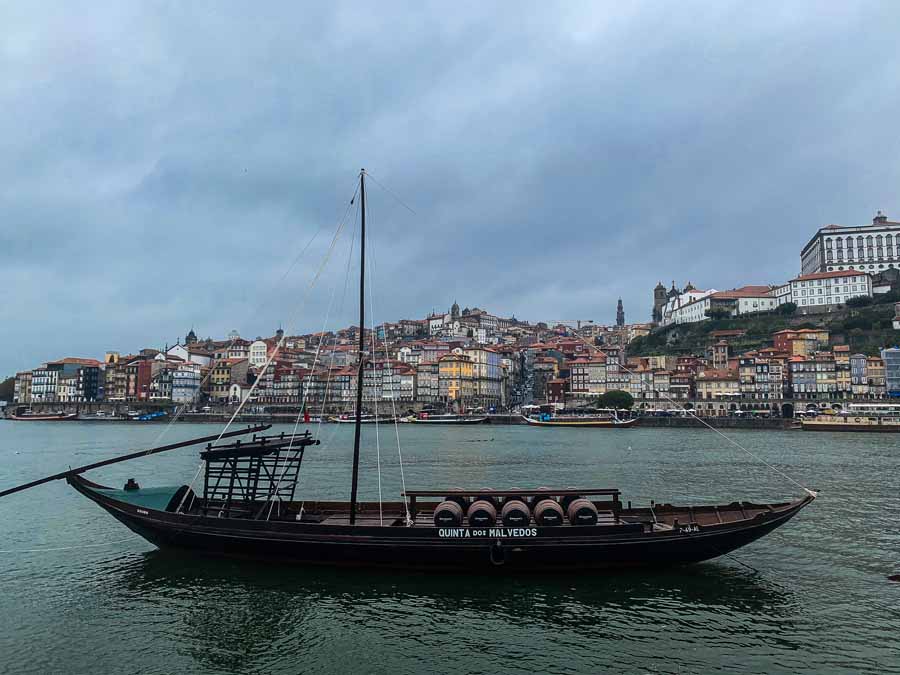
The Camino Portuguese route officially starts from Lisbon, but most pilgrims start their journey to Santiago from Porto, Portugal.
Unlike the Camino Francés, which begins in the small mountain village of Saint-Jean-Pied-de-Port, Porto is Portugal’s second-largest city. This popular place to visit in Portugal offers pilgrims tons of infrastructure, public transportation options, and an international airport, making it extremely convenient to reach.
Remember, Oporto is the Portuguese spelling for Porto, so when searching for any type of tickets it may be listed under Oporto rather than Porto.
Porto Airport | Francisco Sá Carneiro Airport
Porto Aeroporto is the international airport north of the Porto Historic City Center. The Porto Airport code is OPO and is serviced by over 30 airline carriers. There are frequent arrivals and departures offered by budget airlines, such as EasyJet, Ryanair, and Wizz Air.
Major US Airlines like United also offer flights to Porto. Spain’s Iberia airline flies throughout Portugal, and the Portuguese airline TAP has frequent flights.
I flew from the Azores after spending three weeks exploring and hiking on a few of the Azores Islands. SATA Azores Airlines offers frequent flights to Porto and Lisbon, but most will have a stopover or connection in São Miguel.
If arriving at Porto by plane to start the Camino Portuguese, there are multiple ways to reach the city center from the airport.
Ⓜ️ Metro | Metro is the easiest public transportation method to the city center. Take the Purple Line (Line E) to the hub station of Trindade. Trindade is a busy central stop, but use the Metro Trip Planner to find out which stop is closest to your Porto accommodation.
Ⓜ️ Aerporto – Trindade | Purple Line | Hours: 6:00 – 1:00, every 20 – 30 minutes | Duration: around 30 minutes | Standard One-Way Fare: €2.30 – €2.75
🚌 Bus | City buses depart from the Porto Airport on lines 601, 602, and 604. Check in on STCP to plan your journey and inquire on any route updates.
🚕 Taxi | Taxi is a convenient way to reach the Porto City Center from the Airport. Fares vary by location but typically cost around 25-30 Euros. Make sure to check in at the Tourist Information Center as taxi fares should be posted.
🚗 Airport Transfers | There are a few different companies that offer Porto airport transfers dependent on the number of passengers. Viator offers this well-reviewed Porto airport transfer.
Porto Train Stations
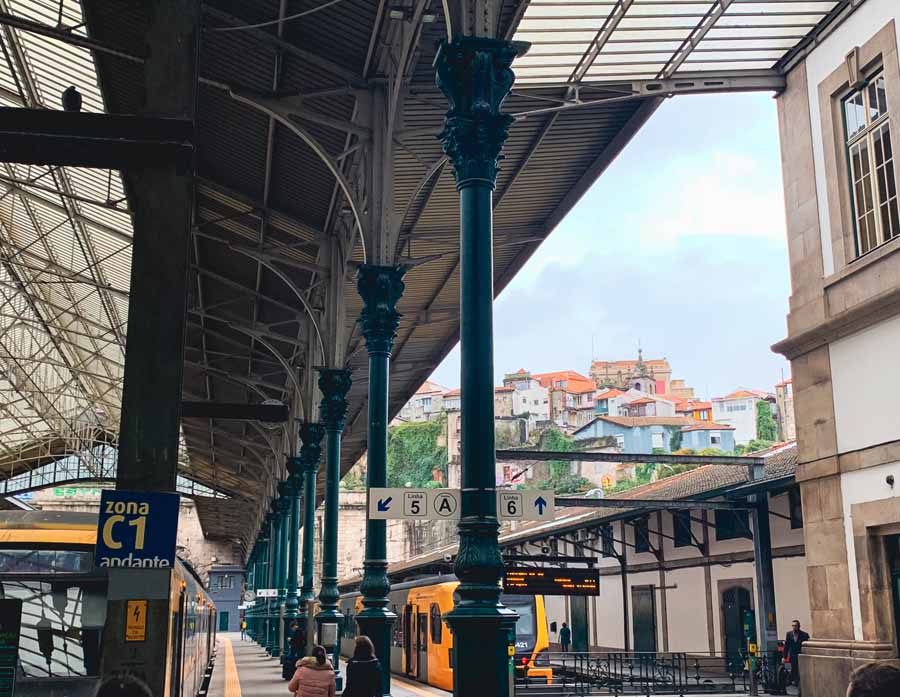
The two main Porto Train Stations are Porto São Bento and Porto Campanhã. All railway tickets can be purchased via the Comboios de Portugal railway company.
Porto São Bento and Porto Campanhã are both connected to Lisbon and Braga. São Bento is more centrally located whereas Campanhã is a little farther from the center. It’s over a 40-minute walk between the two stations, but they are connected via bus and metro.
Porto Campanhã is located next to the main bus terminal. Porto Campanhã is the train station that connects to Spain via the Celtic Line to Vigo. Transfer in Vigo to arrive at Santiago de Compostela by train.
Terminal Intermodal de Campanhã (TIC)
The main Bus Station in Porto is found at Terminal Intermodal de Campanhã, or the Campanhã Bus Terminal (TIC). This is next to the Porto Campanhã Train Station and has a metro stop (Campanhã).
Find bus companies from FlixBus, Alsa, Rede Expressos, BlaBlaCar Bus, and RENEX utilizing the main Porto Bus Statin of Campanhã.
Places of Interest for Pilgrims in Porto Portugal
If starting the Camino de Santiago pilgrimage route from Porto, here are a few significant places for pilgrims.
Porto Pilgrim Office
The Porto Pilgrim Office is new as of April 2026 and is a welcomed addition to the pilgrim infastructure in Porto.
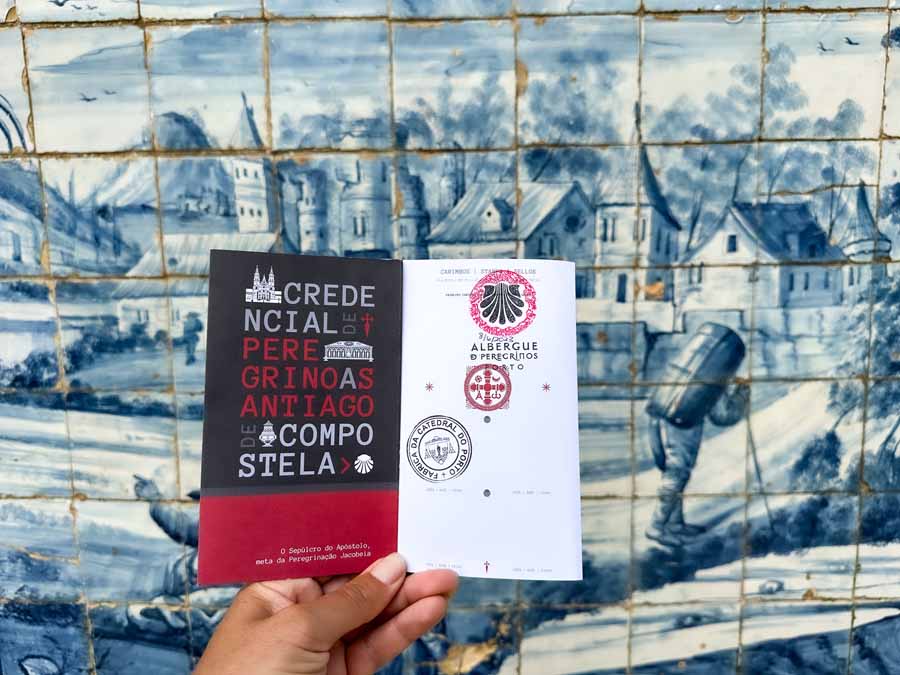
The Oficina do Peregrino Porto acts like a welcome center similar to the one in Saint-Jean-Pied-de-Port on the Camino Frances. Pilgrims can officially register here. The Pilgrim Office sells the Credencial de Peregrino or Pilgrim Passport for €2.
The Credencial is necessary for those pilgrims planning on receiving their “Compostela” in Santiago de Compostela. Simply collect stamps each day in your passport from Albergues, cafes, churches, and sacred sites. When picking up your Credencial, you’ll receive your first stamp, too!
The Credencial del Peregrino is a living document of your journey and is truly one of the best Camino souvenirs
The Pilgrim office can also offer route advice, luggage storage, backpack transfers, and so much more. This office even offers a small last minute gear shop.
Oficina do Peregrino Porto | Find it here: Rua da Pena Ventosa 38 | Hours: Daily by Season: High Season (Mar 21 – Oct 30): 7:00 – 12:00 / 15:00 – 17:00 / Low Season: 10:00 – 12:00 | Official Website
Porto Cathedral
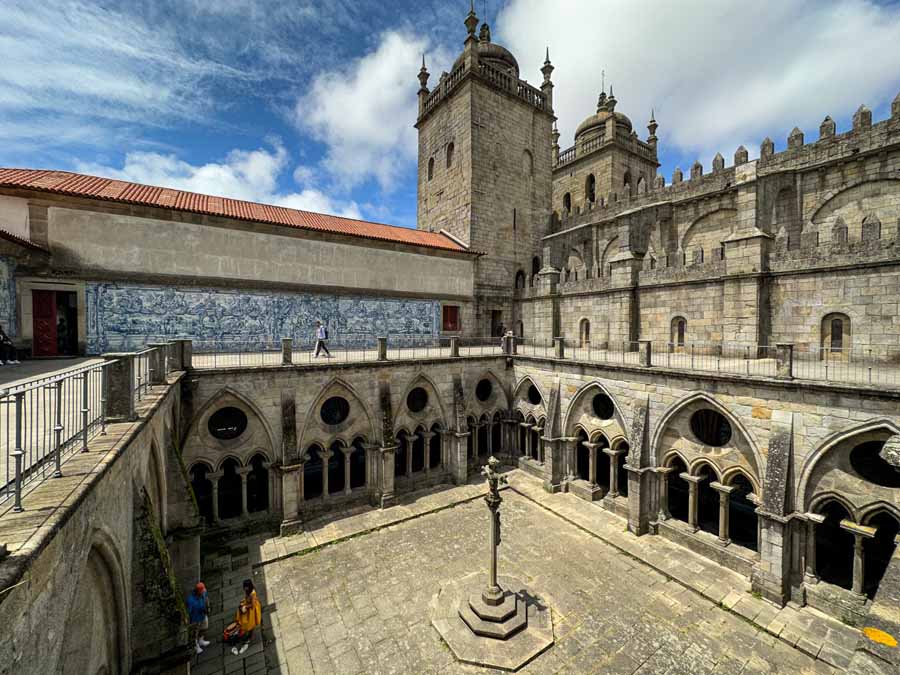
The Porto Cathedral is the official starting point for the Camino Portuguese Way from Porto to Santiago. It’s also directly on the route if starting from Lisbon.
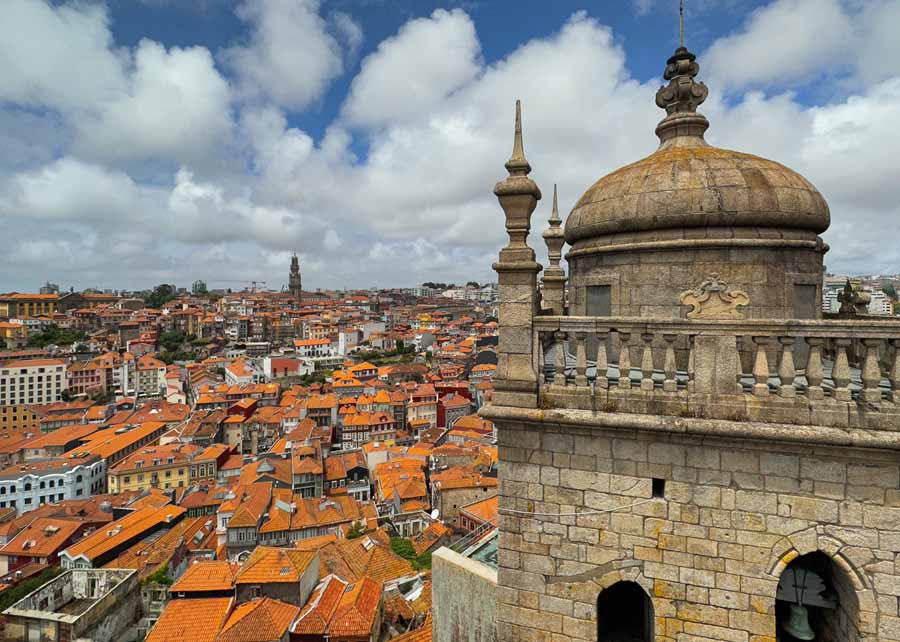
The Porto Cathedral is perched on the hilltop overlooking the Douro River. The main entrance fee includes the cathedral, the tower, and the cloister. The Cathedral in Porto was built during the 12th century and includes Baroque, Romanesque, and Gothic architectural styles.
The Sé do Porto boasts a stunning rose window in the main church. Head up to the tower to appreciate some stunning views of Porto and the river. Don’t miss the Chamber Room on the second floor, decorated in azulejo tiles, the famous blue tiles of Portugal.
Oftentimes, the Credencial offers discounted rates for attractions, but unfortunately, there is no pilgrim discount at the Porto Cathedral.
Sé do Porto (Porto Cathedral) | Find it here: Terreiro da Sé, 4050-573 Porto | Hours: Daily, 9:00 – 18:30 / Winter closes at 17:30 | Closed Christmas Day & Easter | Admission: €4 to Visit Cathedral
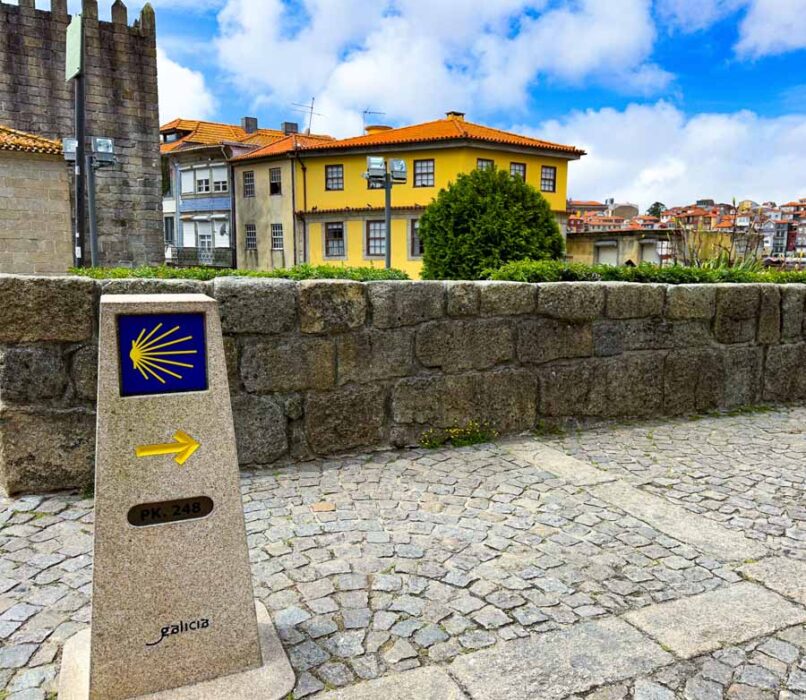
Look in front of the Church in the open plaza of Terreiro da Sé to see the first official Camino de Santiago waymarker!
Porto Tourism Office – Sé
If seeking a little more information, head to the old medieval tower to visit the official Porto Tourism Office. I stopped in and was given a few useful documents about places to see and stay along the way. The Tourist Information Center does not provide the Credencials.
Tourism Office – Sé (Medieval Tower) | Find them here: Calçada Dom Pedro Pitões Porto Portugal | Hours: Daily, 9:00 – 18:00 | Official Website
How Long Should Pilgrims Spend in Porto Before the Camino?
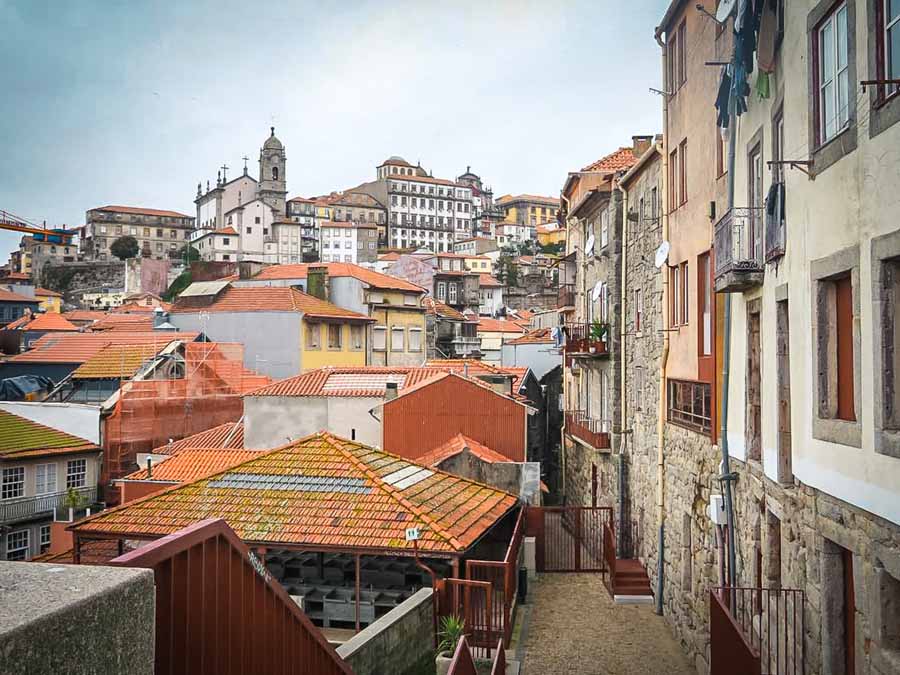
There is quite a lot to see in Porto, Portugal. I visited the city a few years ago and saw a majority of the highlights in Porto over three days. Many pilgrims return to Porto after their Camino to sightsee.
On my second trip to Porto, I spent two nights in Porto. This was mainly because I had some errands to do before walking, like shipping my laptop, stocking up on supplies, doing laundry, and obtaining my Credencial.
For those walking the Camino from Porto to Santiago, two full days will allow for casual sightseeing. However, if on a time crunch, sleeping one night in Porto will suffice. It all depends on what you want to see and do in Porto.
Again, it’s possible to return to Porto after walking the Camino and leisurely savor the city.
Reasons to Come Back and Enjoy Porto
These are some of the most popular tours to explore the area around Porto
▶︎ Experience the heart of Portugal’s famous heart of the Portuguese wine region of the Douro Valley wine region, on this tour which includes a wine tour with lunch and wine tastings, and a river cruise
▶︎ Discover the untouched beauty of Peneda-Gerês National Park via hiking, swimming, and visiting small villages
▶︎ Visit two of Portugal’s oldest cities, Guimarães and Braga, on this full-day tour from Porto
Last Minute Supplies & Gear in Porto
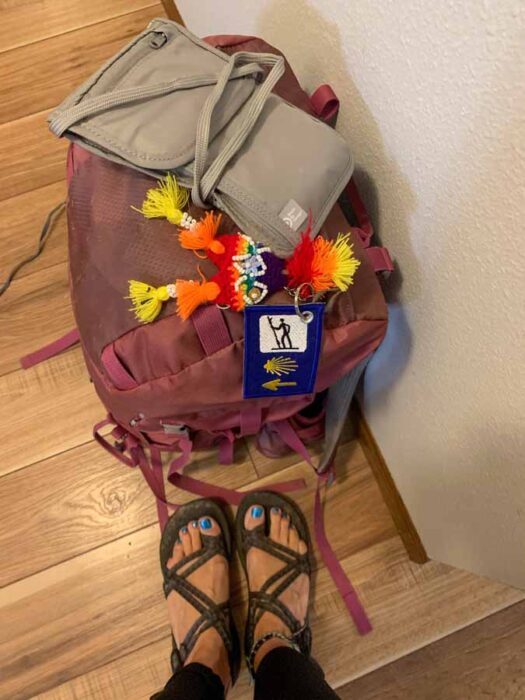
Preparing for the Camino means that you won’t be carrying much. The less you carry, the less weight on your back and knees. I’ve walked multiple Camino de Santiago routes, and this is my essential Camino packing list. This packing list focuses on summer and fall walking logistics.
Winter is also a popular time to walk, especially for those seeking solitude. This is my actual winter Camino packing list.
Your feet are the most important thing to care for when walking the Camino de Santiago. Have properly broken-in shoes, extra dry socks, and a basic first-aid kit. Here are my top tips for walking the Camino de Santiago.
No worries if you forgot something or changed your mind about a hat or walking sticks. There are plenty of gear stores in Porto.
➯ Hey… don’t forget your Travel Insurance! I love SafetyWing
Porto Outdoor Gear Stores
✔ Sport Zone Via Catarina is a large Portuguese chain that sells hiking poles and outdoor gear in a large shopping center in the Bolhão District.
✔ Camping Shop: Loja de montanhismo e Trekking is a local shop not far from the Porto Albergue. Find everything from trekking gear and clothing to headlamps. This is an excellent locally run shop for last-minute gear supplies in Porto.
✔ Decathlons are found throughout Europe and there is one in the large shopping mall of Cidade do Porto
✔ The Porto Pilgrim Office sells last-minute gear items like socks, ponchos, and more.
Many small shops sell rain gear and other supplies throughout the city.
Porto Grocery Stores
In Porto find large grocery chains like Pingo Doce, Froiz, and Continente Bom Dia outside of the heart of the Ribeira District. There are some small SPAR grocery stores located within the historic center, but they are more like smaller convenience shops.
Lidl is another popular grocery shop found throughout Europe with pre-packaged food and miscellaneous items and is found quite a ways from the historic center.
There are plenty of small mom-and-pop shops selling food items, specialty cheeses, meats, and of course tinned seafood. Sniff out local bakeries for bread items. There is no shortage of shops in Porto to find snacks and items for picnics.
Places to Stay in Porto for Pilgrims
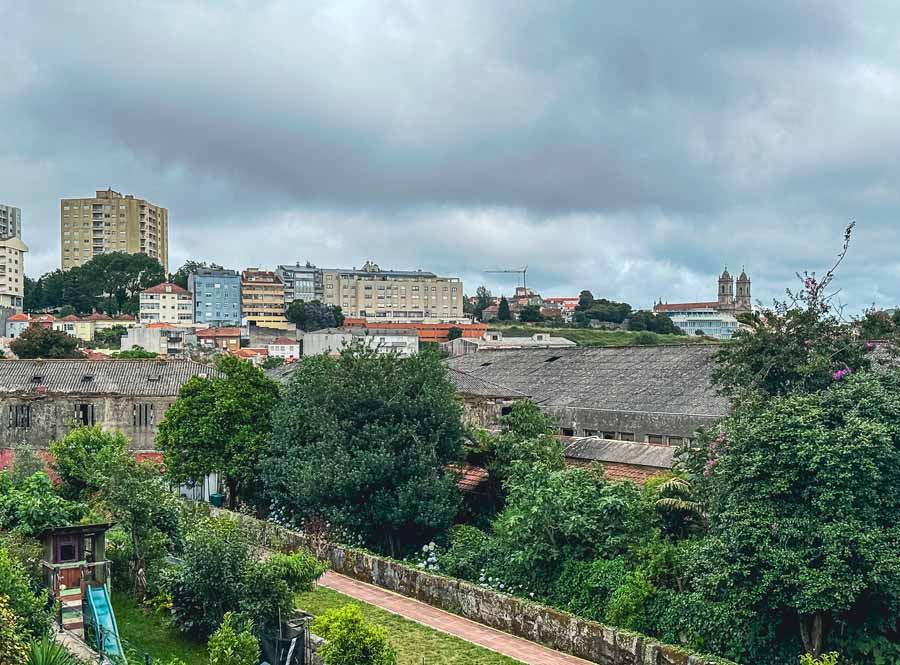
As Porto is a typical starting point for the Camino Portuguese, there is the Albergue de Peregrinos Porto. Albergues are simple accommodation options for pilgrims that consist of dorms and shared bathrooms. Think no-frills hostels with a lively spirit.
Albergue de Peregrinos Porto is a typical Albergue that requires a credencial to sleep there. However, this Albergue does open its doors for reservations. If Porto is your starting point, the albergue does sell the Camino Portugués Credencial for €2.
All reservations must be made by contacting the Albergue directly. It is possible to sleep here for more than one night. Remember, Municipal Albergues on the Camino typically only allow pilgrims to sleep one night. In Porto, this albergue allows multiple nights to rest and enjoy the city.
Albergue de Peregrinos Porto offers dorm-style rooms for €20. The building boasts a large garden area, rooms with terrace views, and is about a 15-minute walk from the heart of Porto. The nearest Metro station is Carolina Michaelis.
The Alergue de Peregrinos Porto also offers a budget-friendly breakfast in the morning and is run by volunteers, many of whom have walked multiple Camino routes. They can help answer any last-minute questions or provide advice on routes.
Laundry services are available onsite, but if they are full, there are nearby laundromats. There are plenty of resources available within a short walk including a Continente Bom Dia and Pingo Doce grocery stores and pharmacies.
The Albergue in Porto is a popular spot to sleep in Porto for pilgrims. Oftentimes it can be booked out. If the Albergue is booked, these Porto Accommodations are also highly rated and budget-friendly.
Budget-Friendly Hostels in Porto Portugal
➜ The House of Sandeman – Hostel & Suites
➜ The Central House Porto Ribeira
Some pilgrims opt to sleep in private accommodation the night before departing on the Camino Portuguese. These are some highly rated private rooms in Porto to stay at.
Popular Porto Attractions

Many places in Porto are worth seeing. If short on time, a walking tour of Porto highlights all the very best city attractions. Another fun and different way to explore Porto is on an electronic bike.
✔ The Cathedral in Porto is one of the popular things to see in Porto, but you’ll already head there to grab your Credencial. The most iconic landmark in Porto is the Clerigos Church and Tower. For a fee, climb over 200 steps to get one of the best views of Porto.
✔ Palácio da Bolsa, or the Palace of the Stock Exchange is stunning on the interior and is filled with rich history. To access the many rooms, it’s essential to book a guided tour.
✔ Porto São Bento railway station is one of the prime examples to see the blue tiles of azulejo. Another grand place to see these picturesque tiles is at the Capela das Almas or Chapel of Souls.
✔ Rua das Flores is one of the most beautiful streets in Porto. The tiled buildings are home to lots of shops, restaurants, and cafes.
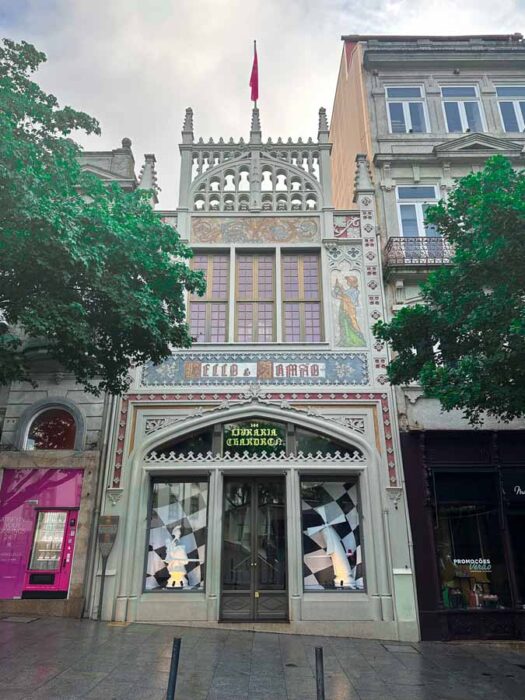
✔ Livraria Lello is said to be one of the most beautiful bookshops in the entire world. There is always a line to visit, but a small price to pay to see the iconic red staircase and the ceiling-stained glass window
Near the Douro River, still through the Cais da Ribeira promenade. There are tons of bars and restaurants that spill out into the plaza. This is one point to access the boat tours on the Douro River or cross the bridge to Vila Nova de Gaia.
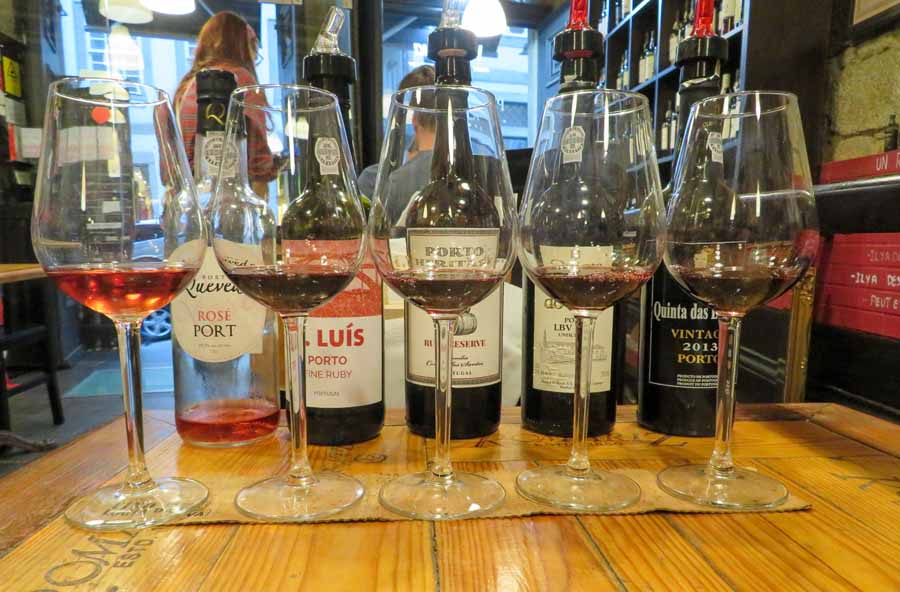
Across the Duouro River, enjoy tasting port wine in Vila Nova de Gaia. Find intimate wine shops, large-scale producers, and everything in between. The waterfront is also lovely to stroll on this side of the river.
Porto is also known for their delicious cuisine. The famed sandwich of Francesinha originated in Porto, so eating one is a must! Don’t worry you’ll have plenty of time to walk it off! The sweet Pastel de Nata is easy to find in Porto (although created in Belem) and sometimes paired with a little snippet of Port Wine.
Top Tours in Porto
▶︎ The Unvanquished Tour in Porto City Center is one of Porto’s most popular walking tours.
▶︎ Hop on an Electric Bike and enjoy all the very best Porto highlights
▶︎ Delve into the local cuisine with this Authentic Porto Small Group Food Tour with Local Tastings
▶︎ This Craft Beer & Food Tour in Porto by Taste Porto is a must for those who love beer
The Official Start of the Camino Portuguese from Porto

The Camino Portuguese starts from the Porto Cathedral. There are three main routes from Porto to Santiago de Compostela, Litoral, Coastal, and Central.
- Litoral – This route literally follows Portugal’s coastline
- Coastal – The Camino Coastal hugs the coastline and has sections of boardwalks and fishing villages, but also can move a little inland to villages, and forests.
- Central – The Caminho Central has the most structure of the three routes and includes small villages, trails through vineyards, and spectacular river valleys.
Choose which route best suits you, but also be mindful of the weather and your physical abilities and limitations.
The Central and Coastal both exit Porto on the same route, which is inland. The routes split at Padrão da Legua. However, the official route out of Porto is on busy roads and goes through an industrial area. It passes by the Porto Aeroporto.
Both the Central and Coastal route out of Porto is not recommended.
Very few pilgrims depart Porto on the Central/Coastal route

Most pilgrims starting in Porto will opt to take the Litoral Way on the first day. This option follows the Rio Douro out of Porto. This desired alternative route on the Camino Portugués hugs the coastline past fishing villages and includes sections of walking on wooden boardwalks.
The Litoral Way from Porto leads to Vila do Conde. In Vila do Conde, the Litoral Way merges with the Coastal Way. It’s also pretty straightforward to rejoin the Central Way to Rates, which is what I did.
Psst… If looking for a Camino de Santiago Guidebook, John Brierley A Pilgrim’s Guide to the Camino Portugués is one of the absolute best, with extremely detailed maps and information for the Camino Portuguese starting from Lisbon.
3 Camino Routes Out of Porto
On Day 1 of the Camino Portuguese from Porto these are the three options to walk from Porto.
1 | Litoral Way
This was the route I opted for to leave Porto. I walked down to the Praça da Ribeira plaza and followed the river to the ocean.
This seaside route follows walking paths to Matosinhos. This lovely town has an extremely helpful Tourist Information Center and is. popular surfing destination. Find a local market, cafes, and restaurants. After Matosinhos pass by small fishing villages and walk on wooden boardwalks.

While most pilgrims walk a long day on the first day from Porto to Vila do Conde, sleeping in Labruge is a nice option.
In Vila do Conde, the Coastal route merges with the Litoral Way. The seaside village is a great place to sleep and soak in the tranquility. There is also a nice and simple Municipal Albergue in Vila do Conde.
🥾 Porto – Vila do Conde | Litoral Way | 20.9 Miles / 33.75 KM | + / – 8 Hours
Coastal Route | Caminho da Costa
The Coastal Route is not recommended out of Porto. Many of the stretches are found on county roads.
Many pilgrims opt to take the metro to Vilar do Pinheiro and walk to Vila do Conde from here (10 miles / 16.4 KM).
🥾 Porto – Vila do Conde | Caminho da Costa | 17.75 Miles / 28.5 KM
Central Route | Caminho Central
Again, the Caminho Central follows busy roads in an industrial-heavy area on the way out of Porto. Some of the way is alongside busy national roads like the N-306.
On Day 1 of the Camino Portuguese Central Way, Vilarinho is the typical stopping point.
The Metro of Vilar do Pinheiro can be utilized for the Camino Central, too. This would allow for a shorter day with the option to continue to Rates with its fabulous Donativo Albergue.
After the Litoral Way out of Porto, I switched to the Camino Portuguese Central Route after Vila do Conde. I absolutely loved the Central Way with its small hamlets and forest trails.
🥾 Porto – Vilarinho | Caminho Central | 17 Miles / 27.6 KM
Alternative Starting Points from Porto on the Camino Portuguese
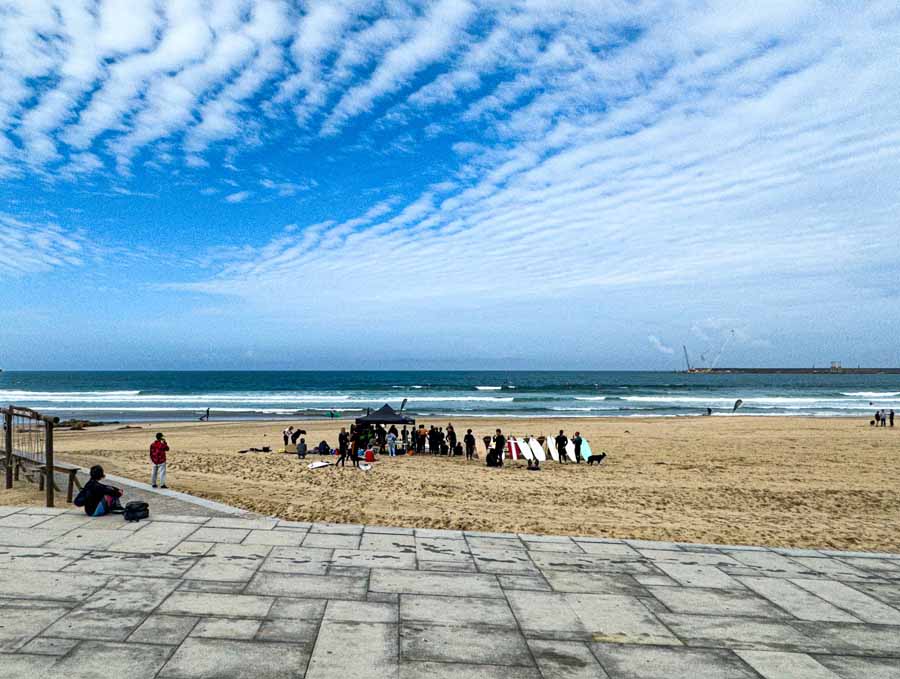
The Camino Portuguese from Porto offers many routes, with most pilgrims walking the Litoral Way out of Porto. With the busy roads and a not-so-scenic industrial area, some pilgrims opt to start outside of Porto beyond the airport.
This website for Metro do Porto is awesome for trip planning and reaching your desired starting point for the Camino Portuguese from Porto.
✔ Vilar do Pinheiro is past the airport of Porto and has connections to the Caminho da Costa and Caminho Central. Vilar do Pinheiro is on the Red Line (B). To the left, walk in the direction of Labruge to join the Caminho da Costa. For the central route, turn right to rejoin at Mosteiró.
✔ Matosinhos is another alternative starting point on the Litoral Way. Hop on the Blue Line (A) and jump out at Brito Capelo, which is a few blocks from the Matosinhos Market. Take a quick visit to the market and then cross the Leca River via the bridge. Taking the metro to Matosinhos helps cut down on a long first day on the Camino Litoral Way from Porto to Vila do Conde.
✔ Of course, always walk your own Camino! Start wherever you feel and let the magic unfold. The last 100 KM of the Camino Portuguese is typically from Tui, Spain, but is closer to 120 KM. Those wanting to walk the final 100 KM of the Comino Portuguese Route can start in Vigo.
Overview | Porto Pilgrim Guide and Starting the Camino Portugués in Porto
In short, this is a general Porto pilgrim guide. This guide is useful for pilgrims planning to walk the Camino Portuguese route from Porto.
Find everything from where to start the Camino Portuguese and tips for planning a successful pilgrimage. Also included are important places for pilgrims in Porto and a basic overview of the three routes that leave Porto.
Whichever route you choose, I wish you a Bom Caminho!
Is there anything missing from this Porto Pilgrim Guide? Any updates or oversights on my part? Let me know in the comments below!
Pack This Post for Later! Pin It!

Disclaimer: There’s a chance this post contains affiliate links, and I receive a small (but grateful) portion of the sale. There’s no extra cost to you, and I only promote things that I use and love.



Hi Megan,
your information is very helpful. we are starting to plan Porto to Santiago going at the end of october. we plan to average 25+/- km per day. could you suggest the stops along the way? should we book our stays? also, if we want our luggage transferred, do you have any recommendations?
Any advice is very welcomed!
Hey Anna-
Thanks for reading. Are you planning to do the coastal or central?
As for stops, I think a guidebook or app is beneficial. I love John Brierley’s guidebooks (Camino Portugues) where he has every location with distances and albergue locations. I never usually plan how far I walk each day and just tend to go with the flow. His books are excellent for helping with distances and gauging daily km. Gronze is also a nice online app that has stages with marked distances. The Portuguese route has enough albergues and towns that you can sleep off the daily stages if you wish.
I typically never book my stays in advance, but I know many pilgrims do. At the end of October most youth are back in school and the Camino is typically quiet. However, this year seems to be busier than normal. Some pilgrims feel comfortable booking a night or two in advance as they walk. I usually find myself sleeping in Municipal (public) albergues which do not accept reservations, they are walk-in only. It all depends on how you want to sleep and experience the Camino. Some pilgrims sleep in private rooms and can book their entire journey in advance. Booking.com is a useful app for planning lodging and WhatsApp (messenger) is useful for contacting and coordinating and is widely used in Spain and Portugal.
As for luggage transfer, on the Camino Portuguese, there are two good companies that people use. Pilbeo and Tuitrans transport backpacks from Porto to Santiago. They can be arranged through your lodging or by using an online app. Remember bag transfers can’t ship to municipal albergues, only private albergues, hostels, pensions, and hotels. Some also limit shipping to backpacks and not hard luggage (verify what each company offers).
I wrote this article about tips for first-time walkers. Maybe take a peek. 😊
The Camino is such an amazing experience. Most importantly, enjoy every minute of it! Buen Camino!
Megs
Porto is a delightful city and worth a visit in its own right.
I would agree with the option of taking the Metro out to Matosinhos rather than walk along the river. Stop at the market for the day’s supplies or breakfast at a beachside cafe.
Bom Caminho!
Yes I loved the market in Matosinhos! Thanks for your input Tom!
Buen Camino 🙂