
The 5 Most Popular Camino de Santiago Routes (2026)
The Camino de Santiago is Europe’s most famous pilgrimage route. Pilgrims walk for many reasons, from religious salvation, spiritual exploration, or simply to spend time reflecting in some of Spain’s most incredible cities, villages, and nature. Some may walk to cope with grief, while others celebrate or take a sacred and intentional pause.
No matter the intention, almost all of the numerous routes lead to Santiago de Compostela, Spain. This is said to be the alleged burial place of Saint James.
Some pilgrims may not realize there are so many Camino routes to choose from. Routes twist through Spain, Portugal, France, and beyond.
The most popular routes are the Camino Frances, the Camino Portugués (the historical Central Way, or the Coastal Way), the Camino Ingles, and the Camino Primitivo.
While similar in many ways, each route offers something a little different. I’ve included some statistics of each route, what to expect along each one, and who will love each route.
At the end, I’ve also included some of my favorite Camino de Santiago routes that aren’t as popular.
Here are the 5 most popular Camino de Santiago routes.
Table of Contents
- Overview of the Camino de Santiago
- Pilgrim Statistics for the Camino de Santiago Routes
- Camino Frances
- Camino Portuguese (Central)
- Camino Portuguese (for the Coast)
- Camino Ingles
- Camino Primitivo
- More Camino de Santiago Routes Worth a Mention
- Conclusion | Overview of the Most Popular Camino de Santiago Routes
Overview of the Camino de Santiago

The Camino de Santiago is not just one route. There are 281 officially listed Camino de Santiago routes that span across 29 countries. Technically, these routes consist of nearly 51, 500 miles of networked trails.
Most people think of the routes through Spain and Portugal, since they are the most popular Camino de Santiago routes. These pathways have been leading pilgrims to Santiago de Compostela since the Middle Ages. Some believe these pathways predate the church and were used by Celtic tribes as sacred fertility paths.
To receive a Compostela, pilgrims must walk a total of 100 continuous kilometers on the same route. The Compostela is a completion certificate, and pilgrims must walk the final stage into Santiago de Compostela. Collect stamps in your Credencial (Pilgrim Passport) and present it to the Pilgrim’s Office to obtain the Credencial.
Pilgrims can choose any route, with these being the most popular places to start the Camino de Santiago. Follow the yellow arrows, pack light, and let the magic of the journey unfold. Along the way, there are numerous Albergues, which are budget-friendly accommodation options for pilgrims. There are my best tips for first-time pilgrims after walking over 12 different Camino de Santiago routes.
Camino de Santiago Guides & Tips


Camino de Santiago Pilgrim Statistics
These Camino de Santiago statistics are collected by the Pilgrim Office and Reception Center in Santiago de Compostela.
This year alone, over half a million pilgrims walked the Camino de Santiago to collect their Compostela (completion certificate) in 2025. The final numer is 530,915 pilgrims collected their Compostela from the Pilgrim’s Office.
Here’s a quick chart from the official numbers of the Pilgrim Office for 2025.
| Camino Route | Compostelas Issued | % of Total Pilgrims |
| Camino Francés | 242,163 | 45.61% |
| Camino Portugués Central | 100,831 | 18.99% |
| Camino Portuguese Coastal | 89,504 | 16.86% |
| Camino Ingles | 30,203 | 5.69% |
| Camino Primitivo | 27,868 | 5,25% |
The Camino Francés is the most walked pilgrimage route to Santiago de Compostela. However, in the past few years, the Camino Portugués has become much more popular, especially the Coastal Route.
Remember, not every pilgrim finish the walk in one setting. Others may walk the Camino de Santiago over time and some don’t collect their Compostela. These numbers are only for pilgrims who completed the entire way and collected their certificate.
1 | Camino Francés


The most famous Camino de Santiago route is the Camino Frances. When most people think of the Camino, they usually think of the French Way. In 2025, nearly 46% of pilgrims walked the Camino Frances (just over 242,000 pilgrims)!
- Official Starting Point: Saint-Jean-Pied-de-Port, France
- Distance: 779 km (484 miles)
- Average Duration: Most pilgrims budget 4 – 6 weeks to walk the Camino Frances
Saint-Jean-Pied-de-Port is the official starting point of the French Way. Pilgrims take their first steps from this small hamlet at the foothills of the Pyrenees Mountains and cross the mountains to arrive in Spain.
This incredible route passes through a mixture of historical cities and small villages. The route cuts through the La Rioja Region, onto the vast Meseta, with the final stages twisting through the mystical region of Galicia. The Camino Frances also has divergent routes that can move pilgrims off the Camino Frances to other, less popular Camino de Santiago routes.


The Camino Frances has the best infrastructure of any Camino de Santiago route, and these are some of my favorite albergues on the French Way. One note to add about the Camino Frances is that most pilgrims don’t walk the entire route from Saint-Jean-Pied-de-Port. That means that the route does get busier the closer you walk towards Santiago de Compostela.
While the Camino Frances is the most famous Camino de Santiago route, only around 6% of pilgrims actually start the Camino from Saint-Jean-Pied-de-Port. Most pilgrims choose to start the French Way from Sarria, which is considered the starting point for those looking to walk the final 100 Km into Santiago de Compostela.
Almost 31% of all the pilgrims walking the Camino de Santiago choose to start in Saria.
Who Will Love the Camino Frances?

There’s a reason the Camino Frances is so popular. It has the best infrastructure, and it’s well marked, as social as you want it to be. There are tons of albergues and places to stay. This makes the Camino Frances one of the best options for first-time pilgrims.
The Camino Frances has a blend of historical cities and small villages that were pilgrimage hubs since the Middle Ages. Along the way are amazing chapels and stunning cathedrals. The landscape is diverse and includes the Pyrenees Mountains, vineyards, the vastness of the Meseta, and the green hills of Galicia.
While it can be busy, especially the final 100 Km, there are ways to find the magic and detours that most pilgrims don’t take.


2 | Camino Portuguese Central Way
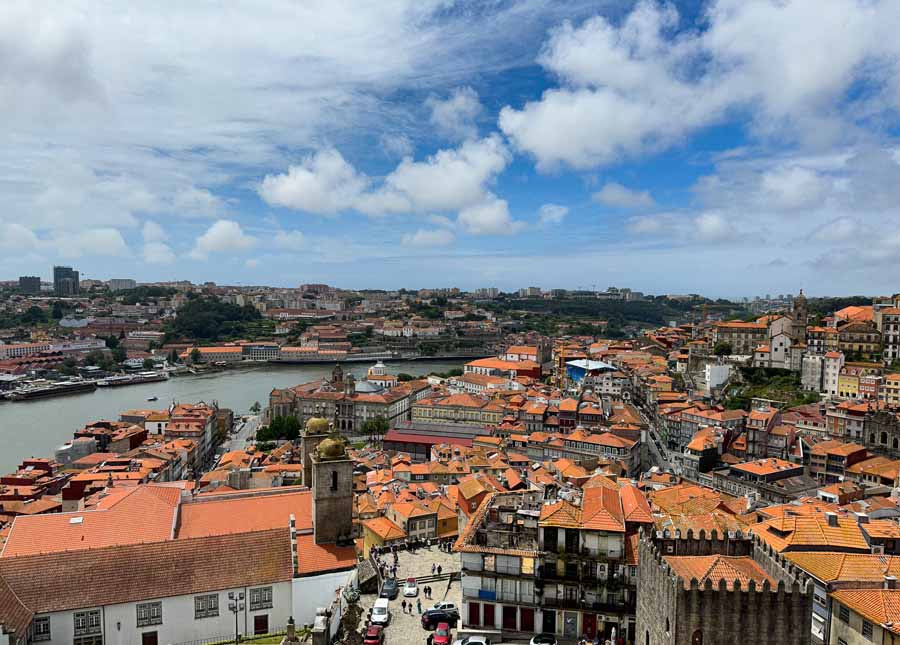
The second most popular Camino de Santiago route is the Camino Portuguese Central Way. In 2025, nearly 19% of pilgrims walked the Camino Portugues. The Camino Portuguese route starts from Lisbon, but most pilgrims opt to start in Porto. From Porto, the Portuguese Way has three main routes: the Litoral (along the coastline), Coastal (near the sea), and Central.
This section refers to the Central Way from Porto, as less than 1% of pilgrims will start in Lisbon.
- Preferred Starting Point: Porto, Portugal (or Tui Spain for the final 100 KM)
- Distance: Porto to Santiago de Compostela is around 252 Km (157 miles)
- Average Duration: Most pilgrims budget around 10 days from Porto to Santiago de Compostela or around 2 weeks with the Espiritual Variante Route
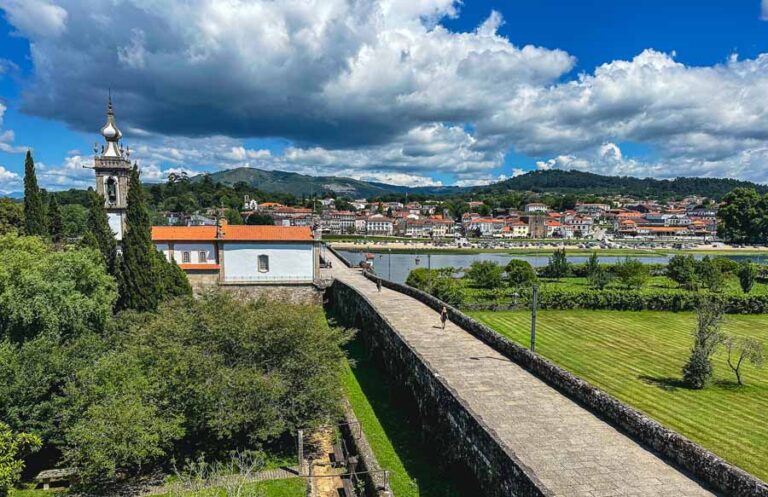
The Camino Portuguese Central Way passes through historical cities like Ponte de Lima in Portugal and Pontevedra in Spain. The route crosses two countries, and there’s a blend of small villages, scenic landscapes, including the beautiful Miño River, and a few alternative routes that are worth exploring.

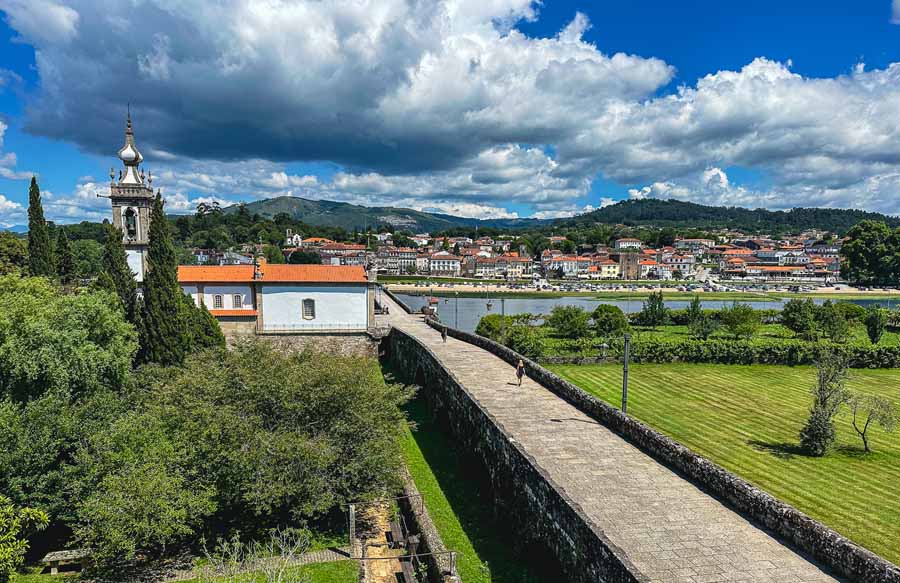
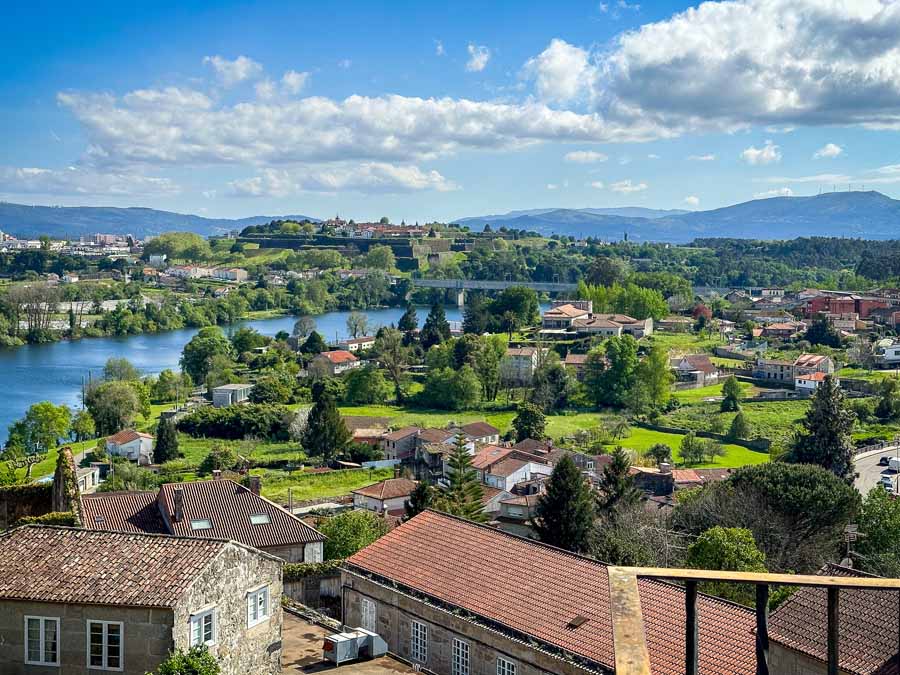
A highlight for most pilgrims walking the Camino Portuguese is the Spiritual Variant, which starts from Pontevedra, and includes highlights like the seaside village of Combarro, the Stone and Water walking route, and taking the boat ride to Padron.
The Camino Portuguese Central Way has the second-best infrastructure of any Camino de Santiago route. While most pilgrims walking this route start in Porto, almost 42,000 pilgrims start in Tui, Spain. The medieval city of Tui is considered the starting point for those looking to walk the final 100 Km on the Central Portuguese Way.
Who Will Love the Camino Portuguese Central Way?

The Camino Portugues Central Way is an ideal route for those looking to walk a Camino de Santiago with limited time. Most people can walk the Portuguese Route in under two weeks.
The Central Way of the Camino Portuguese has all the perks, like albergues, historical cities, and the chance to spend time in two different countries. There is a good mixture of natural landscapes, attractions, and the chance to move with ease between the central way and the coastal way.


3 | Camino Portuguese Coastal

The third-most popular Camino de Santiago route is the Camino Portuguese via the Coastal Route. In 2025, nearly 90,000 pilgrims walked the Coastal Route, which had one of the largest increases in pilgrims.
- Preferred Starting Point: Porto, Portugal (or Vigo Spain for the final 100 Km)
- Distance: Porto to Santiago de Compostela via the Coastal Way is around 280 Km (174 miles)
- Average Duration: Most pilgrims budget around 12 days from Porto to Santiago de Compostela on the Coastal Way
The Camino Portuguse Coastal Route is increasing in popularity. This route follows along the Atlantic coastline from Porto and includes small fishing villages and boardwalks along the sea.
Pilgrims can choose to cross to the Central Way at Vila do Conde, or Camiñha, the border town by the sea. Alternatively, pilgrims can continue to follow the coastline by taking a boat from Camiñha to A Guarda in Spain.


A Guarda has the famous Celtic ruins of Santa Tecla, and then the way follows the Spanish coastline. This is said to be one of the most scenic sections with villages like Baiona. The route reaches Vigo, where pilgrims meet up with the Central Way in Redondela.
Vigo is becoming one of the most popular places to start the Camino Portuguese Coastal Route. Almost 19,000 pilgrims started the Coastal Way from Vigo, which is considered the final 100 Km of the Coastal Route.
Who Will Love the Camino Portuguese Coastal Route?
The Coastal Way of the Camino Portuguese is for those pilgrims who are looking to walk along the sea. As it is a coastal route, it is one of the flatter routes. However, there are more hills as you cross into Spain.
This route is ideal for those looking to walk along the Atlantic coastline and experience the small fishing villages, take a dip at the numerous beaches, and see the sea almost daily.
The Camino Portuguese Coastal Route is along the coast, so it’s also a popular tourist destination. That means that lodging options can be harder to find. It also means the Camino spirit can be harder to find as accommodations can be shared with tourists.
4 | Camino Ingles

In 2025, a little over 30,00 pilgrims started their Camino journey from Ferrol, which is almost 6% of total pilgrims.
- Official Starting Point: Ferrol, Spain
- Distance: Ferrol to Santiago de Compostela is around 116 Km (72 miles)
- Average Duration: Most pilgrims walk the Camino Inglés in 4 to 6 days.
Ferrol is the official Camino de Santiago starting point of the Inglés Way for those looking to receive a Compostela in Santiago de Compostela. Pilgrims who live in A Coruña can actually start the way from the city, but for visitors, A Coruña is under the 100 Km distance requirement to qualify for an official Compostela.
The Camino Inglés was the official route for pilgrims arriving from current day Ireland and Britain. They would arrive by boat in A Coruña or the port city of Ferrol to walk to Santiago de Compostela. It is the shortest Camino de Santiago route that leads to Santiago de Compostela. Because of this, most pilgrims opt to combine this route with the Camino Finisterre Muxia to the “End of the World.”

The Camino Inglés starts along the northern shores of Spain in the Rias Altas. The first section follows along the sea and includes Pontedeume, one of the most beautiful seaside villages along the Way. There is also the historical city of Betanzos, and then the route cuts through the countryside of rural Galicia until it reaches Santiago de Compostela.
Who Will Love the Camino Inglés?
The Camino Inglés is a fantastic and short route and is a great option for those pilgrims looking to walk a quieter Camino route. This route includes a mixture of seaside villages and views, along with the typical landscapes of Galicia.
5 | Camino Primitivo

The fifth most popular Camino de Santiago route is the Camino Primitivo. Almost 28,000 pilgrims completed the Camino Primitivo, which is around 5% of the total Pilgrims
- Official Starting Point: Oviedo Spain
- Distance: 321 Km (200 miles)
- Average Duration: Most pilgrims budget around 2 weeks to walk the Camino Primitivo, as it’s quite a hilly route with challenging ascents and descents
The Camino Primitivo is said to be the “first official Camino route.” During the 9th century, King Alfonso II made the first pilgrimage to Santiago de Compostela, where he followed a similar route to the current Primitivo route. He did this to verify the relics found in the meadows near Santiago de Compostela were those of the Apostle St. James.
Oviedo is a fantastic city with its stunning San Salvador Cathedral and the nearby Pre-Romanesque Churches on the hillside of Monte Naranco.


The Camino Primitivo is a fantastic route that sees fewer pilgrims and can be challenging with the many ascents and descents. It twists through the mountains and is more rural than most Camino routes. It highlights the beauty of the Asturian and Galician regions of Spain.
There are many significant sites along with historical cities, like Lugo, which is famous for its Roman Walls. The Camino Primitivo joins the French Way in the city of Melide.
Who Will Love the Camino Primitivo?
The Camino Primitivo is a fantastic route that includes long and tough stages through the mountains. It feels a little more wild and untouched, even though it is still one of the most popular routes. The Camino Primitvo is a little more remote and has more villages than large cities. It is also a fantastic route for those looking to experience one of the most historical routes that the Camino offers.
More Camino de Santiago Routes Worth Mentioning
While the above list are the most popular Camino de Santiago routes, these are some of my favorite routes.
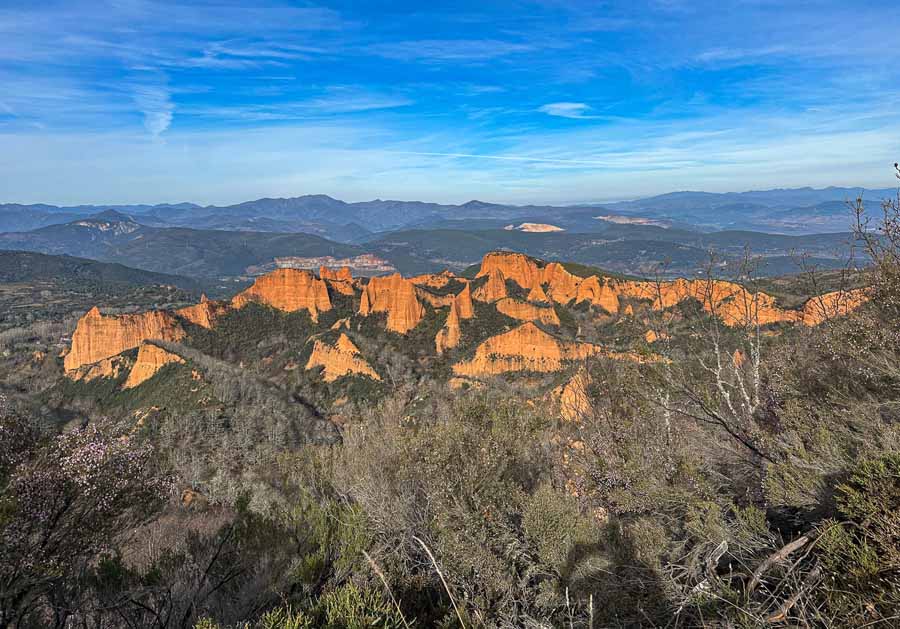


- The Camino de Invierno is a quiet route that starts in Ponferrada and includes highlights like Las Medulas, the Ribeira Sacra, Monforte de Lemos, and Pico Sacro. As this route isn’t as popular as most, these are my suggested Camino de Invierno stages. (2,758 pilgrims / .52%)
- The Camino Lebaniego takes pilgrims from the Camino Norte village of San Vicente de la Barquera to the foothills of the Picos de Europa and the medieval village of Potes. From there, pilgrims can walk the isolated Camino Vadiniense to León.
- The Camino de San Salvador is said to be one of the most beautiful routes and connects the Camino Frances to the Camino Primitivo. This is a remote route that twists through the mountains and small hamlets.
- The only route that leaves Santiago de Compostela is the Camino Finisterre Muxia. Pilgrims can walk to the “End of the World” to either Finisterre or Muxia. Both villages are nice, but I prefer to always end my journey in Muxia. (2,381 pilgrims / .45%)
Conclusion | The Most Popular Camino de Santiago Routes
In conclusion, these are some of the most popular Camino de Santiago routes according to the official statistics of the Pilgrim Office in Santiago de Compostela.
The Camino Frances and both Camino Portuguese routes are by far the most trodden paths. The Camino Inglés is also popular as it is the shortest complete route to Santiago de Compostela. The Camino Primitivo is also popular and is known for its historical value of being the first Camino route.
This quick guide covers the most popular Camino de Santiago routes, but I’ve also included a few additional options for those seeking a quieter and more reflective journey.
Have you walked the Camino de Santiago? What route did you choose. I’d love to hear about your experience in the comments below!


Disclaimer: There’s a chance this post contains affiliate links, and I receive a small (but grateful) portion of the sale. There’s no extra cost to you, and I only promote things that I use and love.


