
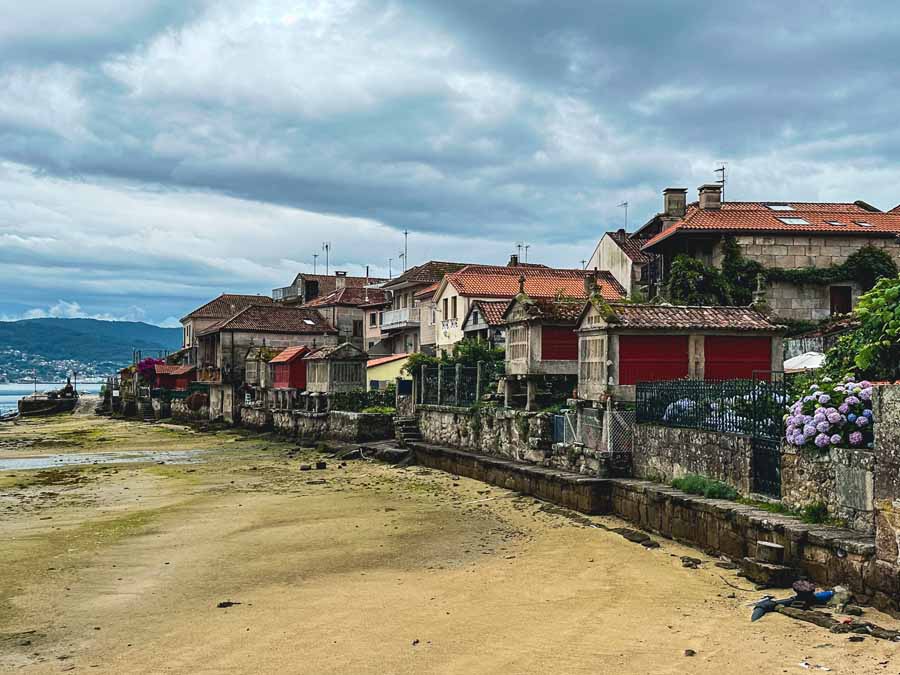
Combarro A Picturesque Seaside Village in Galicia Spain
Picturesque. Magnetic. Beautiful. These are all words that come to mind when fondly reminiscing about my time wandering the streets of the fishing village of Combarro.
This charming seaside village is tucked away perfectly on the Ria de Pontevedra, part of the many stunning Rías Baixas estuaries on the west coast of Spain. The village boasts lovely small plazas, delightful cobblestone streets, and plenty of restaurants and tapas bars that offer some of the freshest Galician seafood straight from the sea.
Combarro may be one of the “most Galician towns” in Galicia. Scattered throughout the village find the iconic Galician stone granaries called hórreos and numerous cruceiros, or double-sided stone crosses. Add in the traditional maritime homes, meandering cobblestone streets, and lovely plazas, and you are left with one of the most beloved villages in Galicia.
Here is a short guide on how to make the most of a visit to Combarro, Galicia’s picture-perfect fishing village.
Table of Contents
- How to Get to Combarro Spain
- Best Things to Do in Combarro Spain
- Things to Do Near Combarro
- Where to Sleep in Combarro Spain
- Overview | Make the Most of a Visit to Charming Combarro in Galicia Spain
How to Get to Combarro Spain

Combarro is located along the Ria de Pontevedra, a beautiful estuary in the southern region of Galicia. The small fishing village is found near the city of Pontevedra. The town can be reached via car, bus, or on foot.
There is also a new marina, so technically it could be visited by boat.
By Car
No cars are allowed in the historic center of Combarro. The cobblestone streets are small, narrow, and for pedestrians only. There are a few designated parking lots for those exploring this region of Spain by car.
Only 5 miles from Pontevedra, it can take about 15 minutes to reach Combarro. There can be traffic and congestion on the small roads, so plan accordingly.
By Public Transportation
Frequent regional buses connect Pontevedra to Combarro. Buses depart from the main Pontevedra Bus Station and drop near the village on the PO-308.
Be mindful that the main bus station in Pontevedra is about a 15-minute walk outside the historic city center.
🚌 Pontevedra – Combarro Bus | Bus XG626 (Multiple Routes) | Pontevedra Bus Station | Hours: Daily, frequently | Bus Fare: €1.55 | Duration: +/- 40 minutes
➜ Check the Current Bus Schedule here
By Foot

Combarro is found on the Camino Espiritual, a variant route of the Camino de Santiago – Camino Portuguese pilgrimage route. The Camino Portuguese typically starts from Lisbon or Porto and has diverse routes that follow the coast or follow more central paths.
All pilgrims will make the journey to Santiago de Compostela. Oftentimes this is the end of the road, but many pilgrims continue to the “End of the World” along the Camino Finisterre Muxía.
Combarro is found directly on the Variante Espiritual route that leaves from Pontevedra Spain.
The Variante Espiritual route passes through the village of Combarro on the first day. Follow the yellow arrows or the designated Variante Espirtual route markers. The yellow arrows can be seen in Praza da Fonte that lead pilgrims away from the sea and up the hillside.
🥾 Pontevedra – Combarro via Camino Espiritual | Distance: 7.25 miles (11.6 Km) | Duration: +/- 2.5 hours
Plan to Walk the Camino de Santiago
The Camino de Santiago is one of the most incredible pilgrimage routes in Europe and is a bucket-list experience.
If walking the Camino de Santiago, it’s important to pack light and walk with an open heart. These are some of my top tips for first-time pilgrims and some of the more common FAQs about the Camino de Santiago.
There are numerous Camion de Santiago routes from the Camino Frances from Saint-Jean-Pied-de-Port to the original Camino de Santiago route, the Primitivo.
➜ Browse All my Camino de Santiago Guides

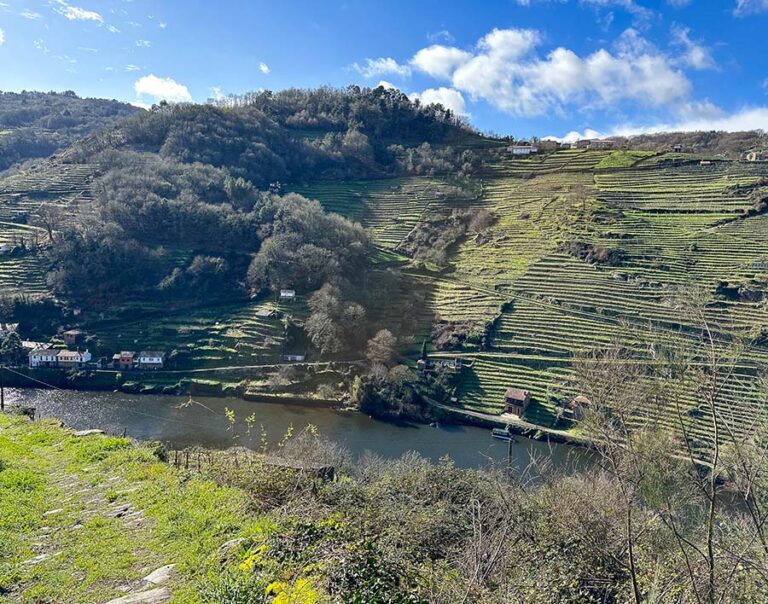

How Much Time to Spend in Combarro
If walking the Camino de Santiago, the highlights of Combarro can be explored in just a few hours. However, there are plenty of things to do from wandering the cobblestone streets, eating some of the freshest Galician seafood, and observing the numerous horreos.
Some pilgrims fall in love with this charming village and opt to sleep in Combarro on the first night of the Camino Espiritual rather than the small hamlet of Armenteira.
7 Best Things to Do in Combarro Spain
Here are the best things to do in Combarro if visiting for a few hours or a few days. Combarro was officially declared one of Spain’s Artistic and Picturesque Sites in 1972.
1 | Wander Through the Cobblestone Streets


Combarro is perfect for a stroll. The historic center allows only pedestrians.
Two of the main streets are Rúa do Mar and A Rúa (which also merges into Rúa San Roque).
By far the most frequented street of the village is Rúa do Mar. This seaside street runs alongside the Ria and boasts a majority of the typical Galician granaries of Hórreos.
Head away from the sea to find A Rúa and Rúa San Roque. These streets are a little less busy but feature tiny plazas, the San Roque church, and the double-sided stone crosses called cruceiros that are found throughout Galicia. There are seven stone crosses found in the historic quarter of Combarro.
The best times to wander the streets are during the early morning hours when the streets of Combarro are especially quiet. Many of the restaurants and bars don’t open until 11 am.
2 | Observe the 30 Hórreos Granaries

Combarro boasts a plethora of granaries called hórreos. Remarkably, there are 30 structures still standing and scattered throughout the village. Combarro is said to have the highest concentration of Hórreos in a single village in all of Galicia.
What sets Combarro apart is that a considerable number of these hórreos are positioned right along the sea. At high tide, it can give the appearance that these hórreos are gracefully afloat above the sea.
The horreos in Galicia were used to store grain and were more commonly made from stone. Horreos in Galicia are protected and are a staple of the image of Galicia. It’s been said that Galicia boasts over 30,000 horreos, some dating as far back as the 12th century.
While a majority of the horreos in Combarro are found along Rúa de Mar, the large plaza of Praza Peirao da Chousa is also lined with horreos.
3 | Visit the Many Historical Plazas

Many of Combarro’s Plazas (Prazas) are minutes apart.
Praza da Fonte | Fountain Plaza
A small plaza with a water fountain leads visitors into the historic center of Combarro. Those pilgrims walking the Camino Espiritual will enter Combarro through the square and can opt to stroll through the village or continue along the way.
The plaza is also home to one of the seven stone crosses found in the village.
Cruceiro Praza de San Roque
A small plaza with a bench, stone cross, and picturesque tree. The cross is coming out of a large stone. Keep in mind that Galicia has deep Pagan roots and many of the crosses were built on top of ancient sacred sites to help convert the area to Christianity.
Praza Peirao da Chousa
The main plaza is almost the living room of the city. The parking area is located near this expansive square. Here, find a few interesting horreos, cafes, and restaurants. This plaza has access to the historic center and maritime homes.
4 | Stroll Rúa da Mar and the Old Fishing Homes

A Rúa do Mar is the picturesque street that runs parallel to the estuary. By far, this is the most visited street in all of Combarro.
The street captures visitors with its many stone granaries and maritime homes. The maritime homes typically have baroque-style balconies carved from stone and face the sea. Today, these balconies are decorated with flowers, making the ancient quarter a delight to explore.
Rúa do Mar is where many of the souvenir shops, seafood restaurants, and fun little tapas bars are located. The pagan influence can still be seen in Galicia which is linked to ancient legends and myths.
One thing you may notice is the presence of Miegas. Miegas are considered “good witches,” many of whom are said to offer protection and were considered wise healers. In Combarro, many small shops sell handicraft Miegas or pay some kind of homage to them.
On top of the many flowers and plants, the cobblestone streets are decorated with Miegas, cats, and owls.
☛ Another epic place to experience Galicia Folklore is Hiking Monte Pindo.
5 | Take in Some of the Best Views from a Souvenir Shop

Speaking of shops, make sure to stop in at Mirador y Tienda de Souvenirs. This “magic” shop sells tons of Miegas dolls, stones, candles, dreamcatchers, and unique souvenirs.
One of the highlights is the viewpoint from the second floor. The shopkeepers are so friendly and encourage patrons to head to the mirador.
6 | Hang out at Praia do Padrón

The small beach of Padrón is located near the Praza da Fonte. The beach isn’t necessarily one of the most pristine to swim in Galicia, like Muiños beach, but rather better to walk and enjoy the horreos.
Like most beaches in Galicia, the beach changes with the tides. When I walked into Combarro, the tide was extremely low. Locals were out harvesting shellfish, which was a special treat to witness.
The beach is sandy and boasts a beautiful stone cross that welcomes visitors to the historic quarter of the village.
7 | Eat Super Fresh Seafood

One of the highlights of visiting Combarro is indulging in fresh Galician seafood. With a majority of the restaurants located along the coast, the seafood is accompanied by stellar views. Be mindful that in many of the restaurants, you are also paying for the view and the privilege to be sitting oceanside. Bonus, a lot of these restaurants also have tables right alongside the horreos.
Of course, the seafood is paired best with a glass of Albariño, a white wine of citrus notes grown predominately right in the Rías Baixas region of Galicia Spain.
Bar Pedramar serves fresh seafood on a seaside terrace for a reasonable price.
Arroyo Mar y Tierra is located in the main Praza Peirao da Chousa and has super-friendly owners, delicious coffee and pastries, and is open early! At night they serve a seafood-heavy menu.
Bodega O’ Bocoi kind of feels like stumbling upon an old pirate bar. Savor a glass of wine in a unique ambiance.
Things to Do Near Combarro

Here are some popular things to do near Combarro
Pontevedra
Pontevedra is a lovely historical city found along the Camino Portuguese that is home to the scallop-shaped chapel of Virxe Peregrina, bustling plazas filled with tapas bars, and lots of history.
Lots of visitors like to sleep in Pontevedra and then take day trips to nearby highlights and villages in Galicia.
Poio Monastery
Poio Monastery is located between Pontevedra and Combarro. The Monastery is known for its stunning mosaic mural and depiction of the Camino Frances route and is home to one of the longest hórreos in Galicia.
Monastery of San Juan de Poio | Find it here: Rúa Convento, 36995 Poio | Hours: Daily, 10:00 – 13:00 & 16:30 – 19:30, closed Sunday mornings and on festivals | Admission Fee: €2.50
Miradouro do Loureiro
From Fountain Square follow the Camino Espiritual out of town and up the steep hill to Miradouro do Loureiro. The tough climb is rewarded with incredible panoramic views of Combarro and the Ria de Pontevedra.
🥾 Combarro – Miradouro do Loureiro | One-Way Distance: 2.2 miles (3.6 Km) | Duration: +/- 45 minutes
Ruta da Pedra e da Auga (Galician Spelling)

Undoubtedly, one of the highlights of the area is walking the Ruta da Pedra e da Auga. The trail begins right after the Monastery of Armenteira and finishes at the giant roundabout next to the Hospedaje Rústico – Restaurante Os Castaños in Barrantes (Ribadumia).
The trail is officially marked as the PR-G 170 and is 6.5 KM (4 miles). Along the way appreciate over 30 old stone mills. Ruta da Pedra e da Auga literally translates to the Route of Stone and Water.
Combarro Tours
Be mindful that the majority of the tours for Combarro village depart from Santiago de Compostela.
➜ This popular Full Day Excursion to the Rías Baixas and Isla da Toxa includes a boat ride
➜ This Rías Baixas Tour focuses on regional gastronomy and other points of interest
☛ Psst… Another fantastic fishing village in Galicia is Muxia
Where to Sleep in Combarro Spain
Combarro has a very magnetic feel, so what better way to experience the charm than by sleeping in the fishing village for a night or two?
Combarro offers a lot of apartment rentals, many of which can be found on Booking.com
Top Rated Places to Stay In Combarro Spain
➜ Albergue Hostel Nuestra Señora del Camino
➜ Browse the Best Places to Stay in Combarro Galicia Spain
Overview | Make the Most of a Visit to Charming Combarro in Galicia Spain

In short, don’t miss a chance to visit the lovely maritime village of Combarro. The small village sits nestled picturesquely into the Ria de Pontevedra of Spain’s underrated region of Galicia.
The seaside village is famous for its numerous protected stone granaries, iconic stone crosses, and small but mighty old quarters. Many visitors stop by Combarro while walking the Camino Portuguese Variante Espiritual variant. However, it’s close enough to Pontevedra, making it a fantastic day trip.
Combarro continues to top the list of the most beautiful villages in Galicia Spain and is definitely worth visiting. Combarro is often a highlight destination on a trip to Galicia.
Have you had the chance to visit Combarro Spain? What did you think?
Pack This Post for Later! Pin It!

Disclaimer: There’s a chance this post contains affiliate links, and I receive a small (but grateful) portion of the sale. There’s no extra cost to you, and I only promote things that I use and love.


