

Discover the Best of the Ribeira Sacra⎟Weekend Road Trip Itinerary
Galicia is spectacular. It’s blessed with a fascinating Celtic history, influenced by the Roman conquest, and deeply connected to the Camino de Santiago. While most travelers will get to know Galicia through its historical cities, one of the best-kept secrets lies farther inland: the Ribeira Sacra.
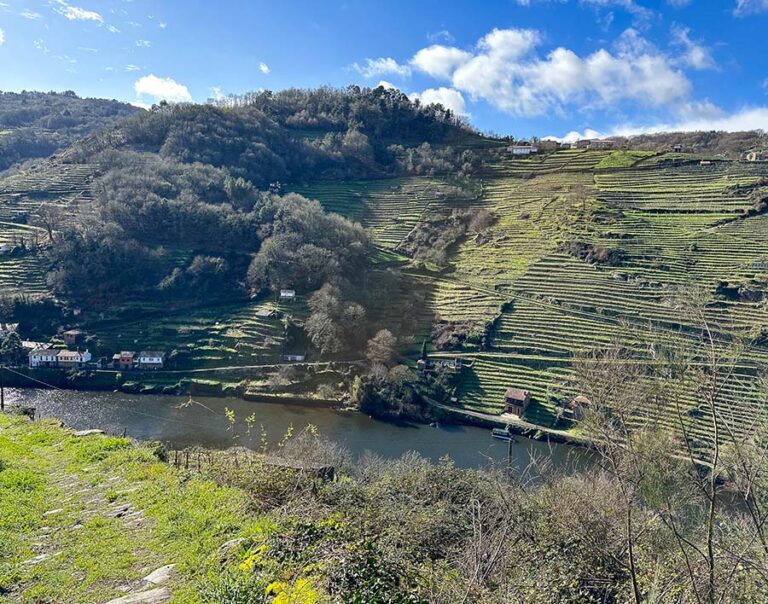
Ribeira Sacra translates to Sacred Shores. The area is known for picturesque hillside terraced vineyards, ancient monasteries, and stunning rolling river valleys.
There are two main river valleys in the Ribeira Sacra, the Minho River and the Sil River. However, the Ribeira Sacra is large, and there are plenty of small rivers that cut through the mountainsides. The Ribeira Sacra is home to many diverse highlights and attractions, most being natural landscapes.
I’ve visited many different areas of the Ribeira Sacra and have included the best ways to explore the region. From walking through the region to escaping into the Courel Mountains, I’ll give a few options.
Those looking to seek out the main highlights in a weekend can follow along with my weekend escape Ribeira Sacra.
Here’s some of the best places to see in the Ribeira Sacra.
Table of Contents
- Where is the Ribeira Sacra?
- Why is it Worth Visiting the Ribeira Sacra?
- Where to Base in the Ribeira Sacra
- Ribeira Sacra Itinerary for a Weekend Getaway
- End of the Ribeira Sacra Road Trip
- More Places to See in the Ribeira Sacra
- Other Ways to Experience the Ribeira Sacra
- Ribeira Sacra Tours
- A Taste of the Ribeira Sacra⎟Weekend Road Trip Itinerary
Where is the Ribeira Sacra?

The Ribeira Sacra is located in the beautiful autonomous community of Galicia, Spain.
The Ribeira Sacra is entirely inland. It is found to the east of Ourense and continues north towards the historical city of Lugo. It stretches across the provinces of Lugo and Ourense and bumps into the border of Castile & Leon.
To the east of the Ribeira Sacra is the incredible UNESCO Biosphere Reserve of the Courel Mountains.
While few travelers visit this special area, the Ribeira Sacra covers nearly 10% of the total land mass of Galicia. The Ribeira Sacra sprawls for 75,7465 acres (306,535 hectares) and includes the stunning river valleys of Sil and Minho.
With the area of the Ribeira Sacra being so large, it’s best to choose one area to focus on for a weekend getaway.
Why is it Worth Visiting the Ribeira Sacra?

One of the most beautiful places in Galicia is the Ribeira Sacra, or Sacred River. This area of Galicia is known for its protected wines, ancient monasteries, tiny hamlets, historical cities, and incredible river canyons.
The Ribeira Sacra is still relatively unknown to tourists and it retains a special charm and energy.
The real charm of the Ribeira Sacra is found in the stunning river valleys of the Sil River and Minho River. Along the rivers find stone wine terraces growing predominately dry red wines from the Mencia grape and the white grape of Godello.
The Ribeira Sacra is blessed with untouched hiking trails, hillside wineries, old monasteries, and plenty of observation decks boasting views of the Minho and Sil River Valleys.
The Best Time to Visit Ribeira Sacra

The Ribeira Sacra can be visited all year round, and there are four distinct seasons.
The Ribeira Sacra is located in the northwest corner of Spain in the autonomous region of Galicia. The weather is very different than most of the country. In fact, the weather here can be more comparable to Ireland, with lots of rain, especially during the winter months.
As the area can be mountainous, there can be snow in the high mountains and extreme heat during the summer in the River Valleys.
The peak season or high season for the Ribeira Sacra is from June – September. During this time, the region can be quite busy with domestic tourism. Many people from the south of Spain beat the heat and head to the north of Spain (including the Basque Country and Spain’s northern shores).
The shoulder season is spectacular with wild flowers in the spring and wine harvesting in the fall months.
In contrast, during the off-season, the Ribeira Sacra is fairly quiet. The rain and lack of sun deter some. For me, I love the Ribeira Sacra during the winter months as it’s super quiet, you can drive to all the sights, and you can find snow in the mountains.
Carnival is big in the province of Ourense, so it can be quite busy in February and March in the tiny surrounding villages.It’s also worth noting that during the off-season some restaurants, hotels, and attractions close or have limited hours.
No matter the season, expect the weather to change throughout the day. A good rain jacket and layers are important as the weather can cycle through all four seasons in a day (or hour).
Believe it or not, I took this Ribeira Sacra road trip in mid-December and had fantastic weather. There was no rain, the sun shined brightly, and my mom and I enjoyed most of the highlights on our own.
Where to Base in Ribeira Sacra?

In the Ribeira Sacra, it’s possible to explore the diversity of the special geological landscapes of the Courel Mountains or spend time in medieval cities.
You’ll have to decide what you are seeking. A culinary tour of the wine regions? A look at the many Romanesque Churches and Monasteries? Hiking through the remote mountains?
There are many ways to see the Ribeira Sacra, but the easiest way is by renting a car. This is an excellent interactive map if you are planning a Ribeira Sacra road trip.
For me I prefer to spend time in smaller villages and closer to nature, so I’ve included some memorable villages in the Ribeira Sacra.
Here are some of the best places to base when exploring the Ribeira Sacra.
1 ⎢Monforte de Lemos (Lugo Province)

I wouldn’t recommend exploring the Ribeira Sacra without a car, but if you do, the historical city of Monforte de Lemos is a great option. Monforte de Lemos is the official capital of the Ribeira Sacra.
Monforte de Lemos has significant museums, sites like the Monuments of San Vicente del Pino, a preserved Jewish Quarter, and the Colegio Nuestra Señora de la Antigua.
Where to Stay in Monforte de Lemos
- Albergue Lemavo
- Albergue Santiago 15 Monforte
- Hotel Ribeira Sacra
- A Casa da Compañía
- Parador Monforte de Lemos
➜All the Best Places to Stay in Monforte de Lemos
2 ⎢Chantada (Lugo Province)

Chantada is a cute village found to the west of the Minho River. The area surrounding Chantada is known for its wine.
Chantada sits along the Asma River and has plenty of wine bars and restaurants to delve into the local cuisine.
Where to Stay in Chantada
➜ Browse all the Places to Stay in Chantada
3 ⎢Castro Caldelas (Ourense Province)

I spent my last weekend trip close to Castro Caldelas and found it to be the perfect base in the Ribeira Sacra for exploring the area south of the Sil River.
The village of Castro Caldelas is worth visiting with its hilltop castle, the Renaissance Church of the Virgin of the Remedios, its many artistic murals, and picturesque streets.
Nearby, it’s easy to visit the famous Romanesque monasteries of the Ribeira Sacra, viewpoints, and vineyards.
Where to Stay Near Castro Caldelas
- Hotel Casa de Caldelas
- Casa Manuela
- Casa Laguiñas en Castro Caldelas
- A Brava (outside of Castro Caldelas but a lovely option)
➜ Browse all the Places to Stay in Castro Caldelas
4 ⎢Courel Mountains (Lugo Province)

Those seeking a quiet and reflective time in the Ribeira Sacra will love staying in the Courel Mountains. This area is for outdoor enthusiasts and can include activities from canyoning, repelling, to hiking.
- Casa da Loaira (A Seara)
- Casa das Tecedeiras (Vieros)
- Casa Ferreiro (Seoane de Courel)
- Lar da Cima (Folgoso de Courel)
➜ Browse all the Places to Stay in O Courel Region
5 ⎢Ourense (Ourense Province)
Ourense is Galicia’s third most populated city with around 105,000 people. Those who are seeking a city experience will want to sleep in Ourense and day trip to the nearby Ribeira Sacra.
Ourense is known for its many hot springs, the Cathedral boasting the Pórtico del Paraíso, and a lovely Old Town.
➜ Browse all the Places to Stay in Ourense
Ribeira Sacra Itinerary for a Weekend Getaway
This weekend Ribeira Sacra road trip itinerary focuses on the area south of Monforte de Lemos and the River Sil. We opted to stay near the village of Castro Caldelas to explore the old monasteries, viewpoints, and short hiking trails.
I have visited the Ribeira Sacra numerous times, both by car and on foot. If you have more time, I’ve included more attractions and highlights to explore here.
Day 1 | Head to the Ribeira Sacra
Those planning to visit the Ribeira Sacra will most likely pick up a rental car from the major cities of Vigo, A Coruña, Santiago de Compostela, or simply start in Ourense.
Drive Times to the Ribeira Sacra from Major Galician Cities
| Galician City | Drive Time to Ribeira Sacra |
| Vigo | +/ – 1 Hour 15 Minutes |
| A Coruña | 1 Hour 45 Minutes |
| Santiago de Compostela | +/ – 1 Hour 15 Minutes |
| Ourense | Within minutes |
Some quick notes on driving in Spain. I always get asked for my International Driving Permit, so make sure to get one before arriving in Spain. Those who can drive a manual car will have much cheaper daily rates. Use a travel credit card that provides international car rental insurance, this can help reduce the high daily insurance costs.
Also, be prepared to pay for tolls throughout Galicia on main highways. Many of these toll roads are quite expensive, but provide the fastest route to your final destination.
Ourense
If driving from Ourense, there’s a chance you already got to experience the city. From soaking in the hot springs to wandering the Old Town, Ourense is worth visiting. Those short on time may choose to skip this historical city or save it for the way back.
Mosteiro de San Pedro de Rocas


We left Vigo airport in our rental car and went to the Monastery of San Pedro de Rocas. This special monastery was said to have been inhabited by six men starting in 573. This makes it one of the oldest Christian buildings in all of Galicia.
There are remaining chapels that were carved into the caves. Make sure to climb up the bell tower to get a lovely view of the surrounding area.
One of the most interesting things to see here is the numerous tombs cut into the stones. It is believed these tombs date back to the 10th century and today are covered with moss.
Monastery of San Pedro de Rocas | Free to Visit | Hours: Tuesday – Sunday: 10:30 – 13:45 pm & 16:00 – 18:00 | Small Parking Lot Located in front of the Monastery
Those looking for a spectacular way to experience the San Pedro de Rocas Monastery can walk along the Camiño Real (PRG4). This circular loop trail showcases the beauty of the area and passes by highlights like the San Benito fountain. This natural water source trickles through the stones and is said to contain healing waters.

🥾 Camiño Real | Official Trail Name: PRG4 | Distance: 9 Km (5.6 miles) | Duration: +/- 2.5 Hours | Trail Markers: White & Yellow Blazes | Official Trail by Ribeira Sacra Tourism Board
Evening Stroll in Castro Caldelas
After visiting the Monastery of San Pedro de Rocas, we headed to Castro Caldelas.
This fabulous village is found on the official list of Spain’s Most Beautiful Villages. The village is built on the hillside that overlooks the Edo River. The main highlights are the cobblestone streets that lead up to the 14th-century Castle. The village is filled with murals and has been declared a Historical-Artistic Site since 1998.
There are lovely viewpoints that lead up to the castle. We also enjoyed walking through the cemetery and appreciating the traditional Sgraffito building in the Torre Plaza.

Although small, the village provides ample bars, cafes, and restaurants. There are also numerous small local tiendas selling groceries for those staying in nearby Casa Rurals. Don’t miss the chance to sample the typical pastries of the region the delicious Bicas.
Those who want to explore the area by foot should plan a day to walk the two large circular routes of PR-G 213, The Way of the Magical Forest of Castro Candelas.
I recommend sleeping in Castro Caldelas or the surrounding area. We slept a little outside the village at A Brava in Sas de Penelas. We absolutely loved it with its green space, wood-burning fireplace, and well-stocked kitchen. (bonus it’s dog-friendly).
Ribeira Sacra Road Trip Day 2 | Monasteries & Viewpoints
Try to get an early morning start on Day 2 of this Ribeira Sacra road trip. Highlights of today include the area around Parada de Sil and options to visit the most famous monastery of the region or sip on wine from the Ribeira Sacra Wine Region.
Parada de Sil
Head early to Parada de Sil. This little village is the entryway to the Santa Cristina de Ribas de Sil Monastery. The small village also has public parking, a few restaurants, and access to hiking trails.
All of the below highlights could be explored on foot via the PR-G 98 Canón do Sil – Santa Cristina. If you’re visiting during the high season, I would definitely recommend seeing the Monastery, Balcons de Madrid viewpoint, and the beautiful Sil River region on foot.
🥾 Canon do Sil – Santa Cristina | PR-G 98 | Distance: 18 Km (11.2 miles) | Duration: +/- 6 hours | Highlights: Santa Cristina Monastery, Balcons de Madrid Viewpoint, Sil Canyon, and ancient Chestnut trees | Wikloc Map
This is a challenging trail and would require the entire day. Make sure to check in at the opening times of the attractions and carry enough food and water.
Those who aren’t up for the hike can visit via car / shuttle below.
Monastery of Santa Cristina de Ribas de Sil

By far, one of the most famous places to see along the Monastery Route is the Santa Cristina de Ribas de Sil Monastery.
⁉️ We visited in the off-season, so we were able to drive right down to the parking lot and explore the grounds. Be mindful that it’s a very windy road. If visiting during the summer and high season, you must book a bus ticket to visit the monastery.
Santa Cristina de Ribas de Sil: €2 shuttle & entrance fee during the high season, check shuttle requirements here
The ticket also includes an unguided visit to the site.
The Monastery has roots dating back to the 9th century, but what we see today is what remains from the Romanesque design during the 12th century. The Monastery is not very big, but the surrounding grounds are worth exploring, too. Find old chestnut trees and hear the flowing Sil River below.
Balcóns de Madrid


One of the most famous viewpoints in the Ribeira Sacra is the Balcons de Madrid. The views of the River Sil are amazing if you have a clear day. Even though we had fog over the river valley, it was still incredible.
For a brief moment, the fog lifted, and we could see the Santa Cristina de Ribas de Sil Monastery in the distance!
🚗 Free parking here in a gravel lot with a picnic area nearby
Short Walk on Sendeiro de Castiñeiros e Carriozas

We returned Parada de Sil to take the short hiking trail of the Chestnuts and Carriozas. Carriozas are wide paths that are marked off by stones. This trail highlights ancient chestnut trees and is a great way to explore the area by foot if short on time.
🥾 Sendeiro de Castiñeiros e Carriozas | Distance: 2.5 Km (1.5 miles) | Duration: +/- 1 hour | Trailhead with Signboard
Options Detours on Day 2
If you visit the area around Parada de Sil by car, there are two more options if you wish. These are two popular places to visit nearby.
➤ Monastery of Santo Estevo de Ribas de Sil
The Monastery of Santo Estevo de Ribas de Sil is the most visited monastery in the Ribeira Sacra. It was believed that the Monastery was founded in the 6th century. The current site we see now was built between the 12th to the 18th century.
It’s free to visit the monastery, but the church on-site requires a €2 entrance fee.
The Santo Estevo de Ribas de Sil is also home to a stunning Parador Hotel, so it’s possible to stay overnight at the monastery.
➤ Ribeira Sacra for Wine Tasting

Alternatively, we left Parada de Sil and went to the stunning vineyard of Bodega Ronsel do Sil. The vineyard is privileged to sit on the shores of the Sil River. They offer wine tours, but as we visited in the off-season, there was no tastings, but the shop was open.
For me, the view reminded me of Belesar village located along the Minho River.
Ribeira Sacra Road Trip Day 3 | Follow the Roman Gold Trail
On the final day of this road trip, follow the Roman Gold Trail on the border of the Ribeira Sacra. Do note that this final day leaves the Ribeira Sacra and continues to the autonomous region of Castile & Leon.
Montefurado


The small village of Montefurado is found along the Camino de Invierno and offers a glimpse into the ancient pathways of the Roman Gold Trail.
On the opposite side of the Sil River find an ancient Roman tunnel built during the 2nd century. This cave is not a natural formation but was blasted out to help carry gold down the river. The current tunnel is over 170 feet long, but during the height of the Roman Empire, the tunnel was said to be almost 400 feet long!
To access the tunnel, park here and take the short footpath to the tunnel. Another way to see the tunnel from a different perspective is to visit the Anguieiros Viewpoint. The mirador provides a more aerial perspective.
Do take a few minutes to stroll the small streets of Montefurado. The village is mostly abandoned but is a picturesque place to wander.
Las Medulas
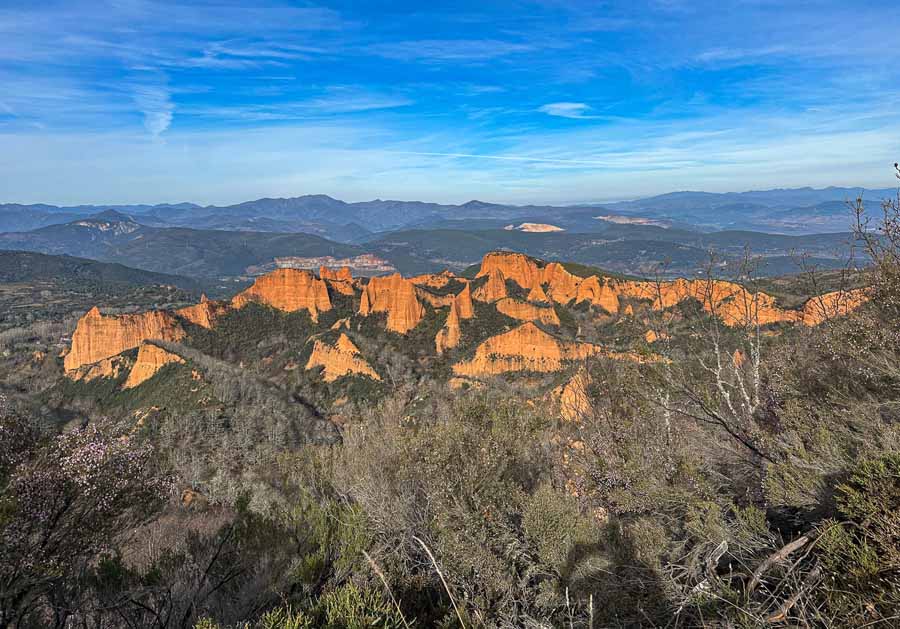
Around 45 minutes away from Montefurado are the incredible ancient Gold Mines of Las Médulas. Although you’ll leave the Ribeira Sacra, I think Las Medulas is a fascinating site and worth a visit.
Las Medulas is a UNESCO World Heritage Site and one of the most incredible and unique Roman ruins in all of Spain. Gold was first extracted here during the 1st century and continued for two centuries using advanced hydraulic channels built into mountainsides.
The landscape has forever been altered, and nearly 600 Km (373 miles) of water canals were carved into the surrounding Aquilianos Mountains.
Las Médulas provides a great Information Center, viewpoints, hiking trails, and a chance to understand the Roman impact on Spain.
End of the Ribeira Sacra Road Trip

Las Médulas is about a 2 hour drive from Ourense. You could return to Galicia and explore the area or check out more ideas in the Ribeira Sacra below.
Alternatively, you could continue east and visit Ponferrada, a village famous for its Knight’s Templar Castle.
If interested more in the Roman water canals, head to the tiny village of Peñalba de Santiago and spend the next day hiking along the Old Roman Canals.
More Places to See in the Ribeira Sacra

The Ribeira Sacra is a huge area and this road trip only focuses on the region south of the River Sil. You could easily head north or east to explore more fascinating sites.
Chantada is a short distance from the stunning village of Belesar. Highlights near Chantada include numerous churches, viewpoints like the Cabo do Mundo, small waterfalls, and the Monastery of San Salvador.
The Courel Mountains are a UNESCO World Geopark and is a spectacular place for nature lovers. There are small villages, waterfalls, challenging hikes, old Castro ruins, and unique geological formations.
Other Ways to Experience the Ribeira Sacra

Spain is famous for its many Camino de Santiago pilgrimage routes. Camino routes span all across Europe and end at the impressive Cathedral de Santiago de Compostela.
One of the best ways to experience the Ribeira Sacra is to walk the Camino de Invierno. The Winter Way was an alternative path for the Camino Frances to avoid the high mountains near the village of O Cebreiro.
The Camino de Invierno diverts in the medieval city of Ponferrada. This Camino route is said to be the “most Galician” as it is the only way that crosses through all four provinces of the Galicia autonomous community (Lugo, Ourense, Pontevedra, A Coruña).
The route leaves Ponferrada and cuts through Las Medulas, the ancient Roman Gold Mines. It then follows the River Sil to Os Alvaredos, the first pueblo of the Ribeira Sacra to welcome pilgrims.
The Camino de Invierno continues along the Sil River to Quiroga, where it leads to Monforte de Lemos, the unofficial capital of the Wine Region of the Ribera Sacra. After that, the way crosses the Mino River. Pilgrims leave the Ribeira Sacra after the highest mountain pass on the route: Monte Faro.

There is still 93.8 Km (58 miles) to Santiago de Compostela. Pilgrims can enjoy a scenic path past sacred sites like Pico Sacro and celebrate a beautiful journey arriving in Santiago de Compostela.
Like all Camino de Santiago pilgrimages, it’s important to pack light and follow the arrows. If feeling inspired by all those pilgrims walking the Camino de Santiago, here are some of my top Camino de Santiago Tips for First-Time Pilgrims.
Camino de Santiago Blogs & Resources


Ribeira Sacra Tours
If you don’t feel comfortable renting a car or only have one day, these are some popular day tours that showcase the very best of the Ribeira Sacra. Since this region is not quite on the beaten path, tour options are currently very limited.
➜ Tour from Santiago de Compostela to Ribeira Sacra includes a boat trip and a stop at one of the monasteries.
➜ Ribeira Sacra, “Heroic Wines” Private Tour from Santiago de Compostela is a must for those looking to sample the best Wines of the Ribeira Sacra Region.
A Taste of the Ribeira Sacra One of Spain’s Most Special Treasures

In short, this is a short road trip to get a taste of the Ribeira Sacra. This detailed road trip of the Ribeira Sacra focuses on the area south of the Sil River.
Find the best places to stay in the Ribeira Sacra, a unique weekend itinerary, and other incredible places to see if you have more time. This guide includes stunning villages, lovely hiking trails, sacred monasteries, Roman sites, and wineries of the region.
The Ribeira Sacra remains one of my favorite places in Galicia. With more time, explore in-depth the are around the Minho River and the isolated Courel Mountains. Neither will disappoint
Visiting the Ribeira Sacra feels like stepping back in time and in the best way possible. Don’t skip this underrated region in Galicia.
Have you visited the Ribeira Sacra? Did you visit by car or on foot? Was there are place you absolutely loved that I’m missing? Let me know in the comments below!
Pack This Post for Later! Pin It!

Disclaimer: There’s a chance this post contains affiliate links, and I receive a small (but grateful) portion of the sale. There’s no extra cost to you, and I only promote things that I use and love.


