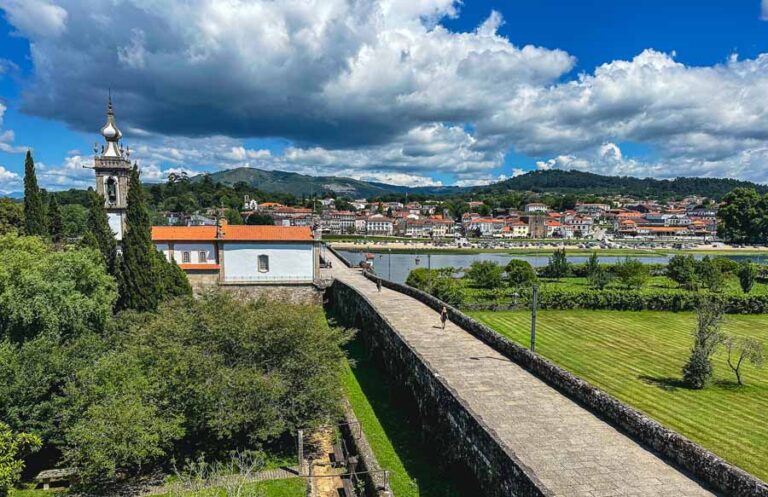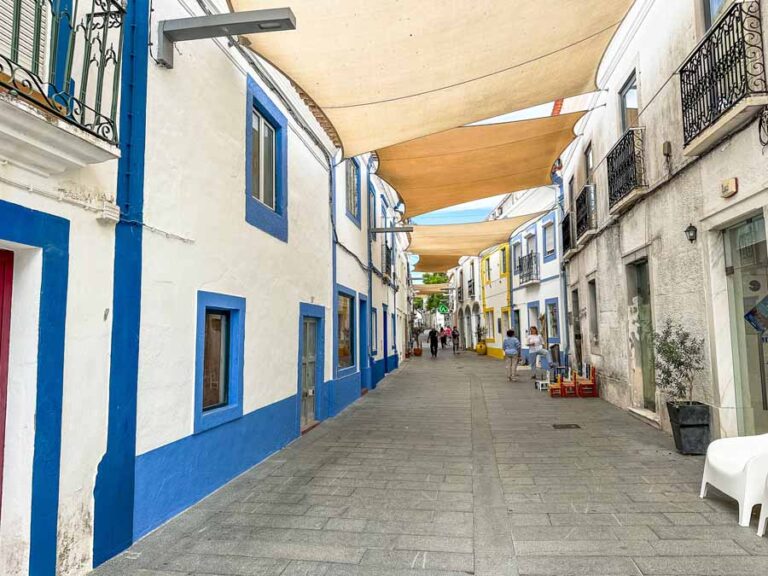

Why Arraiolos Village is Worth a Visit in Portugal’s Alentejo Region
Portugal’s Alentejo region is famous for its rolling plains filled with cork, oak, and olive trees. It’s one of Portugal’s best wine regions, and with a culture so rooted in the land, it’s also one of the most traditional.
Many people in the region have preserved their cultural heritage through artisanal handicrafts. One of these artisan villages is Arraiolos, a town famous for its beautiful carpets (rugs).
The village has references dating back to the 16th century for its wool rugs, with many villagers being employed in the handicraft. However, some say the village started rug production during the 12th century, being influenced by the Moors.
No matter the origin, today, we can still see the care and attention to the rugs that have been passed down from generation to generation.
Arraiolos makes a great stopover from Évora, and while small, the little pueblo packs a big punch. The hilltop castle of Arraiolos is lovely, and there are even opportunities to see the women creating the rugs within the numerous shops or out on the streets.
Here is a quick guide on what to see in Arraiolos and why it’s worth visiting.
Table of Contents
- How to Get to Arraiolos
- What to See in Arraiolos
- Sleep in Arraiolos
- Places to See Near Arraiolos
- Conclusion | Why Arraiolos Village is Worth Visiting
How to Get to Arraiolos

The best way to experience Arraiolos is by car, and including it as part of an Alentejo road trip. The region takes up around 1/3 of the entire country, and to truly experience its magic you’ll need a car.
Arraiolos is only a short 25-minute drive from Évora, Alentejo’s capital and largest city. There are two bus lines that run between the two (1076 & 1913), but it’s best to check the schedule here.
👉 There is also this highly-rated private tour FROM Évora to Arraiolos that showcases the carpet makers, which is a great option if staying in Évora without a car
Tours from Lisbon
Another option for those short on time is to take a guided tour from Lisbon. One of the most popular day tours from Lisbon is to visit Évora. However, the tour options below also include a stop in Arraiolos.
➜ This jam-packed tour from Lisbon includes numerous highlights in Évora with stops at Arraiolos to visit the Rug Interpretation Center and the village’s stunning castle
➜ This private tour from Lisbon includes Évora and its historical sites, Montemor-o-Novo with its epic castle, and Arraiolos with its carpets and castle
Be mindful that many tours from Lisbon typically include the hilltop village of Monsaraz rather than Arraiolos.
➤ Looking to visit Monsaraz? Here’s my quick guide on what to see and do in Monsaraz
What to See in Arraiolos Village
Most of the sights can be explored in Arraiolos casually over a few hours. Unfortunately, we visited on a Monday, so we found a lot of the sites closed. However, we still loved our time wandering through Arraiolos.
Interpretive Center of Arraiolos Carpet (Rugs)


Most people visit Arraiolos to see the exceptional handmade wool rugs. These carpets have been crafted by women over centuries. Again, it is debated how the mastery of the rugs came to be.
While some attribute the influence to the high number of Islamic weavers in Portugal between the 8th and 15th centuries, the first written record dates back to 1598. During the 16th century, many people in the village were tied to rug artistry, which included weavers, sheep shearers, tanners, dyers, and other specialists who helped create rugs.
The Interpretive Center of Arraiolos highlights not only the history and origins of the Carpets, but also the production process, including the techniques and materials. It also highlights numerous designs and styles of the carpets and helps preserve and conserve the cultural heritage.
Centro Interpretativo do Tapete de Arraiolos | Find it here: Praça do Município 19 | Cost: 1€ | Hours: Tues-Sat, 10:00 – 13:00 / 14:00 – 18:00, Closed Mondays
The site is located in the main plaza, Praça do Município, where you can also observe the tiles in front of the space that pays tribute to the local carpets.
Visit a Few of the Carpet Stores


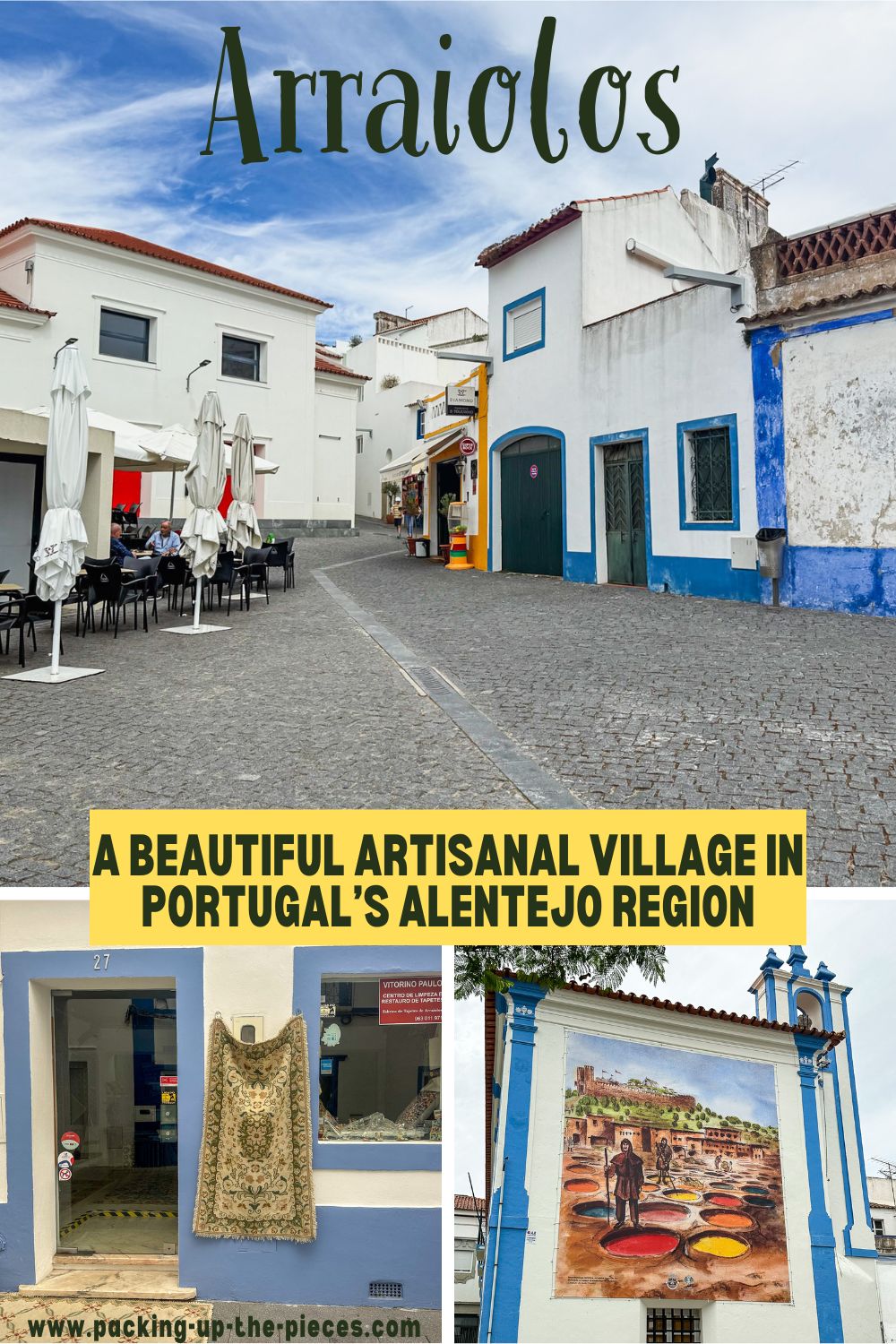
If you can’t visit the museum, the next best thing is to wander the historical center and browse the many carpet shops on the streets. Many of the shops have rugs on display, and oftentimes the local women can be seen hand-stitching the carpets.
A majority of the shops can be found on Rua Alexandre Herculano. Shopping at the local artisans helps preserve the handicraft of this skill. While you may not be able to purchase a carpet, there are also items like purses, pillowcases, and other household items.
👉 Here’s an official list created by the village of the Carpet Artisans in Arraiolos
Arraiolos is one of the best villages in the Alentejo province to visit for artisanal products.
Take a Stroll Through the Village

Most of the action in the village happens around the main town square, Praça do Município. There are numerous cafes in the plaza, a few local tasquinhas, and the Arraiolos Carpet Museum.
Near the Plaza, don’t miss the Misericordia Church. The church was constructed in 1524, in Baroque architectural style. While it looks like any other church, the interior is famous for its beautiful blue tiles. We weren’t so lucky to visit here either.
Another lovely place to walk through is the public gardens. There is a little gazebo and green space.
Of course, Alentejo is known for its delicious cuisine, and many of the restaurants in town serve the black Iberian pork, lamb, and hearty soups and stews.
Arraiolos Castle


We were pleasantly surprised by the Arraiolos Castle. It isn’t the most iconic or well-preserved castle in the Alentejo region, but it does deserve a wander up the hillside. In fact, we spent a lot of our time enjoying a lazy stroll throughout the fortified structure.
The Arraiolos Castle was said to be constructed during the 14th century by King Dinis. It sits perched on top of the hillside of Monte de San Pedro.
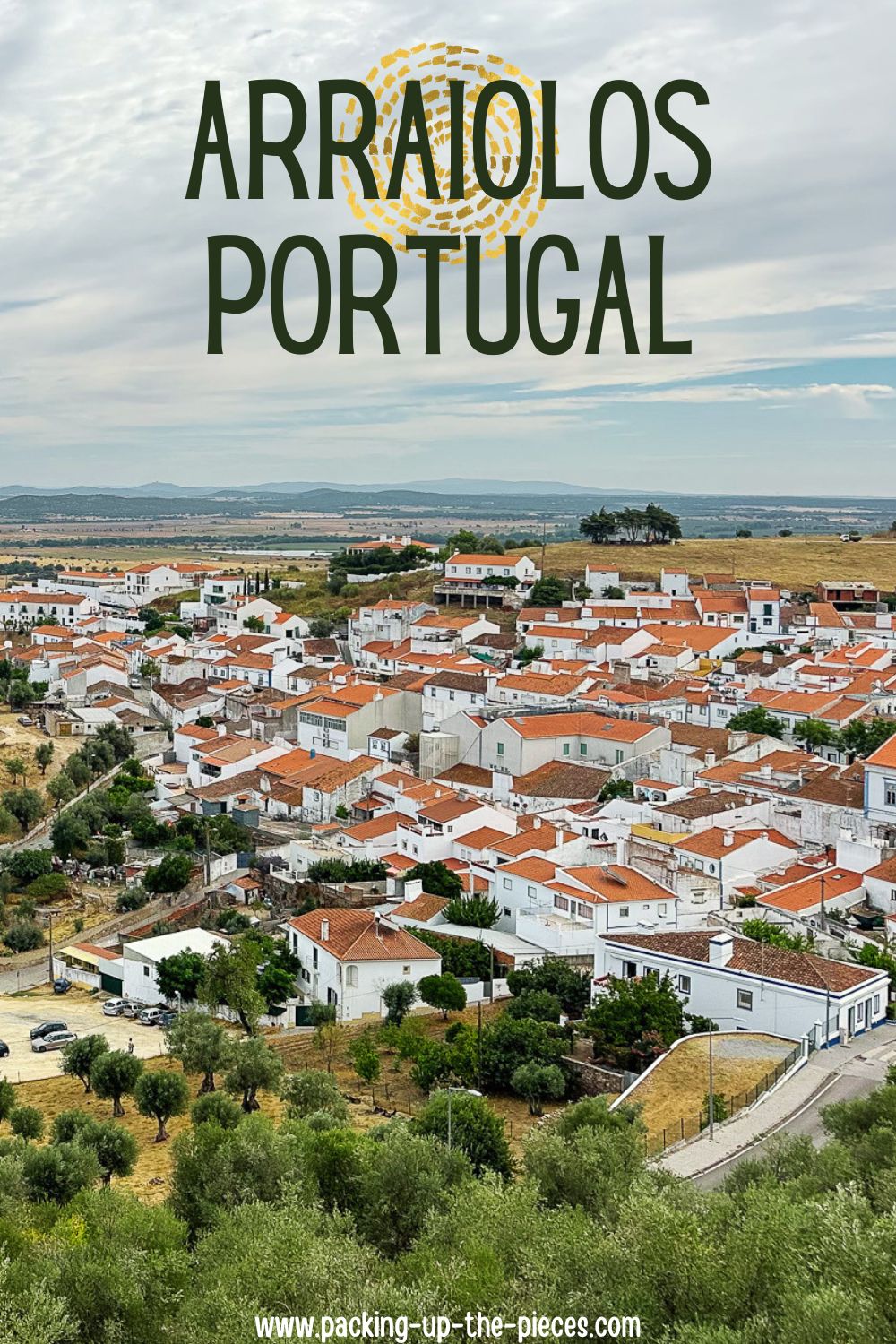
The castle provides some of the best views of the village and helps provide a glimpse into the rolling golden-kissed plains of the Alentejo region.
What’s unique about the castle is its circular shape. Today, it’s possible to walk around many sections of the castle walls.
Inside the walls, find the Church of Salvador. The original church was already standing by 1271. The church we see today was modified during the 16th and 18th centuries. The church was closed on the day we visited.
It’s easy to see that this site has been neglected, but there are still signboards in Portuguese and English to help guide visitors throughout the site. It makes for a nice, free thing to do in Arraiolos.
Eat at Least One Culinary Treat in Arraiolos

Arraiolos is famous for its “Empadas de Arraiolos,” which are little stuffed pastries. The original empanda was made of shredded chicken, but today, they are filled with numerous goodies, including pork, tuna, and of course, bacalhau.
We loved browsing the shelves at República da Empada in the main plaza. However, there are plenty of places in town that serve up these local delicacies.
If looking for something sweet, try “Pastéis de Toucinho,” which is a small pastry created by nuns of the village made of almonds, eggs, sugar, cinnamon, and pork fat (toucinho).
Hike the PR1 ARL Route
Those more interested in taking a hike can explore the PR1 ARL Route, Entre Pontos e Colinas de Arraiolos. This trail translates to the trail between Between Peaks and Hills of Arraiolos. The hike starts from the village and includes a chance to see local cork forests, a lake, and livestock grazing in the fields.
A small section of the trail follows the old abandoned railways and continues back to Arraiolos via Ilhas. This is a loop trail.
🥾 PR1 ARL Hiking Route | Official Distance: 9.4 Km (5.85 miles) | Average Duration:2 – 3 Hours | Official Trail Information
Appreciate the Monument to the Carpet

Before leaving town, take a chance to visit the Monument to the Carpet. A fairly new structure that was inaugurated on December 23, 2001, it honors the importance of the artisanal handicrafts in Arraiolos.
Where to Sleep in Arraiolos
Arraiolos is quite small, but it’s a quieter place to sleep than Évora. One main draw is the Pousada Convento Arraiolos, which is a restored old convent from the 16th century.
➜ Pousada Convento Arraiolos offers a pool, breakfast, and a quiet location just on the outskirts of Arraiolos village. The old convent also accepts dogs up to 15 kilos.
➜ Casa D. Diogo is located in the heart of the village in a historical home with super friendly hosts
➜ Casa do Plátano – Arraiolos offers private rooms with beautifully curated public spaces.
➜ Browse all the Places to Sleep in Arraiolos
Places to See Near Arraiolos
Here are some worthwhile places to see near Arraiolos in the Alentejo region. All the approximate driving times are for those renting a car.
Évora (25 minutes)


Évora is the largest city in the Alentejo and the capital city of the province. The historical city is known for its rich cultural history, including Celtic roots, Roman rule, Visigothic influence, and Moorish impact. Many sights can still be seen from many of these power shifts.
During the 15th century, Évora had its Golden Age, with many of the kings and royalty residing in the area.
Évora’s highlights include the Templo de Diana (Roman Temple), the Évora Cathedral, its medieval aqueducts, and its almost morbid Chapel of the Bones.
Many people stay in Évora and explore the nearby villages of Alentejo.
Evoramonte (30 minutes)

Most people visit the old settlement of Evoramonte located at a peak along the Serra d’Ossa mountain range. It is a small fortified village with one road and the iconic Evoramonte Castle. The castle sits at about 481 meters (1,578 ft).
The fortified village was built in 1306 under the rule of King Dinis. The castle was damaged by the great Lisbon earthquake and was rebuilt in its unique style in 1531.
Evoramonte is a sleepy village with one of the “most peaceful” guesthouses, The Place at Evoramonte.
Estremoz (35 minutes)

Estremoz is known as the “White City” due to its numerous marble quarries located around the village. Many of the structures boast marble facades, like the Torre das Três Coroas of the Estremoz Castle.
The medieval Old Town is perched on the hillside with its twisting streets and 13th-century walls. The Estremoz Castle was built by King Dinis for his wife, Queen Isabel of Aragon, who was known for her charity and kindness towards the poor, which would go on to make her a saint.
The “New Town” sits below the castle. It was constructed during the 14th century, with the fortified walls being completed during the 17th century.
Estremoz has numerous museums, twisting cobblestone streets, and one of the most bustling Saturday Markets in the Alentejo region. The village is surrounded by numerous wineries, and culinary treats include unique pork dishes.
We stayed in Estremoz on our last trip to the Alentejo and loved it!
Montemor-o-Novo (20 minutes)

Montemor-o-Novo is a lovely village with its iconic hilltop Castle. The Castle of Montemor-o-Novo is free to explore and offers incredible views of the village below.
The 13th-century walls contain the old village, and it’s possible to appreciate the old entrance gates, a clock tower, fortified towers, the São Tiago Church, which acts as the interpretation center, and the Convento da Saudação.
We made a quick little impromptu stop here and spent a little time wandering the old village with the Castle of Montemor-o-Novo.
Conclusion | Why Arraiolos Village is Worth Visiting

In short, this is a quick overview of why Arraiolos village is worth visiting in Portugal’s Alentejo region. I’ve included tips on how to get to Arraiolos, what to do there, places to stay, and nearby places that are easy to include on a visit.
Although small, this beautiful village is packed with a unique history of making rugs. Most of the sights in the village are there to help preserve this centuries-old craft. Visit the Interpretation Center, browse the local shops, and climb up the historical castle.
Those interested in artisanal works will love visiting Arraiolos. Those who love nature and hearty pies and sweets will also love stopping to savor these delicacies.
Arraiolos can easily be explored in a lazy half day, or spend the night and appreciate a quieter pace of life in the Alentejo region.
Don’t miss Arraiolos, a village woven in its artisanal rug-making techniques.
Have you visited Arraiolos in Alentejo, Portugal? What did you think? Is there anything that needs updating? Let me know in the comments below!
Pack This Post for Later! Pin It!


Disclaimer: There’s a chance this post contains affiliate links, and I receive a small (but grateful) portion of the sale. There’s no extra cost to you, and I only promote things that I use and love.