

5 Special Villages in the Alentejo to Experience Incredible Artisanal Handicrafts & Culture
Alentejo is Portugal’s largest region and perhaps one of its most traditional, with a rich cultural heritage. One of the best ways to experience the beauty of Alentejo is to visit a few of the many tiny villages, some of which offer a chance to see and discover unique and beautiful traditional handicrafts.
Many villages in the Alentejo region specialize in artisan goods. Many of these traditions have been passed on from generation to generation over centuries and in some cases over millennia.
Within the special region of Alentejo, find beautiful clay pottery, hand-stitched rugs, blankets, traditional food and drink, and many more cultural treasures.
Here are some of the best Alentejo artisan villages to browse, buy, and help preserve handcrafted goods.
Table of Contents
- How to Best Visit the Alentejo Artisan Villages
- Arraiolos for Carpets & Empanadas
- Reguengos de Monsaraz for Woolen Blankets
- Estremoz The City of Marble & Clay Figurines
- São Pedro do Corval The Largest Pottery Hub in Portugal
- Vila de Frades For Traditional Wine in Talhas
- More Places to Experience Artisan Goods in Alentejo Portugal
- Conclusion | Best Village in Alentejo for Handicrafts
Disclaimer: There’s a chance this post contains affiliate links, and I receive a small (but grateful) portion of the sale. There’s no extra cost to you, and I only promote things that I use and love.
How to Best Visit Artisan Villages in Alentejo Portugal

Alentejo stretches from the coast to the border of Spain. It includes Natural Parks, coastal gems, rolling fields of oak, cork, and olive groves, and villages that seem to transport visitors back in time.
Évora is the capital city of Alentejo province and makes for an excellent base. The capital city has only 50,000 people, but is packed with historical sites, delicious restaurants, museums, places to stay, and offers tours to many of these artisan villages.
It is possible to stay in Évora and visit all of these villages, and it’s also easy to include them on a road trip of the region. There are many historical places to stay in each of the villages listed. Additionally, some of these villages can be explored on guided day trips from Lisbon or Évora.
Either way, try to visit at least one of these artisan villages in the Alentejo to experience traditional life and customs.
Arraiolos | Rugs & Empanadas

- Visit from Évora: 25 minutes by car
- Visit from Lisbon: 1 hour 20 minutes by car
Arraiolos Handstitched Rugs
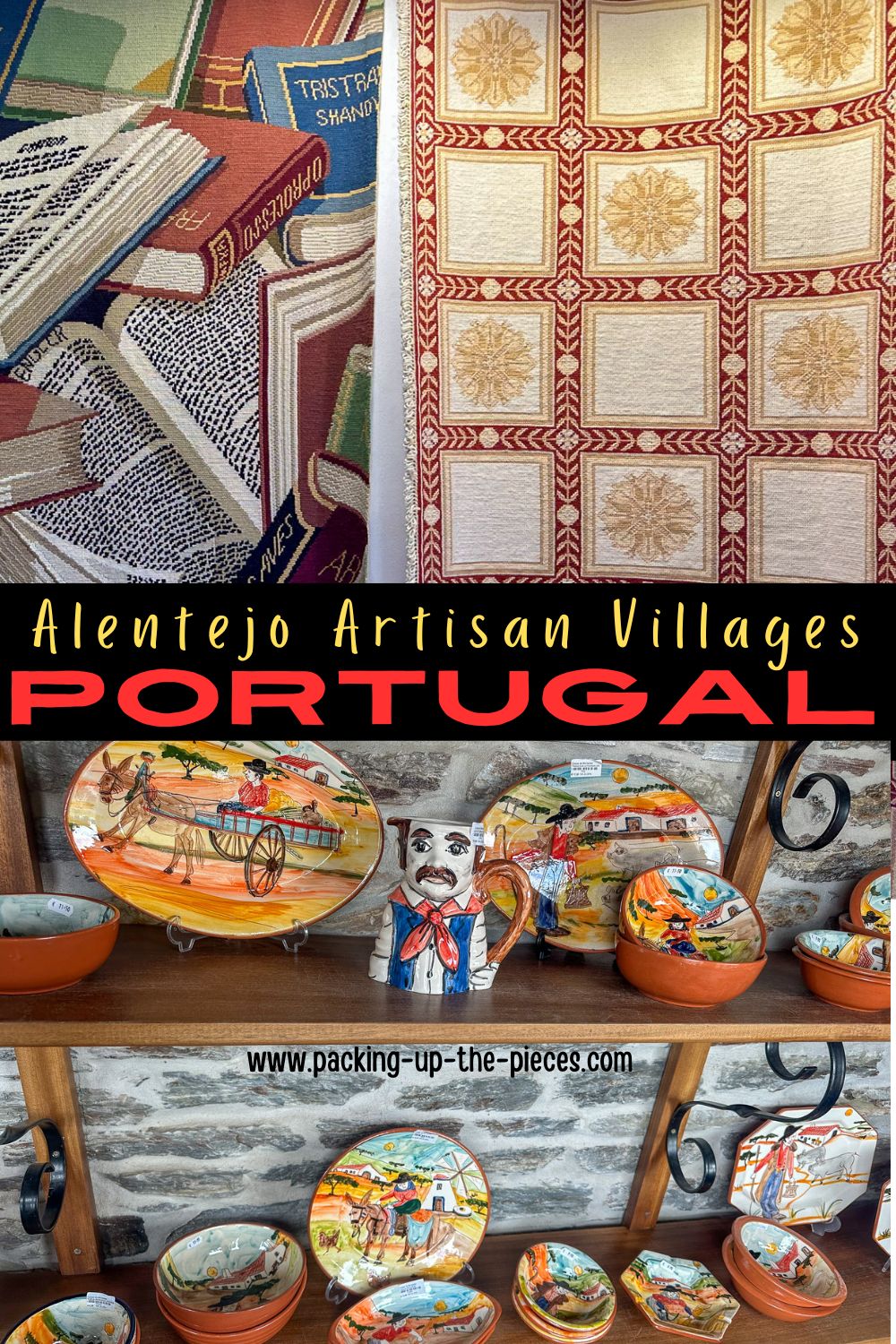
Most people visit Arraiolos to see the exceptional handmade stitched wool rugs. These carpets have been crafted by women over centuries, yet their origin story remains debated.
While some attribute the influence to the high number of Islamic weavers in Portugal between the 8th and 15th centuries, the first written record dates back to 1598. During the 16th century, many people of the village were tied to the rug artistry, which included weavers, sheep shearers, tanners, dyers, and other specialists who helped create rugs.
One of the best things to do in Arraiolos is to visit the Interpretive Center of Arraiolos. This living museum highlights the origins and history of the rugs, the production process, techniques and materials, and highlights numerous designs and styles.
This Interpretive Center in Arraiolos helps preserve and conserve this ancient artisan good.
Centro Interpretativo do Tapete de Arraiolos | Find it here: Praça do Município 19 | Cost: 1€ | Hours: Tues-Sat, 10:00 – 13:00 / 14:00 – 18:00, Closed Mondays
More Things to Do in Arraiolos


Arraiolos packs in a lot to see and do for such a small village. Wander the small streets of the village to see the women in action, hand-stitching rugs on wooden stools.
Another fantastic thing to do is try the “Empadas de Arraiolos.” These pies have been a culinary staple for the region, and while originally chicken, today it’s possible to try various forms of these little pastries. Another sweet treat of the village is “Pastéis de Toucinho.” This small pastry was created by nuns from Arraiolos and is made of almonds, eggs, sugar, cinnamon, and pork fat (toucinho).
Arraiolos also has a lovely hilltop Castle, even though it is in a bit of a ruin state. Those looking for a hike can walk the loop trail of Between Peaks and Hills of Arraiolos (PR1 ARL).
Arraiolos has the beautifully restored Pousada Convento Arraiolos, which is housed in a 16th-century convent
Tour Arraiolos

Those without a car can join a guided tour from either Lisbon or Évora.
➜ This tour from Lisbon highlights historical places in Évora and stops in Arraiolos to visit the Rug Interpretation Center and the Arraiolos Castle
➜ This private tour from Lisbon stops in Évora, Montemor-o-Novo, and Arraiolos to see the carpets and castle
➜ This highly-rated private tour is from Évora and visits Arraiolos and the carpet makers
Reguengos de Monsaraz | Blankets & Woven Items
- Visit from Évora: 40 minutes by car
- Visit from Lisbon: 2 hours by car
Reguengos de Monsaraz is famous for its heirloom wool blankets. One of the best places to see here is Fabricaal. The workshop offers a chance to see people weaving on looms, which dates back to the 16th century.
Fabricaal | Find it here: Rua dos Mendes 79, Reguengos de Monsaraz | Cost: 5€ | Hours: Mon-Fri, 9:00 – 13:00 / 15:00 – 17:30
The tour costs 5 Euros, but it’s reimbursed if you purchase something in the shop. While Reguengos is most famous for its merino wool blankets, the modern workshop also makes handbags, rugs, cushion covers, computer cases, and more.
Reguengos de Monsaraz also has the notable Distilery Gin Sharish.

Those who don’t visit the factory can also find an artisanal shop in Monsaraz, Loja Fabricaal Monsaraz.
Monsaraz is a beautiful hilltop village with whitewashed houses and views, and it is only 15 minutes from the factory. Monsaraz is worth visiting and is considered one of the most beautiful villages in Portugal.
The area surrounding Monsaraz is a spectacular place to see megalithic structures, and at night, the Observatório do Lago Alqueva (OLA) is part of the Dark Sky® Reserve.
Estremoz | Marble & Bonecos de Estremoz

Estremoz is known as the “White City,” and while it does have many white facade buildings, it’s more to do with the numerous marble quarries located near the village. One of the most iconic marble facades is the Torre das Três Coroas of the Estremoz Castle.
The castle was built by King Dinis for his wife, Queen Isabel of Aragon, who was known for her charity and kindness towards the poor, which would go on to make her a saint.
Today, it’s possible to visit the Pousada Castelo de Estremoz (2 Euros). Alternatively, the Estremoz Castle is now a luxury hotel, the Pousada Castelo de Estremoz, with a pool, historical rooms, and breakfast included.
Besides the 13th-century castle, many of the monuments throughout the village are made from the marble coming from the nearby quarries.
Estremoz is worth visiting due to its numerous museums, like the Museum of Berardo Estremoz, a museum that boasts over 800 years of Portuguese tiles (Azulejos), and the Estremoz Municipal Museum Professor Joaquim Vermelho, which highlights local crafts and rural living of the Alentejo region. There’s also the kid-friendly Science Museum.


Estremoz boasts cobblestone streets, a beautiful fountain, and is home to the weekly Saturday Market, which is one of the most lively in the entire Alentejo region. The village is surrounded by numerous wineries and offers chances to delve into the regional cuisine that typically features pork.
➤ Those interested in guided tours can take this local Estremoz Walking Tour
Bonecos de Estremoz

One of the more unique handicrafts from Estremoz is the Bonecos de Estremoz. These are clay figures that are now considered a UNESCO Intangible Cultural Heritage of Humanity. The Bonecas of Estremoz date back to the 17th century and showcase local cultural and natural elements.
Estremoz has the Interpretative Center of Boneco de Estremoz, where you can see a variety of the clay figures. Many of the local museums also have them on display.
Centro Interpretativo do Boneco de Estremoz | Find it here: Rua Vasco da Gama 3, Estremoz | Cost: 1.50€ | Hours: Tues – Sun, 9:00 – 12:30 / 14:00 – 17:30
Marble Tours
This guided tour from nearby Vila Viçosa handles all the logistics to visit the Marble Quarry and includes a stop at a workshop and marble mill
São Pedro do Corval | Pottery Hub

- Visit from Évora: 45 minutes by car
- Visit from Lisbon: 2 hours by car
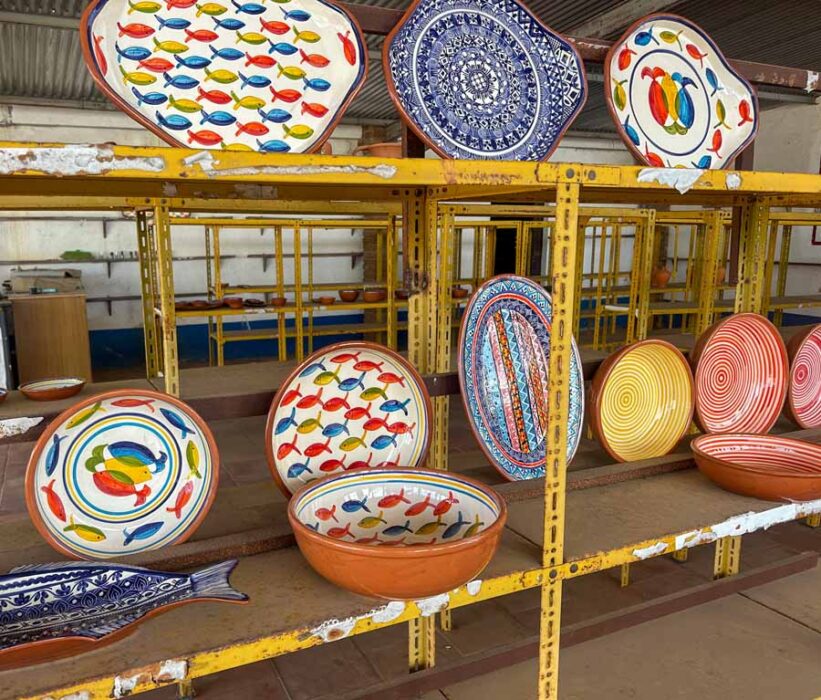
São Pedro do Corval is an artisan village famous for its hand-painted pottery. The small village has more than 21 working artisan shops, making it home to the largest concentration of pottery shops in Portugal and the entire Iberian Peninsula.
It is said that the region’s history with pottery dates back to prehistoric times. With all the megalithic structures and dolmens, it’s easy to tie pottery making to this timeline. The first historical reference to São Pedro do Corval as an artisanal pottery hub is first mentioned during the 17th century.
A good place to start is Casa do Barro – Centro Interpretativo da Olaria. This small building as a local tourist information center and provides information on all the pottery artisans within the village.
However, if it’s closed, a majority of the shops are found on the main street in the village. The best way to experience the pottery is to browse each shop and see the unique style of each handicrafter. We parked the car and just started wandering from Olaria to Olaria.
➜ Discover Monsaraz and the Art DA Olaria in São Pedro do Corval is an organized tour that offers a guided experience in Portugal’s Pottery Village of Corval and highlights of the hilltop village of Monsaraz
Vila de Frades | Wine from Talhas
- Visit from Évora: 1 hour by car
- Visit from Lisbon: 2 hours 20 minutes by car
- This village is focused around wine tasting. Portugal has a strict legal limit for BAC of 0.05%. It is best to have a sober driver, hire a private driver, or sleep in Vila de Frades
- Browse All the Places to Sleep in Vila de Frades
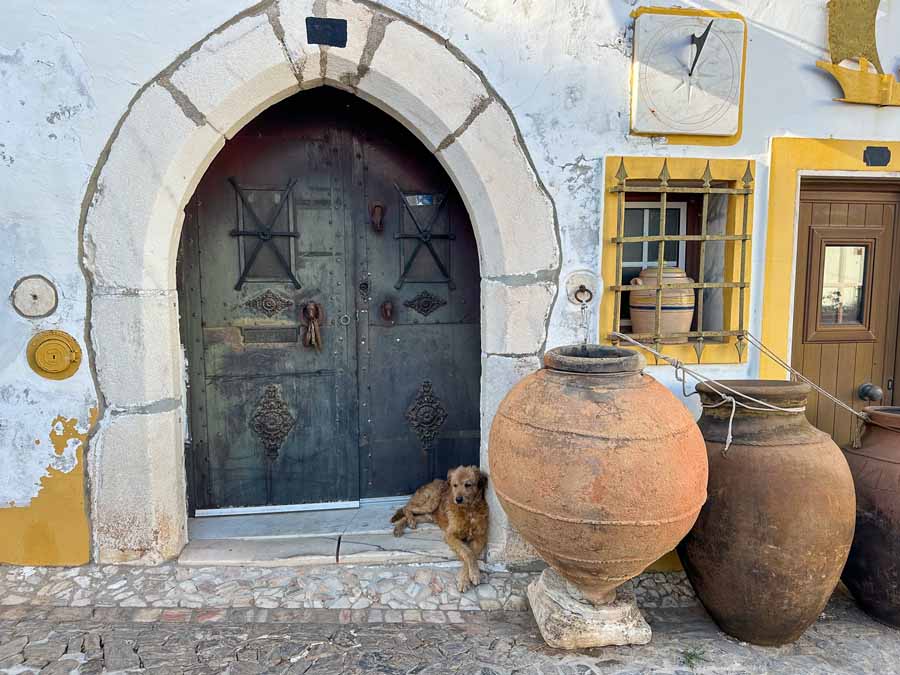
Vila de Frades is an Alentejo village famous for its wine made in Talhas. Talhas are large clay vessels that are used to ferment wine. This tradition was brought to Portugal by the Romans over 2,000 years ago and is still used today.
The grapes are crushed and then stored in the clay talhas, where fermentation happens. The wine process is simple and completely natural. This is the same method used in the famous wine region of Kakheti, but in Georgia they call their clay vessels Qvevris. Unlike in Georgia, where they bury the vessels, in Portugal, the talhas stay above ground.
Here in Portugal, some talhas can store over a thousand liters.
In Vila de Frades, there are almost 20 wineries that use the talha method to produce wine. For this reason, it has been declared the National Capital of Talha Wine. A majority of the village’s wineries are run by family or small businesses and only produce wine for local consumption, helping maintain the authenticity and quality of the wines.
Head to the Interpretive Center of Talha Wine to get an overview of the ancient Talha wine-making techniques. They showcase Roman history and production methods interactively. After that, stop in at the locally run Talhas for a tasting, or eat at a local restaurant serving up the local Talha wine.
Centro Interpretativo do Vinho de Talha | Find it here: Praça 25 de abril 11-14, Vila de Frades | Hours: Tues – Fri, 9:30 – 12:30 / 14:00 – 17:30, Sat & Sun, 10:00 – 13:00 / 14:30 – 17:30 | Official Website
Another point of interest nearby is the Villa Romana de São Cucufate. This Old Roman Villa was believed to be connected to the region’s wine history. It was at one point believed to be a monastery from the presence of beautiful frescoes still on the walls and ceilings.
Talha Wine Tours
One of the best ways to experience the Talha Wines is via a Tour
➜ Honrado Vineyards offers this highly-rated tour of the Winery-Museum that uses Talha Wine Production. This English tour offers a chance to sample 4 different DOC wines with snacks in a beautiful space. This tour is from the village of Vila de Frades
➜ Those who want to day trip from Lisbon can take this private tour of the Talha Wine Region that stops in nearby villages and the Talha Wine Interpretation Center
More Places to Experience Artisan Goods in Alentejo Portugal

➤ Redondo is an artisanal hub in the Alentejo region. Redondo has a handful of beautiful pottery factories and a museum that highlights the clay pottery. Redondo also has a museum dedicated to its beautiful paper flower art. Some of the tascas also produce wine in talhas.
On top of that, Redondo is home to Corktrekking, an adventure tour group dedicated to highlighting the beautiful cork forests on tours like this 2hr Cork Safari in a Classical Land Rover or this Jeep Cork Tour Experience Pack.
➤ Nisa is a village in the Alentejo famous for its beautiful flowered embroidery works and unique pottery “cobblestoned” with white quartz. The embroidery has been done by women for centuries, and their cautious hands also place the white quartz stone in the pottery.
Conclusion | Best Villages in Alentejo for Handicrafts

In short, these are some fabulous villages in Portugal’s Alentejo region to discover artisan goods and products. Many of the villages highlight handicrafts that have been passed down from generation to generation; some traditions can be traced back to the Romans.
The best way to discover these villages is with a car or on a guided tour. Some people may choose to base themselves in Évora, the capital city of Alentejo, or move slowly and intentionally from village to village.
These handmade crafts in the Alentejo range from pottery to rugs, embroidered goods, unique clay figures, and wine. Visiting these small villages is an excellent way to help preserve and maintain these intangible cultural heritage ways of life.
Do take the time to stop at the many Interpretation Centers, browse the craft shops, and help support local artists.
Have you been to any of these Alentejo artisan villages? Which one was your favorite? I know there are so many that I didn’t get the chance to visit or explore. Do you have a village you love that I’m missing so I can visit next trip? Let me know in the comments below!
Pack This Post for Later! Pin It!

Disclaimer: There’s a chance this post contains affiliate links, and I receive a small (but grateful) portion of the sale. There’s no extra cost to you, and I only promote things that I use and love.


