

6 Reasons to Visit Cangas de Onís One of the Best Gateways to the Picos de Europa
Nestled in the foothills of the Picos de Europa National Park is the village of Cangas de Onís. While the village is quite touristy, it is worth a stop when planning a visit to Spain’s beloved National Park, the Picos de Europa.
Cangas de Onís is an extremely popular base to explore the Picos de Europa National Park. Most people are drawn to the village to visit the pretty alpine Lakes of Covadonga and the sacred site of the Covadonga Sanctuary. However, there are plenty of things to do in Cangas de Onís, from visiting a few historical sites to sampling the typical cuisine.
The town picturesquely straddles the Sella and Güeña Rivers and is a nice place for a weekend getaway.
This quick guide to Cangas de Onís includes how to get to the gateway of the Asturias region of the Picos de Europa, how much time to spend there, reasons to visit, plus tips on where to eat and sleep.
Here’s my quick guide to Cangas de Onís, a lovely mountain village to base in the Picos de Europa.
Table of Contents
- How to Get to Cangas de Onís
- How Much Time to Spend in Cangas de Onís?
- The Best Reasons to Visit Cangas de Onís
- Where to Eat in Cangas de Onís
- Where to Sleep in Cangas de Onís
- Conclusion | A Quick Guide to Visiting Cangas de Onís the Gateway to the Picos de Europa
How to Get to Cangas de Onís

Cangas de Onís is a small village found in the autonomous region of Asturias in Spain. It is a popular starting point to explore the incredible Picos de Europa National Park in northern Spain.
The easiest place to access the mountain village is from Oviedo. There are frequent buses that connect Oviedo to Cangas de Onís.
Oviedo offers plenty of rental car agencies. Those who pick up a car will also find it convenient to visit the village while road-tripping through the Picos de Europa.
As the mountainous area is not far from the Bay of Biscay, popular ways to access Cangas de Onís are from the coastal cities of Gijón and Santander. Those looking to spend a day on the coast may consider resting in San Vicente de la Barquera before driving up into the mountains.
Cangas de Onís Bus Station

The Cangas de Onís Bus Station is located steps away from the center of the town. There are frequent buses run by ALSA Bus Company between Cangas de Onís and Oviedo.
Alternatively, those already in the Picos de Europa can find bus connections between Cangas de Onís and Las Arenas de Cabrales.
The Cangas de Onís bus station also offers frequent connections to the Sanctuario de Covadonga and the extremely regulated Lagos de Covadonga.
On Foot

The small mountain village of Cangas de Onís is found on a quieter and newly promoted Camino route. The route is known as the Camino Lebaniego Asturiano or the Camín de los Santuarios route.
The importance of this route has been revitalized after the 1,300th anniversary of the Battle of Covadonga that took place sometime between 718 and 722. Miraculously, Mother Mary appeared, and with her assistance, Pelayo was able to defend Covadonga and push back against the Moorish forces.
This significant battle was between the Christians led by Don Pelayo and the Moors. This battle was said to be the start of the “Reconquista.” It left Asturias as a Christian foothold in the Iberian Peninsula.
Today, the significance of the Camín de los Santuarios is that it connects three historical sites: Santo Toribio de Liébana Monastery near Potes, the Covadonga Sanctuary, and the impressive Cathedral in Oviedo.
Pilgrims can walk the special Camino Lebaniego to see the Monastery of Santo Toribio, a sacred site that is said to hold the largest piece of “true cross” or lignum crucis. From there, pilgrims follow the Camino Lebaniego Asturiano along the incredible Picos de Europa through the Covadonga Sanctuary, onto Cangas de Onís, and end in Oviedo.
Once in Oviedo, pilgrims can walk the first known Camino de Santiago route, the Camino Primitivo to Santiago de Compostela.
The Path of the Sanctuaries is over 200 Km and is not very well signposted or trekked.
👣 The Camino de Santiago is a life-changing journey. One of the best tips for first-time pilgrims is to listen to your body, pack only what you need, and walk with an open mind.
Cangas de Onís Tours

Those who don’t have a lot of time to experience the Picos de Europa may wish to book an organized tour. This is the best way to see all the highlights and attractions in one day without worrying about driving and travel logistics.
Day Tours to Cangas de Onis
➤ This highly rated tour showcases the best of Spain’s Asturias region from Oviedo or Gijón. Highlights include the Roman Bridge in Cangas de Onís, Covadonga Sanctuary, Lagos de Covadonga, and small fishing villages along the coast.
➤ This tour from Oviedo includes stops at Lagos de Covadonga, the Covadonga Sanctuary, and then stops at a coastal village
How Much Time to Spend in Cangas de Onís?

The main attractions in Cangas de Onís are all easy to explore on foot in a few short hours. It is more than possible to see most of the highlights in one full day.
I think sleeping overnight in Cangas de Onís is a must for those planning to visit the Covadonga Lakes and the Covadonga Sanctuary.
If looking to experience the nearby hiking trails, viewpoints, and villages, spend at least 2 nights in Cangas de Onís.
All the Reasons to Visit Cangas de Onís
Here are some of the highlights of visiting Cangas de Onís and nearby attractions.
1 | The Perfect Base to Explore the Picos de Europa National Park


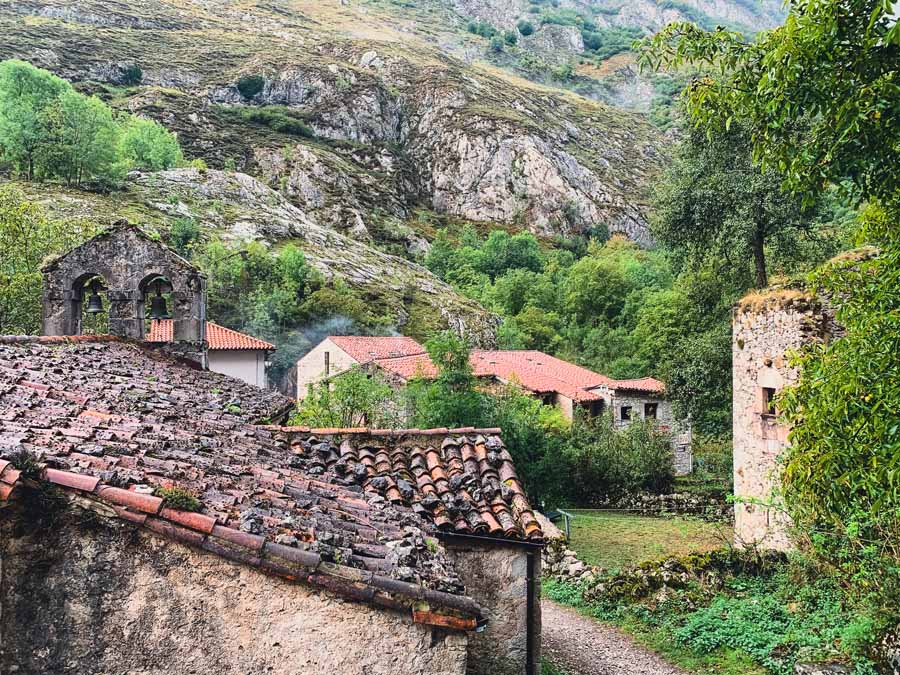
Cangas de Onís is a fantastic place to discover the beauty of the Asturias region of the Picos de Europa. Remember, the Picos de Europa National Park spans across the three autonomous communities of Asturias, Cantabria, and Castile and León.
Cangas de Onís is fairly centrally located to explore the Asturias highlights of the Picos de Europa. Oviedo is around an hour from Cangas de Onís. Covadonga is a short bus ride away, and the famous Covadonga Lakes are around 40 minutes by bus.
The Covadonga Sanctuary is less than 30 minutes from Cangas de Onís.
In addition, Las Arenas de Cabrales, another fabulous mountain village, is less than 40 minutes away. From here it’s easy to explore more highlights of the Picos de Europa, such as the Ruta del Cares hike, the isolated village of Bulnes, or a handful of other hiking trails.
Cangas de Onís is also home to tons of local tour agencies. Many of these agencies offer adventurous excursions, from hiking trips, biking and kayaking tours, and extreme sports.
Cangas de Onís is small but offers all the amenities for travelers. There are numerous restaurants, cafes, and grocery stores. In addition, small localized tiendas sell local and regional specialty items from beans to cheeses.
Hikers will love Cangas de Onís for stocking up on hiking supplies, having access to laundry, and replenishing cash at numerous ATMS.
Cangas de Onis has everything you need in a mountain village for hikers and tourists alike.
2 | Walk Across the Roman Bridge


The Roman Bridge is an iconic attraction in Cangas de Onís. This bridge is said to have Roman origins, but the current bridge we see today was probably built during the 13th to the 15th century.
The arched bridge provides a scenic footpath across the Sella River and is made from cobblestones. Underneath the bridge hangs a wooden replica of the Cross of Victory, an iconic symbol of Asturias and the “Reconquista.”
The real Cross of Victory can be seen in the San Salvador Cathedral in Oviedo.
Today, the old Roman Bridge in Cangas de Onís is a must-see attraction and is one of the most photographed spots in the village.
3 | Visit an Authentic Market

Every Sunday, Cangas de Onís offers an authentic market in the market hall behind the Palaciu Pintu. The market is so busy that it often spills out into the Plaza de Iglesia.
This is the place to buy typical Asturian products, from cheeses, produce, nuts, flowers, and meats. Many artisans come from the surrounding mountain villages to offer their local specialty items.
Even if you miss the market on Sunday, do take a few moments to wander this lovely part of town.
4 | Cangas de Onís is an Easy Access Point to the Covadonga Lakes

Perhaps the most iconic landmarks in the Picos de Europa are the natural alpine Lakes of Covadonga. The two lakes of Enol and Ercina can be seen all year round, but in the spring thaw, a third lake, El Bricial, can be seen.
As the Lagos de Covadonga are some of the most popular places to see in the Picos de Europa, they are also one of the most regulated. To help conserve the landscape and limit visitors, the Lagos de Covadonga can only be visited via bus, taxi, or shuttle during high season and holidays. Always check the official website to see when yearly regulations are in effect.
The Cangas de Onís Bus Station is the easiest way to reach the Covadonga Lakes. There is a ticket booth that sells daily tickets and can help assist visitors and easily reach the lakes.
🚌 Lagos de Covadonga Bus | Round Trip Bus Fare: 9€ | Departures: Offered by Alsa Bus Company, check the current timetables here | Duration: 50 minutes
The Lagos de Covadonga is a great place to simply walk alongside the lakes, appreciate the meadows and pastures, sample Asturian cuisine, or check out a few iconic viewpoints.
Those looking to hike up in the high mountains could take the full-day hike up to Mirador de Ordiales. This is where the founder of the park, Pedro Pidal, is buried.
5 | There are Frequent Buses to the Covadonga Sanctuary


As the Covadonga Sanctuary is such a significant place in the history of Asturias, it is also a must-visit place. Frequent buses run the short distance between Cangas de Onís and the Covadonga Sanctuary.
Bus tickets to the Covadonga Sanctuary can be purchased from the cafe inside the bus station. Tickets are only 1.55€, and the buses run almost every 30 minutes.
The Covadonga Sanctuary is completely free to visit unless you wish to add the official Museum (3€).
One of the most iconic spots at the Covadonga Sanctuary is the Santa Cueva or Holy Cave. Here, it is possible to visit the small chapel where Don Pelayo is buried. It was in these surrounding caves that he was able to hold off the Moorish invasion. The cave has been a holy site since the 8th century and was a sacred site probably long before that.
Below the Santa Cueva is a beautiful waterfall that is home to the Fuente de los Siete Caños, a water fountain that states women who drink from it will be married within a year.
The signature pink Basílica de Santa María la Real de Covadonga has a daily mass and a crypt. Make sure to stroll through the beautiful public garden or explore one of the nearby hiking trails.
There are a few cafes and restaurants onsite and near the bottom entrance. As this is a popular pilgrimage stop, it is typically always busy here, especially around mass times.
Covadonga Sanctuary | Find it here: Lugar Covadonga, 33589 Covadonga Asturias | Free Admission, except the Museum | Hours: 8:00 – 20:00 with multiple daily masses | Official Website
6 | Tap Into the Cider Culture & Typical Asturias Cuisine


The Asturias region produces 80% of all cider, or sidra in Spain. Asturias has over 80 major cider mills and is a fantastic place to try out a typical Sidrería or cider house.
Asturias cider culture is unique, and the ciders are typically poured from a tall height to create bubbles. These bubbles allow the true flavor of the cider to shine through. This is why only a few “sips” are poured at a time.
To ensure the flavor of the cider, many cider houses have little machines that replicate the process. The cider culture in the mountains of Asturias is vastly different than the Basque cider that is typical, like from the hillside village of Astigarraga.
In addition to Cider culture, Asturian cuisine highlights hearty stews featuring meats and beans. Do treat yourself to one nice meal in Asturias and savor the richness of the mountain cuisine.
Don’t miss a chance to stop in a local store selling typical products, where they offer different samplings of the local cheeses.
Where to Eat in Cangas de Onís

There are plenty of different places to eat in Cangas de Onís, from cafes to typical Sidrerías. One of the busiest places to eat in town is at one of the many restaurants along Calle San Pelayo. Find plenty of cider houses, restaurants, and bars to choose from.
I had a fantastic menu del dia from Sidreria Llantares de Pelayo. This restaurant offers a two-course meal with wine and dessert for a fair price. I had to join a waiting list to grab a seat at lunchtime.
Just down the road, La Sifoneria is a great place to sample traditional cuisine, with the idea that the plates are to be shared. They also have a great cider menu.
Those seeking an authentic cider experience can eat at Restaurante Sidrería El Polesu. This fabulous restaurant hand-pours cider in the traditional way high above the glass. My glass was never empty, and my tummy was left full and satisfied. I sat outside, but the interior is found in an old mill.
Those looking to have great views of the Roman Bridge can enjoy the outdoor terrace of Mesón Puente Romano.
The heart of the city surrounds the “El Parque.” Tons of cafes and restaurants offer outdoor seating that spills into the park.
A fabulous place to get a pastry and coffee in the morning is Pastelería La Golosa.
Where to Sleep in Cangas de Onís Spain

There are plenty of accommodation options in Cangas de Onís. As this is a popular destination during the summer and weekends, prices can increase significantly during the busy season.
I highly suggest sleeping close to the city center in Cangas de Onís to be close to the bus station if you don’t have a car.
➜ Pension Reconquista offers simple rooms with lovely little balconies
➜ Hotel Los Robles is a great budget-friendly option, steps away from many great restaurant options
➜ Pensión San Pelayo 10 is a highly rated place to sleep in Cangas de Onis
➜ Hotel Santa Cruz is a popular option near the center of the village
➜ Hotel Los Lagos Nature is found in the heart of Cangas de Onís
➜ Browse all the Cangas de Onis Accommodation Options
Seeking More Solitude?
Alternatively, with a car, these are quiet and peaceful places to sleep outside of Cangas de Onís.
➜ Outside of town, Parador de Cangas de Onis sits on the banks of the Sella River
➜ Casa Rural Asprón is steps away from the Covadonga Sanctuary
➜ Hotel La Casona de Llerices comes highly recommended for its stunning views and warm hosts.
➤ These are all my top recommendations on where to sleep in the Picos de Europa
Conclusion | A Quick Guide to Cangas de Onís Spain

In short, this is a quick guide to Cangas de Onís, a cute mountain village located in the foothills of the Asturias region of the Picos de Europa National Park. This guide to Cangas de Onís includes the best ways to reach the village, what to see and do there, and tips on where to eat and sleep.
Cangas de Onís has everything you need to explore the Picos de Europa, from grocery stores, laundry facilities, hiking supplies, ATMS, delicious restaurants, and a variety of places to sleep.
Within the small town, find a bus station that connects the highlights of the Picos de Europa from the Covadonga Sanctuary to the alpine Lakes of Covadonga.
While most people use Cangas de Onís as a base to explore the Picos de Europa National Park, the town offers sites like the Roman Bridge, cider houses, and a bustling weekly market. It is surrounded by beautiful nature, and you’ll find plenty of tour agencies that provide adventurous activities.
Cangas de Onís is an ideal gateway to the Picos de Europa National Park.
Have you visited Cangas de Onís while exploring the Picos de Europa? While it is touristy, did you enjoy the attractions and nearby natural gems? Is there anything that needs updating in this guide? Let me know in the comments below!
Pack This Post for Later! Pin It!


Disclaimer: There’s a chance this post contains affiliate links, and I receive a small (but grateful) portion of the sale. There’s no extra cost to you, and I only promote things that I use and love.


