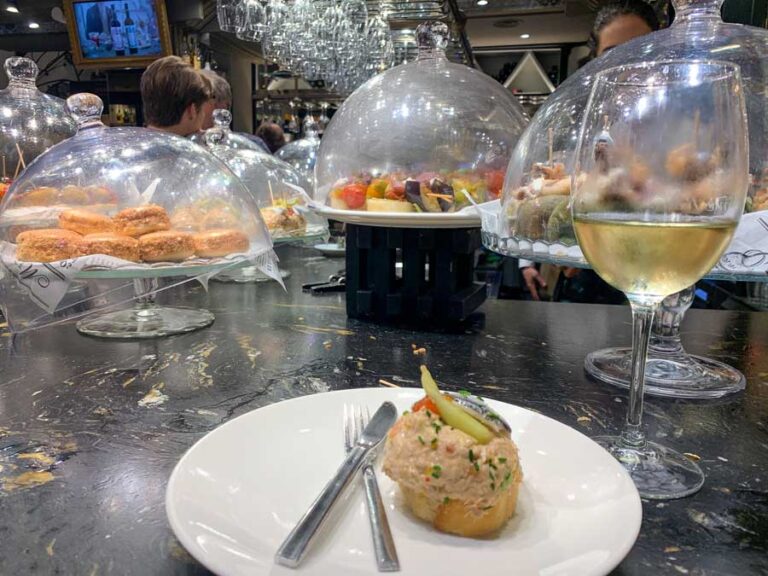

10 Unmissable Things to Do in the Picos de Europa National Park in Spain
The Picos de Europa is one of Spain’s most incredible National Parks, and it was also the first. The park consists of limestone peaks, stunning river valleys, and a culture deeply connected to the land.
Located in northern Spain, the Picos de Europa National Park spans the three autonomous regions of Spain: Cantabria, Asturias, and León (Castilla & León). Each section of the park is different from the next; visiting here is as unique as the landscapes.
As the park is extremely diverse, there are numerous things to do in the Picos de Europa. From hikes, epic viewpoints, culinary treasures, historical sites, and villages that stick in your mind, these are highlights not to miss in the Picos for first-time visitors.
Here are the top 10 things to see and do in the Picos de Europa National Park.
Table of Contents
- A Quick Note on Visiting the Picos de Europa
- Best Things to See in the Picos de Europa for First-Time Visitors
- Where to Base in the Picos de Europa to Make the Most of Your Time
- Conclusion⏐Overview of Unmissable Things to Do in the Picos de Europa
Disclaimer: There’s a chance this post contains affiliate links, and I receive a small (but grateful) portion of the sale. There’s no extra cost to you, and I only promote things that I use and love.
A Quick Note on Visiting the Picos de Europa

I’ve visited the Picos de Europa area multiple times. I have rented a car, used public transportation, and even walked through the park, and I’ve only scratched the surface of what there is to see. Each time I return, I fall in love a little bit more with the energy of this area.
If visiting the Picos de Europa for the first time, it’s best to rent a car. Unless planning to spend the entire time hiking in the high mountains, a car allows you to move with ease throughout the park.
Almost every site that I list here is accessible via this five-day Picos de Europa road trip. If planning on doing some hiking (it’s a hiker’s paradise), plan on extending your time in the park. Many of the hikes take a full day.
Alternatively, if you only have time to visit one section of the park, public transportation would be fine. The three main access villages to the park are Potes (Cantabria), Cangas de Onís (Asturias), and Las Arenas de Cabrales (Asturias).
☞Always check in with up-to-date alerts and information on the official Parque Nacional Picos de Europa
Picos de Europa Tour Options

Those with extremely limited time could opt to take a day trip to the Picos de Europa. Most tours choose one section of the park and focus on a few highlights. These are NOT hiking focused tours, unless it specifies it.
Always check where the tour departs from (typically Oviedo or Santander).
As these tours depart early, sleep in Oviedo or stay in Santander, depending on which tour you book.
Picos de Europa Day Tours
► This highly-rated tour departs from Oviedo and stops at the Covadonga Lakes, Sanctuary, and offers free time in Cangas de Onís. The tour ends at the coastal village of Lastres
► This small-group tour departs Santander and includes Potes and the Monastery with a ride up the Fuente Dé Cable Car
► Those looking for a custom Picos de Europa Tour can arrange one via this Full Day Private 4WD Tour from Santander or Bilbao
Unmissable Places to See in the Picos de Europa

The following are my favorite places to visit in the Picos de Europa. I’ve included the closest village hub to access each point of interest.
1 ⏐Ride the Teleférico of Fuente Dé ⏐Near Potes
One of the best things to do in the Picos de Europa is to ride the Cable Car in Fuente Dé. It whisks visitors up nearly 2,500 feet up to the top of the Central Massif in under four minutes. The top cable car station sits at an elevation of 6,079 feet (1,853 m).
The views from the top are incredible, with jagged limestone peaks stretching in every direction. This is an excellent place to look for Chamois, the goat-like creatures that call these mountains home. There is also a restaurant and cafeteria at the top from which to enjoy the panoramic views.
This is one of the most popular places to visit in the park, so during high season, pre-booking tickets is essential.

High Season: July, Daily: 9:00 – 19:00 / August, Daily: 8:00 -19:00 | Last Departure runs 15 minutes before closing | High Season Adult Ticket: Round-Trip €30 / One-Way: €17 | Reserve Tickets Online Here
Those who are looking to incorporate a hike can easily do so from the top of the cable car. One of the most popular routes is to descend the mountain via the Puertos de Áliva Trail (PR-PNPE 24). More advanced hikers with suitable weather may wish to head to the high mountains via the Horcados Rojos(PR-PNPE 23)
The Teleférico de Fuente Dé is an excellent option for those who wish to experience the mountains of the Picos de Europa, whether you’re a hiker or not.
Sleep in Potes or spend the night in the small village of Espinama
In Fuente Dé, steps away from the Cable Car parking lot, is the Parador Hotel de Fuente Dé and Hotel Rebeco.
2 ⏐Hike the Ruta del Cares (Cares Gorge) ⏐Easiest Access via Las Arenas de Cabrales
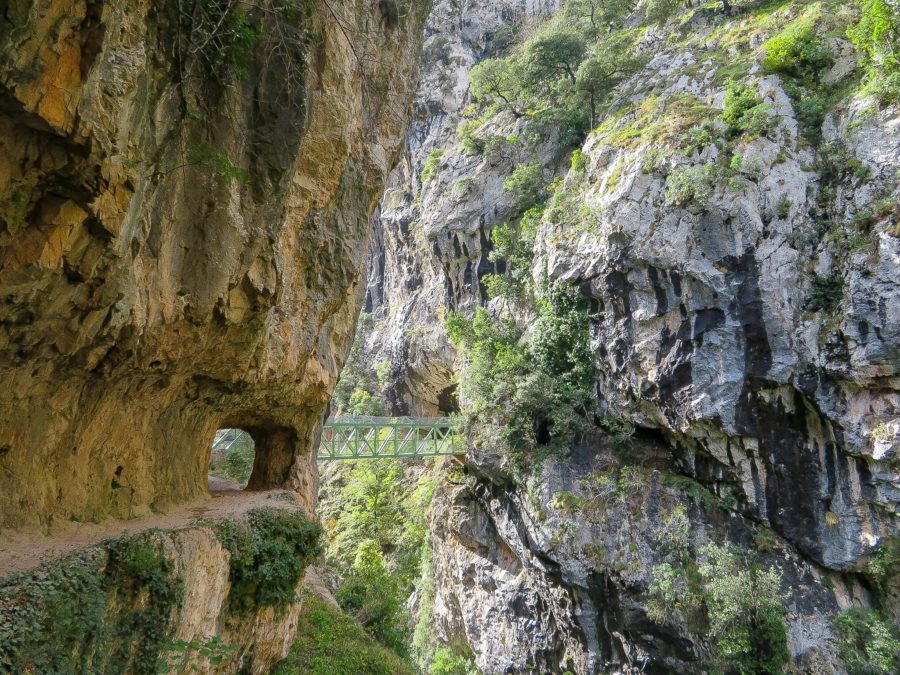
The Ruta del Cares is without a doubt the most famous hike in the Picos de Europa, and for good reason.
This out-and-back trail follows the Cares River through a stunning limestone gorge, follows narrow paths carved into the cliff face, and small tunnels. Cross over the river via bridges and spend the afternoon with jovial goats.
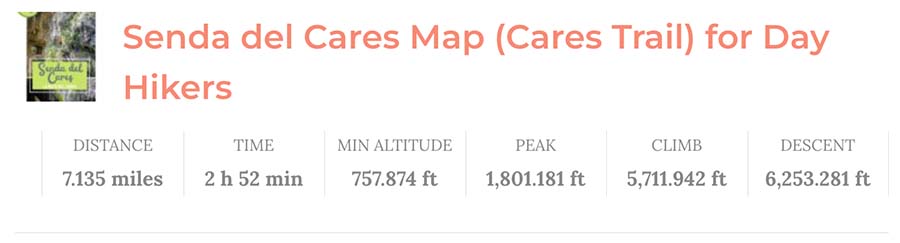
The trail stretches 12 km each way between Caín de Valdeón (León) and Poncebos (Asturias). If you have a car, I think it’s best to start the trail from Caín, so if you opt not to make the full length, you’ll still catch the best of the route.
The trail is mostly flat, but if walking to Poncebos, you’ll have a steeper descent into the village. As it’s an out and back trail, prepare to the uphill on the way back.
If hoping to walk the entire 24 km route (15 miles), plan on it taking at least 6–8 hours round-trip. Depending on where you start, grab lunch in either Poncebos or Cain, or pack a lunch and enjoy the gorge views.
This is by far one of the most memorable hikes in the Picos de Europa.
Most hikers prefer to sleep near one of the Cares Route Trailheads
The hamlet of Poncebos offers a few lodging options. I’ve personally stayed at Hostal Poncebos and loved it.
The village of Caín de Valdeón has a few lodging options, including the Albergue de Caín
3 ⏐ Visit the Picturesque Lagos de Covadonga ⏐ Cangas de Onís

The Covadonga Lakes are two crystal clear glacial alpine lakes: Lago Enol and Lago Ercina. The Lakes of Covadonga are found in the Asturias region of the park.
The lakes sit at an elevation of around 3,720 feet (1,134m), to reach them is an adventure in itself, with twisting roads and stunning views around every bend.
Note that during the high season, the road is closed to private vehicles as a conservation measure, so you must take a bus or shuttle from Cangas de Onís. During the summer and around holidays, it’s essential to book your ticket in advance.
‼️ Confirm the regulated dates with the official tourism website.
These scenic lakes are probably the most visited sites in the Picos de Europa National Park. This is because it’s quite easy to reach them from Cangas de Onís. Near the lakes, it’s possible to follow numerous hiking trails, sample traditional cuisines of the mountain region, check out the visitor center, or simply savor the views while breathing in the fresh mountain air.

If planning to hike, you’ll want to spend the whole day around the Lagos de Covadonga. The three main trails of Covadonga Lake are:
- PR-PNPE- 2 Los Lagos, a scenic loop trail around the lakes that can be casually walked in a few hours / 3.9 miles (6.2 KM)
- PR-PNPE- 4 Vega de Ario, a moderate full-day out and back trail that takes hikers up to Vega de Ario, a shelter in the high peak, and then back down / 9.5 miles (15.2 KM)
- PR-PNPE- 5 Mirador de Ordiales, a moderately challenging full-day out and back hike that takes hikers past the Vegarredonda mountain hut and to the final resting place of Pedro Pidal, an avid conservationist and founder of Spain’s first National Park (and then back down) / 14.5 miles (23.3 KM)
☛ Always check in with the official hiking routes via the Asturias Tourism website
Covadonga Sanctuary


It’s easy to combine a trip to the Lagos de Covadonga with the Covadonga Sanctuary. The signature pink Basilica of Covadonga is found on the road between Cangas de Onís and the Lakes.
The Sanctuary of Covadonga consists of the Basílica de Santa María la Real de Covadonga, Santa Cueva (Holy Cave), a crypt, hiking trails, a beautiful public garden, and a museum.
The Sanctuary is free to visit, but the on-site museum has an entrance fee.
Covadonga Sanctuary | Find it here: Lugar Covadonga, 33589 Covadonga Asturias Spain | Hours: 8:00 – 20:00 with multiple daily masses | Official Website
There are a few cafes and restaurants withing the grounds and nearby. It all depends on how much energy you have after spending the day at Lagos de Covadonga.
There are some great places to stay in Covadonga if looking for something a little quieter and closer to the Sanctuary and Lakes
4 ⏐Experience the Cider Culture of Asturias ⏐Anywhere in the Asturias Region

At the end of the day, there’s nothing better than enjoying a typical cider in the Asturias region. It’s easy to find a Sidreria, or a ciderhouse, in Cangas de Onís and Las Arenas de Cabrales.
The Asturias region produces 80% of all cider, or sidra in Spain. Asturias has over 80 major cider mills and is a fantastic place to try out a typical Sidrería or cider house.
Asturias cider culture is unique, and the ciders are typically poured from a tall height to create bubbles. These bubbles allow the true flavor of the cider to shine through. This is why only a few “sips” are poured at a time.
To ensure the flavor of the cider, many cider houses have little machines (escanciadores de sidra) that replicate the process. While it’s more animated and fun to have the waiters pouring the cider, it’s also neat to see what each restaurant and bar comes up with to “pour the cider from.”
The cider of Asturias pairs well with the cuisine of the region, which typically features hearty stews with various meats and beans.
5 ⏐Explore the Medieval Village of Potes


Potes is a fantastic gateway into the Picos de Europa National Park. This is one of the best places in the Picos to wander through the cobblestone streets and ancient neighborhoods. It’s also an amazing opportunity to explore some of the lesser know gems, like the Liébana and Camaleño valleys.
Although small, there are many things to do in Potes. The medieval village is blessed with significant historical sites and walkable streets with preserved traditional homes. One of my favorite places is the scenic river path along the Deva and Quiviesa Rivers, which flow through the heart of the pueblo.
While the stone bridge over the Quiviesa River is iconic, I think one of the best views comes from on top of the Torre del Infantado. The tower also houses a museum.


A casual walk from Potes, find the Santo Toribio Monastery. This monastery tucked into the mountains is famous for holding one of the largest pieces of the “Lignum Crucis,” or a piece of the true cross that Jesus was supposedly crucified on.
This is one of the most significant monasteries on the Camino de Santiago. Even if you opt out of the noon mass, there are numerous hiking trails on the grounds. Head past the Ermita de San Miguel, and savor the views from the observation deck of the Camaleño Valley.
There are many places to sleep in Potes. I’ve stayed at Hosteria Picos De Europa and loved it. In town, Apartamentos Casa de la Abuela and Casa Cayo are both highly rated, as well.
Want to be close to Potes, but out of the village? Stay anywhere in the Liebana Valley Region.
6 ⏐ Sample Cabrales Cheese ⏐ Las Arenas de Cabrales
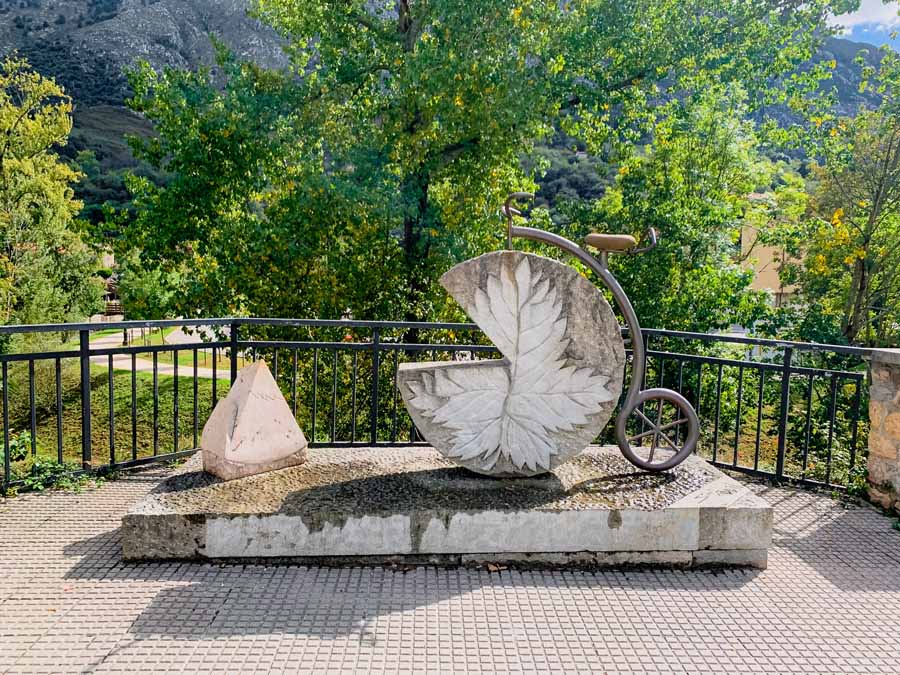
Las Arenas de Cabrales is known for its cheese, Cabrales Cheese. This cheese is unique to the Asturias region and is registered as a Protected Designation of Origin (PDO). It’s a strong Spanish blue cheese which is aged in the nearby limestone caves for a few months.
Cabrales Cheese must be produced and come from livestock that graze within the municipalities of Cabrales. An interesting fact is that the most expensive cheese ever sold at auction was a slab of Cabrales Cheese.
The best way to learn about the process is to visit Las Arenas de Cabrales, where there are a few guided tour options. The Cueva del Queso de Cabrales offers guided tours of an aging cave that also includes a tasting. Another way to sample the cheese is at Quesería Vega de Tordín, which showcases more of the animals and milking process.
Alternatively, it’s possible to visit a local tienda and purchase the cheese there. Or sit down at a cafe and enjoy a cider with some cheese.
7 ⏐ Wander Through the Isolated Village of Bulnes ⏐ Las Arenas de Cabrales
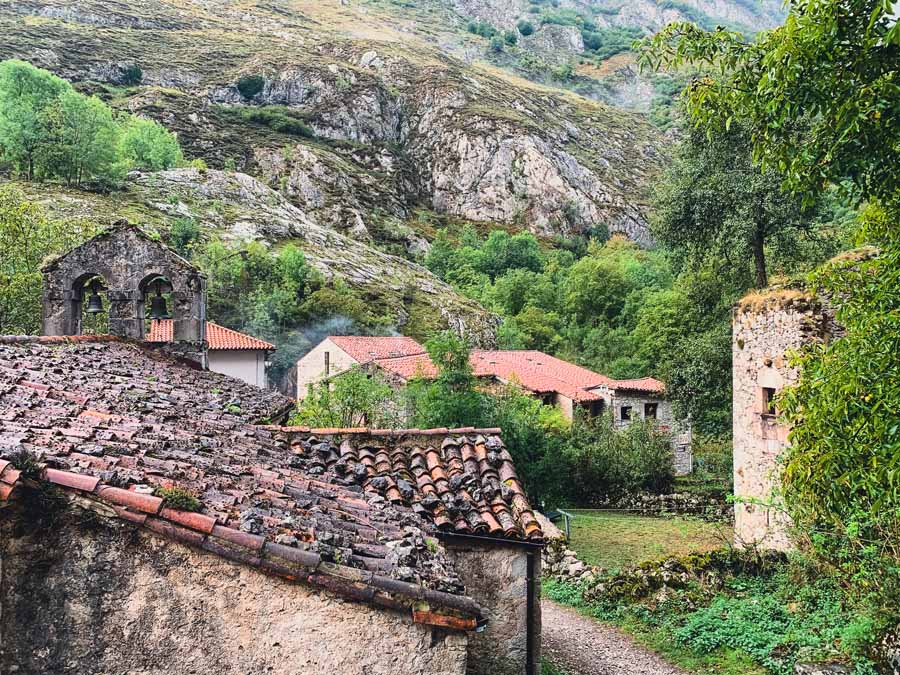
Bulnes was once the most isolated village in Spain. Up until 2001, it was only possible to reach it on foot. There are no roads to Bulnes, but now there is a speedy (and quite expensive) funicular that connects Bulnes to Poncebos.
There are two parts of Bulnes: Bulnes de Abajo (lower Bulnes) and Bulnes de Arriba (upper Bulnes). There are only a few sites within the village including a small chapel, viewpoints, and the Tejo River quietly flows through the village. For being so remote, the mountain town is artsy and has some serious character.
There are a few cafes and restaurants in Bulnes, all of which boast outdoor seating.
Bulnes is a good place to sleep, especially if looking to take advantage of some of the higher mountain paths. Alternatively, you can hike over to Sotres, the village at the highest elevation in the Picos.


If the weather is nice, it’s possible to hike through 4 hilltop villages in the Picos de Europa, Bulnes and Sotres included.
Bulnes is a fabulous place to spend a few hours or pass through on a hike.
8 ⏐Visit One of the Most Beautiful Pueblos in Spain, Mogrovejo ⏐ Potes

Mogrovejo is a spectacular medieval village located along the foothills of the Picos de Europa.
Mogrovejo is officially listed on Spain’s list of Pueblos Los Más Bonitos de España. In fact, a few years ago, the village was used as a filming location for a Spanish film about Heidi.
While there are very few sights to see here, it’s just a nice place to relax, catch a drink, or maybe go for a hike. One of the most famous hiking trails in Mogrovejo is the Bajo los Picos, or Under the Picos. This circular hiking trail highlights the foothills of the Cantabrian Mountains.
One of the most iconic structures here is the Torre de Mogrovejo, but it’s privately owned, so it’s ony possible to savor the exterior views.
Mogrovejo is a fantastic village to enjoy for a few hours, or an ideal place to sleep (only a few options) away from the crowds.
9⏐ Appreciate at Least One Mirador ⏐ Throughout the Park


There are so many incredible viewpoints in the Picos de Europa. While some of them may be along the numerous hiking trails, these are a few official miradors that stick out to me that can be reached easily by car.
- San Glorio (Deer Statue) / Castilla & León
- Collado de Llesba (Bear Statue) / Cantabria
- Mirador de San Miguel / Cantabria
- Mirador del Naranjo de Bulnes (Picu Urriellu) / Asturias
- Mirador de Oseja de Sajambre / Castilla & León
🙂 The official National Park of the Picos de Europa has conveniently listed some of the best viewpoints within the park all on one page!
10 ⏐ Walk a Stretch of one of the Camino Routes


For a truly unique way to experience the foothills of the Picos de Europa, consider walking a Camino de Santiago route. This is a great way to hike the Picos, without going up into the extremely high mountains and relying on the mountain hut systems, like on the Anillo de Picos.
The first route is the Camino Lebaniego. This pilgrimage route runs 44.7 miles (71.9 km) from the coastal village of San Vicente de la Barquera, which is on the Camino del Norte. The route twists through winding mountain roads and tiny villages to the Monastery of Santo Toribio de Liebana, just outside Potes. This route is typically walked over 3 or 4 days.
From Potes, there is an option to continue on the Camino Vadiniense. This Camino route is little-trekked and rejoins the Camino Frances at Mansilla de las Mulas, just before León. This route is officially marked at 95.6 miles (153.85 KM) and is typically walked over 6-7 days. The route gets its name after the tribes that lived in the foothills of the Picos de Europa before the Roman Conquest.
These two routes are extremely special and are the perfect way to explore the foothills of the Picos de Europa. You’ll also pass by memorable villages like Riaño just outside the park borders.
Where to Base in the Picos de Europa
There are many places to stay in the Picos de Europa.
The villages of Cangas de Onís (Asturias), Las Arenas de Cabrales (Asturias), and Potes (Cantabria) are the best gateway villages to explore the Picos de Europa.
All three villages are located in the foothills of the Picos de Europa and are just outside the National Park borders. These three villages provide all the necessities, from hotels, restaurants, bars, hiking gear shops, specialty stores, pharmacies, and laundry facilities. You can also find a little nightlife here, even if it’s only going to dinner or enjoying a drink on a patio.

▶︎ Cangas de Onís is the largest village with a population of under 5,000 residents. Cangas de Onis is closest to the Lagos de Covadonga and the Covadonga Sanctuary. It’s also easily connected with Oviedo, the capital city of Asturias.
▶︎ Arenas de Cabrales is the best option for hikers. There are numerous hiking trails that are accessible without a car from nearby Poncebos. Las Arenas de Cabrales and Poncebos are connected via bus during the high season. From here you can easily reach Sotres, Bulnes, and the Ruta del Cares. This is also a great place to indulge in the typical cuisine.
▶︎ Potes is also a great option and is the access point for those coming from Santander. It’s also ideal for those traveling as far west as Bilbao in the Basque Country. Potes is close to the Fuente Dé Cable Car, the village of Mogrovejo, and the overlooked Liebana and Camaleño River Valleys.
Alternatively, some of the most special places to stay are outside the villages in tiny pueblos with very few people. It all depends on what you are looking for.
➜ Browse all the accommodation options in the Picos de Europa
Conclusion ⏐Best Things to Do in Picos de Europa National Park Spain

In short, these are the best things to do in the Picos de Europa National Park in Spain. This overview includes everything from epic hiking trails, charming villages, breathtaking viewpoints, and historical sites.
I’ve visited the Picos de Europa numerous times and continue to return and find new places, trails, and other highlights to explore. I think this guide is best for first-time visitors to really get an idea of the best places to see in the Picos de Europa.
If you’re like me, you’ll continue to return time and time again.
The Picos de Europa is really a special place to spend time in northern Spain.
Did you visit any of these places in the Picos de Europa? Is there something you loved that I missed? Anything that needs updating? Let me know in the comments below!
Pack This Post for Later! Pin It!


Disclaimer: There’s a chance this post contains affiliate links, and I receive a small (but grateful) portion of the sale. There’s no extra cost to you, and I only promote things that I use and love.