
How to Visit the Special Cabo Touriñán on the Costa da Morte
Cabo Touriñán is wild and untouched. It’s home to two lighthouses that sit on top of the rocky cliffs above the dangerous shores of the Death Coast in Galicia, Spain.
The Cape of Touriñán is secluded and takes a little more effort to visit than other places along the Costa da Morte. A car is a must to see this sight. Alternatively, it can be reached on foot for those who wish to savor the tranquility of this special place.
This short guide includes detailed information on how to reach the Cape of Touriñán, what to see there, and why it’s worth a quick-stop.
Here’s how to visit one of the westernmost points in Spain.
Table of Contents
- Where is Cabo Touriñán?
- Why is the Cape of Touriñán Important?
- How to Visit Cabo Touriñán
- What to See at Cabo Touriñán
- Is the Cape of Touriñán Worth Visiting?
- Conclusion⎟Why Cabo Touriñán is Worth a Stop on the Costa da Morte
Where is Cabo Touriñán?
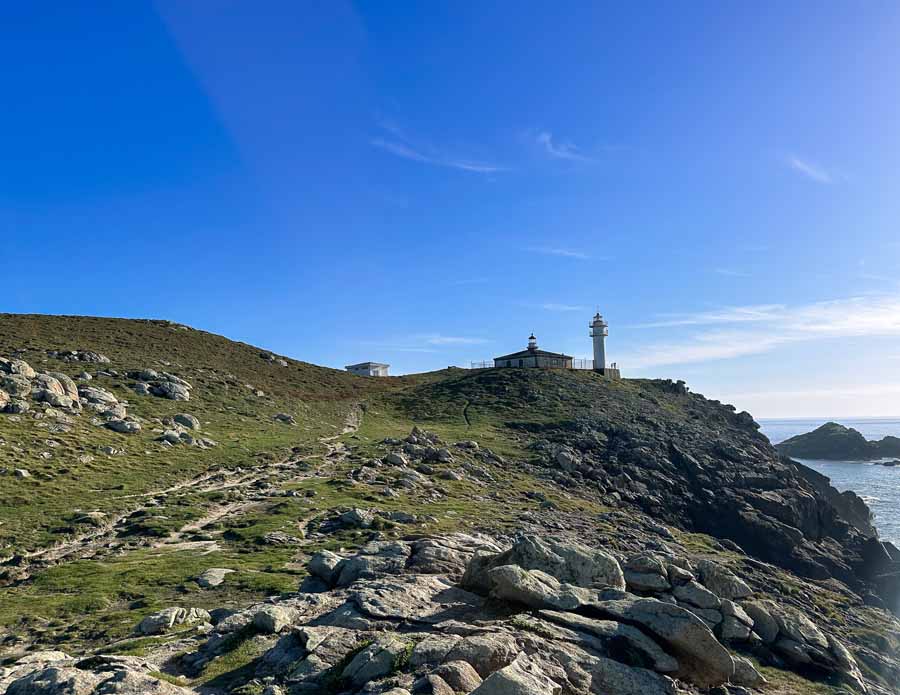
The Cape of Touriñán picturesquely sits along the stunning shores of the Death Coast of Galicia Spain. This rugged and wild coastline is on northern Spain’s west Atlantic Ocean coastline.
This scenic cape is found between the sleepy fishing village of Muxía and the popular city of Fisterra. Muxia and Fisterra are ending points to the Camino Finisterre Muxia, the final pilgrimage route from Santiago de Compostela to the sea.
Why is the Cape of Touriñán so Significant?
The Cape of Touriñán is famous for its location. While the ancient Romans claimed that Finisterra was the “End of the World,” there are two places in Iberia Spain that are even farther to the west.
Some sources claim that the Cape of Touriñán is the westernmost point of mainland Spain. Others disagree and say that Cabo da Nave is a few degrees farther west. Either way, Finisterre is not the actual “End of the World.”
Touriñán Cape and Nave Cape are the two most western locations of Iberia Spain. The bench that sits next to the lighthouse actually claims that this is the westernmost point of mainland Spain.
How to Visit Cabo Touriñán
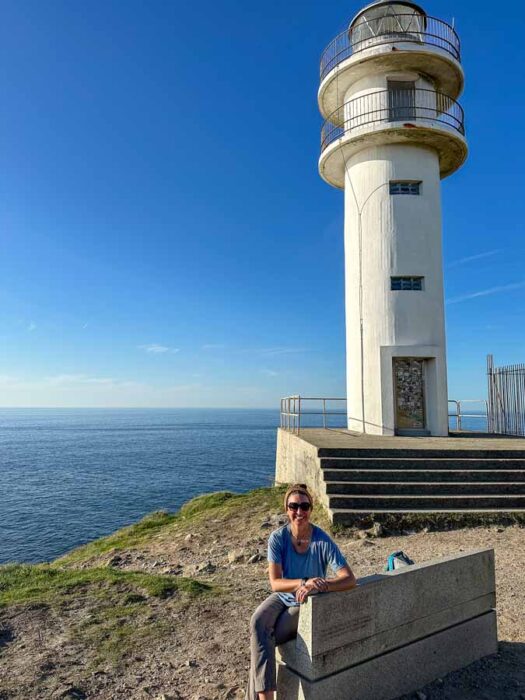
Cabo Touriñán is quite isolated so there are only two ways to visit: by car or on foot.
By Car
The easiest way to reach this isolated cape is with a car. Touriñán Cape is less than a half hour to the south of Muxía. Be mindful that the roads are not main highways, but rather more local and narrow streets.
There is limited parking right in front of the lighthouse.
On Foot
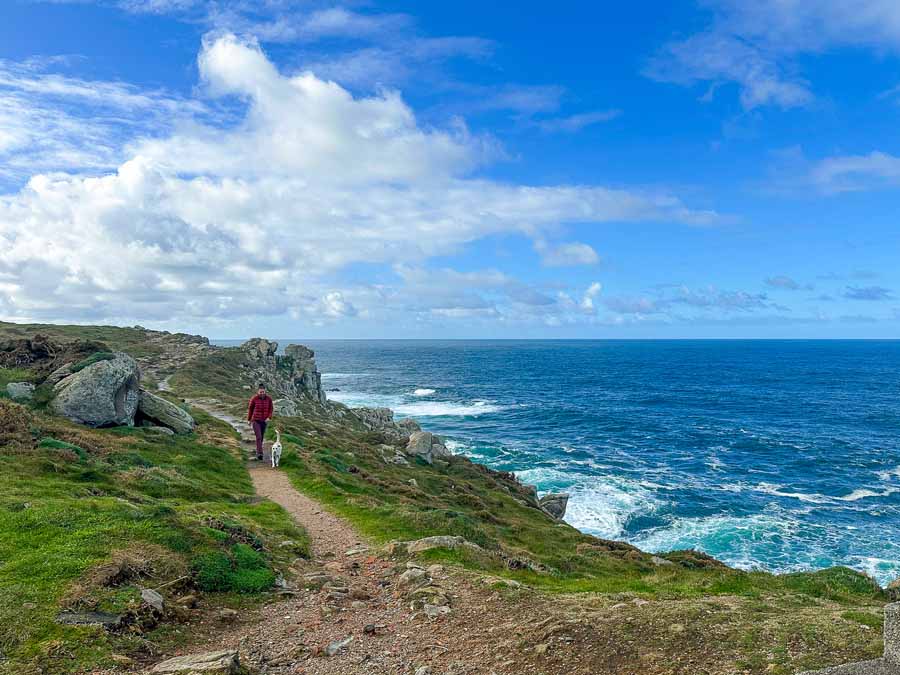
Touriñán Cape is found on the stunning coastal hiking route of the Camino dos Faros. This 200 Km route starts in Malpica and follows close to the shore for 200 KM until it reaches Finisterre. The Lighthouse Way is not a Camino de Santiago route; rather, it is a challenging and more isolated hiking path that highlights the ruggedness and beauty of the Death Coast.
The Touriñán Lighthouse and Cape are typically reached on Stage 7 of the Camino dos Faros.
What to See at Cabo Touriñán
The Cape of Touriñán is isolated, which makes it especially beautiful. On both of my visits, we are the only people visiting.
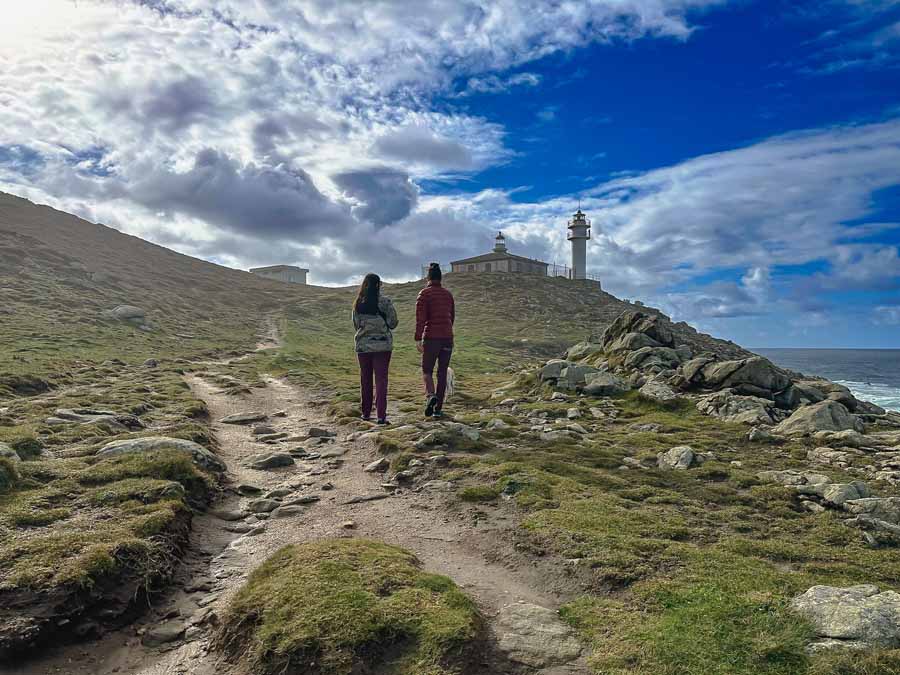
There are two lighthouses (faros) perched on the top of the rocky cliff. The oldest one was built in 1898, with the modern one replacing it as the working lighthouse of the cape in 1981.
There is a small bench to contemplate the crashing waves hitting the rocks.
It’s easy to see the path of the Camino dos Faros and it’s possible to follow the trails for as long you wish to the north or south.
Be mindful that the cliffs have steep drop-offs and it is not advisable to walk the paths during bad weather. Each time I have visited the lighthouses, I typically spend around 30 minutes walking the paths, taking photos, or finding a rock to journal.
Is the Cape of Touriñán Worth Visiting?
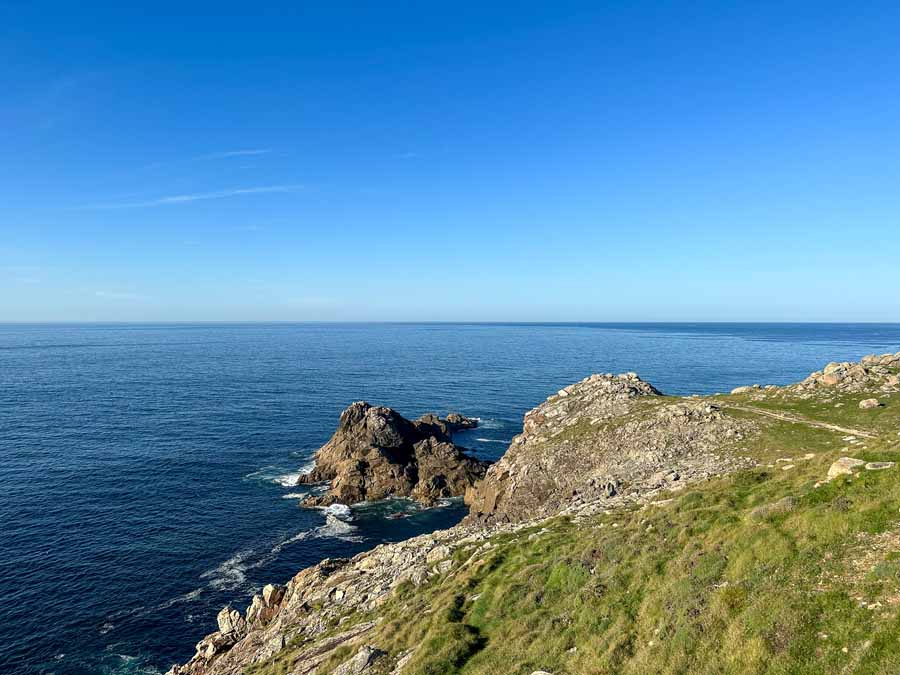
For me, I love the energy of the Cape of Touriñán. The jagged rocks, crashing waves, and complete silence make me feel small. It also helps that every time I visit I have unusually warm weather and sunny skies.
Although the Faro de Touriñán isn’t as impressive as some of the other lighthouses in the area, I love the views and landscape. While Cabo de Touriñán requires an effort to visit, I think it’s definitely worth visiting.
As it is not a major attraction or highlight, it’s easy to combine this place with other places nearby, like Muxía or Finisterre. On my last visit, we stopped at the Faro Tourinan, visited the Ezaro Waterfall, stopped by Carnota Beach, and ended the afternoon enjoying Finisterre.
If looking to soak in the solitude and find a corner of the Death Coast that isn’t bombarded with tourists, take the time to visit the Cape of Touriñán.
Conclusion⎟Why Cabo Touriñán is Worth a Stop on the Costa da Morte
In short, this is a quick guide to the Cape of Touriñán and why it’s worth a stop when visiting the Death Coast of Galicia.
This guide includes the best ways to reach the Cape, what to see there, and why it’s so important.
Have you visited the Faro de Touriñán and the scenic Cape? What did you think? Any updates I should know about? Let me know in the comments below!
Pack This Post for Later! Pin It!

Disclaimer: There’s a chance this post contains affiliate links, and I receive a small (but grateful) portion of the sale. There’s no extra cost to you, and I only promote things that I use and love.