How to Visit Castro de Baroña & Why It’s Worth Visiting
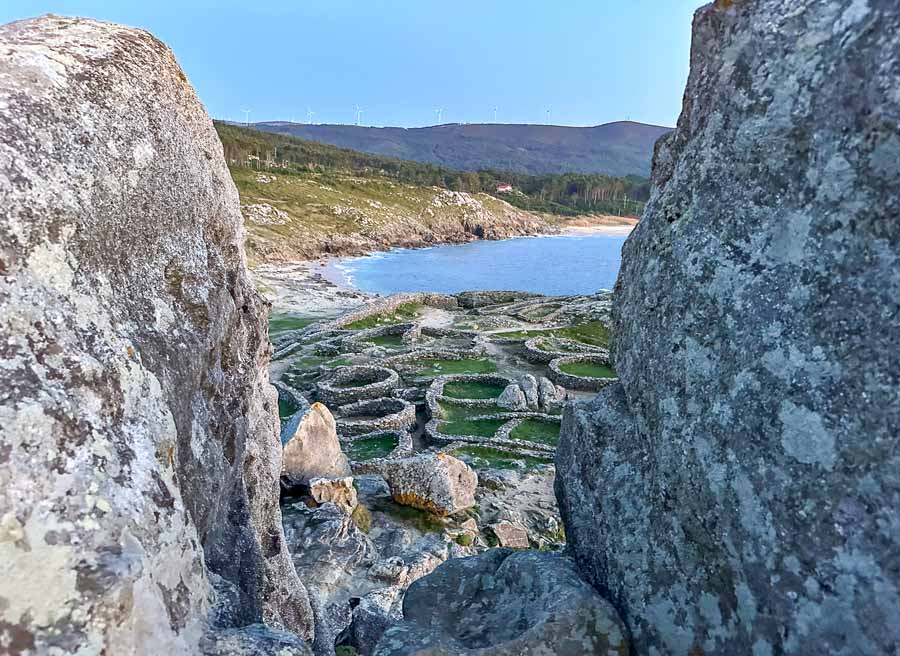
One of the more unique places to see Celtic history in Galicia is at Castro de Baroña. This ancient fortress is different than most as it is found along the coast. The Baroña Castro is steps away from the Muros and Noia Estuary.
There is little information about what remains of the Baroña Castro. It is known that this settlement was from the Iron Age and was occupied between the 1st Century B.C. It was thought to be abandoned around the 1st Century A.D.
While the history of the site is lacking, there is an amazing energy here. There are surrounding petroglyphs on the hillsides. Some legends even claim there was a doorway that has now been lost that was dedicated to the welcoming of the solstice.
This is a basic overview of the Castro de Baroña, some tips on how to visit, and why I think it’s worth visiting.
Table of Contents
- Where is Castro de Baroña?
- How to Visit the Baroña Castro
- What to See at Castro de Baroña
- Is Castro de Baroña Worth Visiting?
- What to See Near Castro de Baroña
- Conclusion | A Quick Guide on How to Visit Baroña Castro
Where is Castro de Baroña?
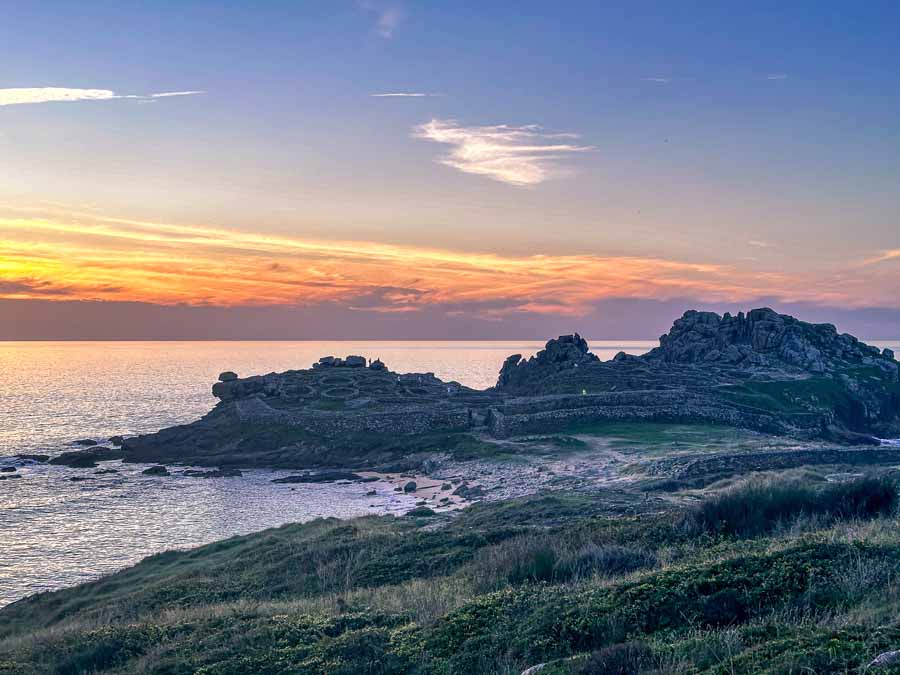
Castro de Baroña is located near the village of Porto de Son in A Coruña province in the region of Galicia Spain. The ruins sit on a peninsula surrounded to the north by the Muros and Noia Estuary and the Arousa Estuary to the south. The peninsula is known as O Barbanza.
Noia village is the closest beach village to Santiago de Compostela and is around 30 minutes away.
As this site is quite far off the beaten path, a car is essential to visit. Follow the coastal road, AC-550. There is limited parking near the restaurant O Castro. Many people park along the side street and there is limited gravel parking.
From the parking area, expect a half-mile walk down to the Castro de Baroña.
How to Visit the Baroña Castro

Castro de Baroña is one of the only coastal Castros that remains. Celtic people lived in Castros, but many were built away from the sea on larger hilltops. The hills added an extra layer of security and why Baroña Castro is so fascinating.
The Celts lived throughout northern Spain and there are intriguing studies stating that Celtic tribes actually descended from Spain, rather than Ireland. New theories suggest that the Celts were a fishing community that traveled from the Bay of Biscay north to the British Islands.
To access the Castro, you’ll need to take a steep trail down towards the sea. The trail is about half a mile (.8 KM), but it’s challenging due to the descent.
There were lots of loose rocks and gravel, so make sure to wear good shoes. These ruins can be difficult to access for those with mobility issues.
What to See at Castro de Baroña
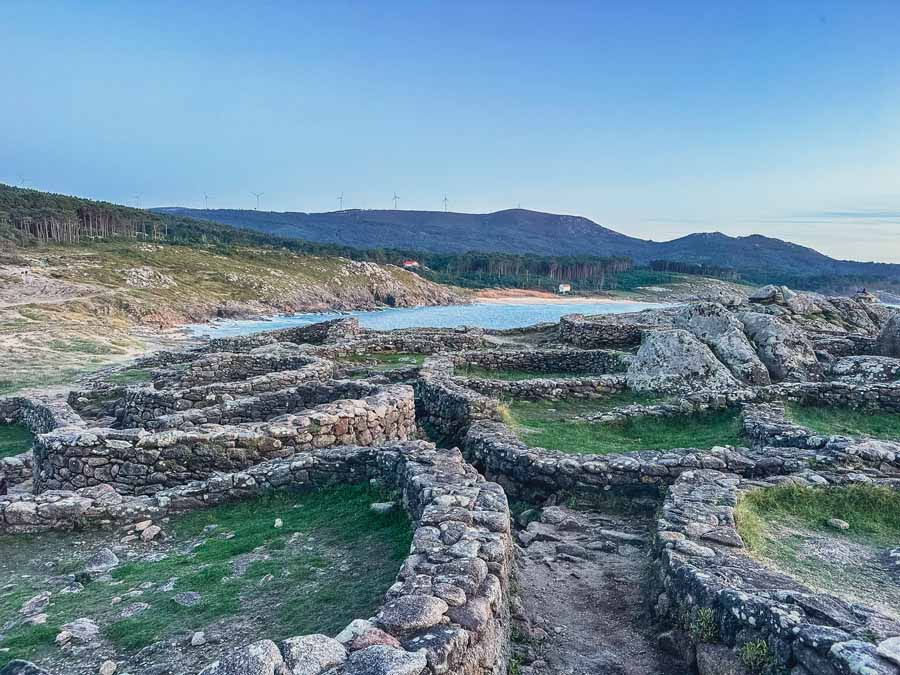
Baroña Castro can be explored in little time. The area is small, but what makes it so special is the natural beauty. From the jagged cliffs to distant white sand beaches, it’s hard to deny the sacredness of this place.
It is free to visit Castro de Baroña.
There are remnants of an old irrigation canal and a protective wall that helped protect the dwellings. Inside the fortified walls are around 30 structures circular in shape. This is very typical of Castros and it was believed these circular constructions were dwellings or spaces for everyday activities.
After excavations, it’s believed that this dwelling was a place of metalworking and masonry and even produced some textiles.
Some of the rock patterns reminded me of sacred sites in Peru. For some reason, the main doorway to the city reminded me of the extremely sacred site of Waqrapukara.
Again, the site is small and can easily be explored in under a half hour. For me, one of the highlights was taking the small footpaths along the stones to get sprawling views out of the Bay and the Atlantic Ocean.
Be extremely cautious on the stones, especially in bad weather. With so much seawater and rain, the stones can be extremely slippery and dangerous. Many of the surrounding stones are sharp and jagged with deep drop-offs into the sea.

In 1933 the first excavations happened at the ruins of Baroña. There were multiple excavations over time and in 2011, the site was listed on the Places of Cultural Interest (BIC).
There is a small interpretation center found in village center of Porto de Son. The site is temporarily closed but lists their houses as follows:
High Season: Monday – Sunday, 11:00 – 14:00 / 19:00 – 21:00.
Castro de Baroña as a Spiritual Site
I remember seeing these ruins first mentioned on a T.V. series, Sacred Sites, the Camino. The series dives deep into the Camino de Santiago way before the Catholic Church “adopted the sacred path.”
The series explains how the Camino de Santiago started as a fertility path for those who followed a Pagan religion. Many couples would follow the Milky Way to reach Finisterre, what the Romans would go on to refer to as the “End of the World.”
Today, pilgrims can follow the same pathway from the Cathedral of Santiago de Compostela to Finisterre or Muxia. The pathway is known by modern pilgrims as the Camino Finisterre Muxia.
While the Camino Finisterre Muxia does not pass by Baroña, the series shows clips of Castro de Baroña questioning if this site once held a doorway that lined up with the summer solstice. Like many ancient religions, the pagans worshiped nature and the sun. It would make sense that this place would have held some ceremonial signficance.
I visited at sunset and this was a really powerful time to see the Castro. The sunny day turned the sky multiple colors and we watched dolphins swim nearby.
Is Castro de Barona Worth Visiting?
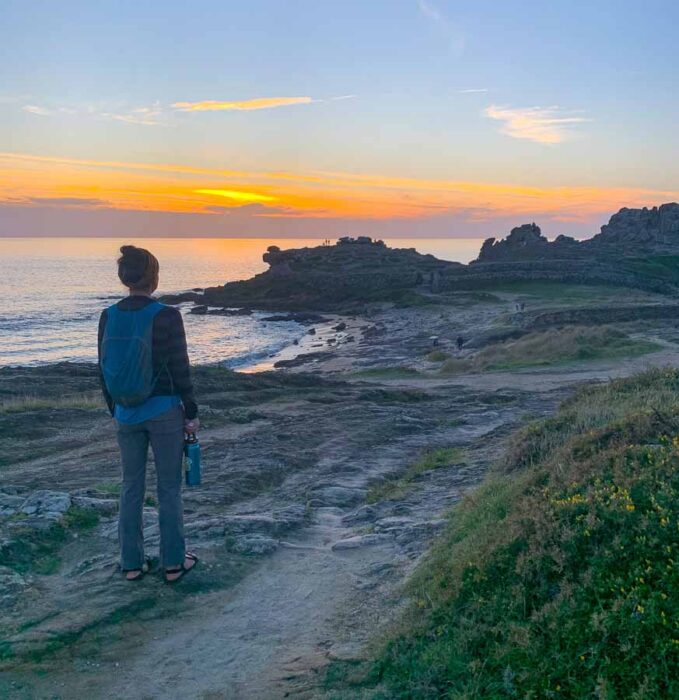
For me, Castro de Baroña was worth the visit. The coastal Castro is one of the only remaining in Spain. While the site is small and a little out of the way, it is a special place to visit in Galicia.
This site is quite different than Castro de Santa Trega near A Guarda. While Santa Trega is bigger, more organized, and has a museum, I found the spiritual aspect of Baroña enchanting. I liked them both equally for two very different reasons.
Little is known about the life of these Celtic tribes, but what remains is intriguing to see. I love to walk these ancient sites and let my mind wander. We know so little about their past. Because of this, I think Baroña is worth visiting.
What to See Near the Baroña Castro

The Baroña Castro is a little isolated and out of the way. Here are some ways to add it to a Galicia itinerary.
✔ Sleep in Santiago de Compostela and spend the day driving around the Barbanza Peninsula. Highlights include the seaside village of Noia, the Castro ruins, and sampling traditional food. We had an amazing traditional meal at Bocatería O Corral de Prego or stop for fresh seafood in Ribeira. On the way back to Santiago, stop in Padrón, one of the most historical cities on the Camino Portuguese. This would be a long and full day trip from Santiago de Compostela
➜ Browse all the best places to stay in Santiago de Compostela
✔ Take a long day trip from the historical city of Pontevedra. It’s possible to add a stop to Cambados, the unofficial capital village of Albariño wine.
➜ Browse all the best places to stay in Pontevedra
✔ It would be a long trip, but Castro de Baroña could be combined with the Costa da Morte. The Death Coast is known as the End of the World, with quiet fishing villages like Muxia. The Costa da Morte is filled with Celtic sites from Dolmens to inland Castros. Adding Castro Baroña is far, but it might be worth it if you are extremely interested in the lost history of the region.
➜ Browse where to stay in the Death Coast region
Conclusion | A Quick Guide to Castro de Baroña
In short, this is a quick guide on how to visit Castro de Baroña. These fascinating Castro ruins are peculiar as they are found along the sea near the village of Porto do Son.
The site of the ruins is small but still worth visiting. Little is known about the history of Baroña, but the natural beauty surrounding the old circular ruins is a highlight.
There is no denying that Castro de Baroña is one of the most beautiful places to see Celtic ruins in Galicia Spain.
Have you visited the ancient site of Baroña Castro? What did you think? Is there anything that needs updating in this guide? Let me know in the comments below!
Pack This Post for Later! Pin It!
Disclaimer: There’s a chance this post contains affiliate links, and I receive a small (but grateful) portion of the sale. There’s no extra cost to you, and I only promote things that I use and love.


