

Where to Stay in the Ribeira Sacra A Natural Treasure in Galicia
The Ribeira Sacra is one of the best places to visit in Galicia, Spain. The entire area is filled with untouched hiking trails, hillside wineries, sacred monasteries and chapels, and charismatic pueblos. The two main rivers, the Sil and Miño, carve through the hillsides, creating stunning river valleys and offering unforgettable viewpoints.
The Ribeira Sacra is big and is considered to cover nearly 10% of the area of the autonomous community of Galicia. With so much space, it can be hard to know where to stay in the Ribiera Sacra. It can also be challenging, as many of the roads are small or cut through the mountainside.
In this guide, I’ll break down my favorite places to stay when visiting the Ribeira Sacra. From major cities to small villages. These come from my personal and favorite experiences of visiting this area in Galicia.
I’ve also included an alternative way to experience the region and for those short on time, where to get tours to the Ribeira Sacra (because it’s not where you may think)!
Here are all the best places to stay in the Ribeira Sacra.
Table of Contents
- A Brief Overview of the Ribeira Sacra
- Best Places to Stay in the Ribeira Sacra
- Spiritual Stays in the Ribeira Sacra
- An Alternative Way to See the Ribeira Sacra
- Tour Options of the Ribeira Sacra
- Conclusion | Best Places to Stay in the Ribeira Sacra
Disclaimer: There’s a chance this post contains affiliate links, and I receive a small (but grateful) portion of the sale. There’s no extra cost to you, and I only promote things that I use and love.
A Brief Overview of the Ribeira Sacra

Ribeira Sacra translates to “sacred shores.” The name comes from the many and oftentimes ancient monasteries that line the numerous rivers of the region. These monasteries are mostly in the Romanesque architectural style. The Ribeira Sacra is famous for having the largest concentration of rural Romanesque architecture in Europe.
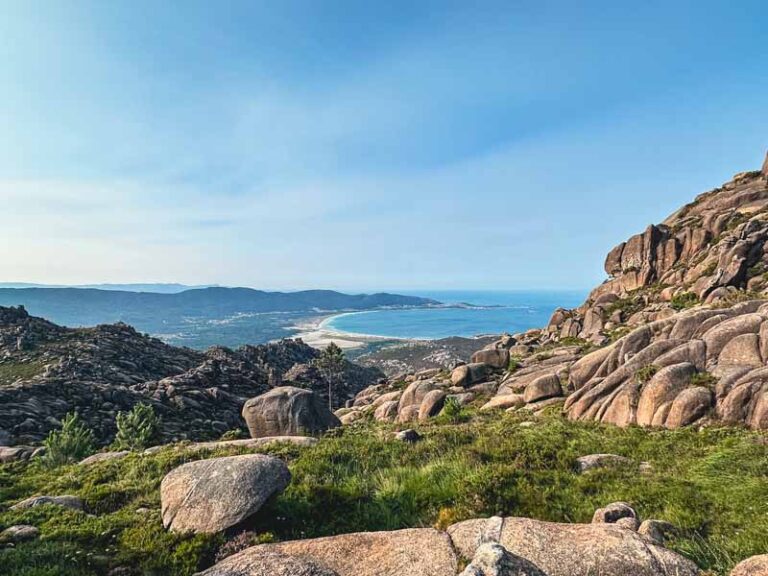
The area is extremely diverse and there’s more to see than reglious monuments. The Ribeira Sacra has everything from stunning river valleys to the special geological landscapes, like in the heart of the Courel Mountains. There are also medieval cities with most in the mountains with only a few residents.
There are some major cities, but for me as always, the real charm is found outside the main hubs and within the river valleys of the Sil and Miño.

The Ribeira Sacra of Galicia Spain is also known for its wine region, so it’s possible to tour and taste the unique wine while enjoying the spectacular countryside. Along the rivers, find stone wine terraces growing predominantly dry red wines from the Mencia grape and the white grape of Godello.
You’ll have to decide what you are seeking. A culinary tour of the wine regions? A look at the many Romanesque Churches and Monasteries? Hiking through the remote mountains? In the Ribeira Sacra, the adventures are endless.
As the area is relatively untouched and unknown to most domestic tourists, there are few guided tour options available. I think it’s best to explore the Ribeira Sacra by car. I recommend spending at least three days in the area, and if you’re like me, you’ll return again and again.
Best Places to Stay to Explore the Ribeira Sacra

There are two major cities to explore the Ribeira Sacra, Ourense and Monforte de Lemos. Ourense is one of the major cities of Galicia. The Ribeira Sacra lies just to the east of this notorious Roman city. Monforte de Lemons is more centrally located and is known as the heart and unofficial gateway to the Ribeira Sacra.
For those who love smaller villages, Castro Caldelas and Chantada are great options. Those who want to experience the quaintness of the mountains will love anywhere within the region along the southern slopes of the Courel Mountains.
Here are some of the best places to stay in the Ribeira Sacra.
Map of Places to Stay in the Ribeira Sacra
This is a quick reference map of the cities/pueblos that I mention in this article.
You can check in on this interactive map, run by the tourism board, which highlights all the best things to see in the Ribeira Sacra. It lists everything from river beaches, street art, festivals, viewpoints, and more.
1⎢Ourense (Ourense Province)

Ourense is Galicia’s third most populated city with around 110,000 people. Those who are seeking a city experience will want to sleep in Ourense and day-trip to the nearby Ribeira Sacra.
Ourense is known for its many hot springs, the Cathedral boasting the Pórtico del Paraíso, and a lovely Old Town. Many of the hot springs are located along the Miño River and date back to Roman times. Ourense is said to have the largest geothermal spring in all of Europe. The iconic Roman Bridge crosses the Miño River and leads to a cute, historic old town.
Just to the east of the city of Ourense is the Ribeira Sacra. Many local buses connect to smaller villages within the Ribeira Sacra. Without a car, it would be easy to take a day trip or two by using the public buses. Be mindful that buses to the village are infrequent.
Ourense is a big city, and there are different areas to stay in. There’s the central historical old town. As you move north towards the Miño River, there’s a mixture of accommodations for pilgrims and higher-end hotels near San Lazaro Park.
North of the city and across the Miño River is closer to the bus and train station and has a mixture of budget lodgings from hostals to 1-star hotels.
✓ Who will like staying in Ourense? People who want to experience the Ribeira Sacra casually on some day trips from a bigger city. At night, they want to be in a lively city with plenty of restaurants, bars, and experiences.
Popular Places to Stay in Ourense
➜ Browse all the places to Stay in Ourense
2 ⎢Monforte de Lemos (Lugo Province)


Monforte de Lemos is the official capital of the Ribeira Sacra due to its central location. It’s the second largest city in the Lugo province with around 18,500 inhabitants.
At its heart, Monforte de Lemos is a historic city with numerous religious sites. The Camino de Invierno cuts through the city, making it a significant stop for pilgrims. Besides the religious places of interest, the city has a wine museum, a hilltop castle, a preserved Jewish Quarter, and the Colegio Nuestra Señora de la Antigua.
With its central location, Monforte de Lemos makes an ideal place to explore the Ribeira Sacra. The Sil River is to the south and the Minho to the west. The city is super walkable. Plus, there are plenty of amenities, from laundry facilities, grocery stores, restaurants, and bars.
✔︎ Who will like staying in Monforte de Lemos? People who want to stay in the heart of the Ribeira Sacra and take more day trips that are closer to nearby natural sights. There’s a smaller city feel than Ourense without losing all the comforts of restaurants, bars, historical sites, and more.
Where to Stay in Monforte de Lemos
- Albergue Lemavo
- Albergue Santiago 15 Monforte
- Hotel Ribeira Sacra
- A Casa da Compañía
- Parador Monforte de Lemos
➜All the Best Places to Stay in Monforte de Lemos
3⎢Chantada (Lugo Province)

Chantada is a cute village not too far away from the Minho River. There are only around 8,000 residents in Chantada. The town is known for its traditional houses with well-preserved wooden balconies.
While the old town is delightful, Chantada is strategically positioned near the Asma River, so there is a nice river walk. Those who appreciate abandoned spaces can visit the Ermita de Fátima.
The area surrounding Chantada is famous for its wine, which grows along scenic terraces along the river. Chantada also holds one of the first wine festivals of the year for the Ribeira Sacra.
It’s only a short drive until you come to picturesque hamlets like Belesar, famous for its stunning terraces that climb up the hillsides. Follow the Minho River from north to south and stop at numerous viewpoints and riverside beaches. There are also opportunities to take small boats on scenic river tours.
There are only a handful of bars and restaurants in town. At night, locals head to them to enjoy the wine of the region with tapas.
Chantada is also pretty centrally located to a main road that connects Ourense and Lugo city.
✔︎ Who will like staying in Chantada? Chantada is ideal for those who want to experience a small local village that has a lot of heart. This area of the Ribeira Sacra is a match for those who want to delve into the local wine culture.
Where to Stay in Chantada
➜ Browse all the Places to Stay in Chantada
4⎢Castro Caldelas (Ourense Province)


Just to the south of the Sil River is the town of Castro Caldelas. The village has around 1,300 inhabitants and is officially registered as one of Spain’s most beautiful pueblos.
Castro Caldelas has a lovely hilltop castle, the Renaissance Church of the Virgin of the Remedios, and has a medieval charm. Along the picturesque streets, find artistic murals and etched buildings.
Don’t miss trying the typical pastry from the area, the bica.
Just outside the village, the Edo River flows on by. The river is alongside numerous hiking trails that pass by the typical stone mills found in Galicia. Nearby, the Ponte das Taboas Recreational area has a pool, picnic area, and places to BBQ. Serious hikers can take the Magical Forest Loop (PR-G 213), which offers varied scenery like towering chestnut forests to abandoned villages.
Castro Caldelas is a close distance to many highlights of the Sil River. From here we accessed the special Monastery of Santa Cristina and numerous viewpoints.
The small village has a few cafes and local supermarket options.

✔︎ Who will like staying in Castro Caldelas? Castro Caldelas is perfect for those looking to disconnect in one of Spain’s most beautiful pueblos. There really is no nightlife, but still ample places to stock up on food and catch a drink/coffee after a hike. We stayed outside a little from the town and loved cooking our own meals in the well-stocked kitchen.
Where to Stay Near Castro Caldelas
- Hotel Casa de Caldelas
- Casa Manuela
- Casa Laguiñas en Castro Caldelas
- Fogar Rivoira Sacrata
- A Brava (outside of Castro Caldelas but a lovely option)
➜ Browse all the Places to Stay in Castro Caldelas
5⎢Courel Mountains (Lugo Province)


Nature lovers will love staying along the outskirts of the Ribeira Sacra in the Courel Mountains. The Courel Mountains cross over with the Ribeira Sacra in the far eastern corners of the region. In fact, Courel Mountain sits on the border of the Castile & Leon region of Spain.
The area of the Courel Mountains is home to numerous hiking trails, abandoned villages, and endless waterfalls. There are chances to see wild animals, from wolves, wild boar, bears, wildcats, and a variety of birds.
Many species of trees are scattered throughout the forests, including oak, beech, yew, alder, and chestnut trees. There are around 22 different species of orchids found within the region. It is said to be one of the most diverse areas on the entire Iberian Peninsula.
In 2019, the Courel Mountains were recognized as a UNESCO Global Geopark. Numerous areas showcase the glacially carved landscapes. What’s also interesting is that this area shows evidence of being inhabited by Bronze Age settlements over 2,500 years ago. There are a few megalithic structures left behind and some hilltop castro settlements.
The best places to stay in Courel are out in the mostly abandoned villages, which are being revitalized and brought back to life.
✔︎ Who will like staying in Courel? Those seeking a quiet and reflective time in the Ribeira Sacra will love staying in the Courel Mountains. This area is for outdoor enthusiasts and can include activities from canyoning, rappelling, hiking, and simply disconnecting.
- Casa da Loaira (A Seara)
- Casa das Tecedeiras (Vieros)
- Casa Ferreiro (Seoane de Courel)
- Lar da Cima (Folgoso de Courel)
➜ Browse all the Places to Stay in O Courel Region

➜ Psst… Quiroga village is at the foothills of the Courel Mountains and has around 3,000 people. There are modern services from places to stay, grocery stores, restaurants, and bars. It’s a popular stopping point on the Camino de Invierno. Quiroga is a great option to stay for those who want to experience the mountains, yet still want access to services and amenities.
➜ Browse all the Places to Stay in Quiroga
Spiritual Stays and Splurges in the Ribeira Sacra

Again, the Ribeira Sacra is famous for the monasteries and chapels found within the region. There are nearly 80 registered chapels, churches, and monasteries. Many of these monasteries were built in the Romanesque architectural style, some as early as the 5th century.
For a unique stay in the Ribiera Sacra, it’s possible to sleep at one of the monasteries or ancient palaces.
Parador de Santo Estevo
If you’ve always wanted to stay in a Monastery, then the Parador of Santo Estevo is an excellent option. The original Benedictine Monastery was built around the 10th century, but there are legends of the first monks arriving in the 6th century. Now, modern rooms replace the old monk chambers.
The Parador de Santo Estevo overlooks the Sil River and is close to numerous hiking trails, viewpoints, and even features an onsite spa and restaurant.
The Santo Estevo Monastery is free to visit, and the nearby church can be toured for 2€ (5€ for a guided tour). Those staying at the monastery don’t have to worry about the parking restrictions during the busy season.
➜ Stay at the Parador de Santo Estevo in the Ribeira Sacra
Parador de Monforte de Lemos

The Parador de Monforte de Lemos is perched on the hill above Monforte de Lemos’ Old Town. The buildings are part of the Complex of San Vicente do Pinco and contain the Monastery of San Vicente do Pino (17th-century Benedict Monastery) and the Palace of the Condes de Lemos.
Those staying in the Parador of Monforte de Lemos will love a slice of affordable luxury in the Ribeira Sacra. Besides the stunning views, the facilities offer an outdoor swimming pool and gardens. The rooms are found around the main cloister of the monastery.
Like most paradors, there is a restaurant on-site and parking
➜ Stay at the Parador de Monforte de Lemos in the Ribeira Sacra
Áurea Palacio de Sober by Eurostars Hotel Company
Those who want to treat themselves to a historical yet luxurious stay will love sleeping at Aurea Palacio de Sober. This historical landmark was built during the 12th century. However, there was a major reconstruction during 2010, although parts of the medieval walls were kept.
The hotel features a spa, gardens, pool, and restaurant. The Áurea Palacio sits in the countryside, not far from Monforte de Lemos and close to numerous vineyards.
➜ Stay at the Áurea Palacio de Sober by Eurostars Hotel Company
An Alternative Way to See the Ribeira Sacra

One of the best ways to explore the Ribeira Sacra is by walking the Camino de Invierno. Those who want to explore on foot will appreciate numerous villages, viewpoints along the Sil River, and the beauty of the Galician countryside.
The Camino de Invierno is also called the Winter Way, as traditionally its origin was to help pilgrims avoid the higher mountains entering Galicia via the French Way. No matter which route you choose, all the roads lead pilgrims to the Cathedral in Santiago de Compostela.
The Camino de Invierno starts in Ponferrada, and this route is typically walked over 10 – 14 days. There are different ways to break up the Camino de Invierno stages.
The delightful village of Albaredos prides itself on being the first village to welcome pilgrims to the incredible Ribeira Sacra. This is typically on Stage 4 of the Camino de Invierno. The Ribeira Sacra ends once pilgrims come down Monte Faro, right before the stage ends in Rodeiro.
Pilgrims have the privilege to walk through nearly 104 Km (65 miles) of the stunning Ribeira Sacra.
Thinking about walking the Camino de Santiago? Make sure to pack light, follow the arrows, and let the magic unfold. After walking numerous Camino de Santiago routes, these are my best tips for first-time walkers.


Tours of the Ribeira Sacra
If short on time, the best way to experience the Ribeira Sacra is on a day trip tour. Surprisingly, most of the guided tours start from Santiago de Compostela. There are limited options for tours that start from Lugo and none from Ourense.
Santiago de Compostela is an incredible city to visit, whether you’re a pilgrim or not. Santiago de Compostela warrants at least a few days to explore, even more if you plan on taking day trips or tours. Here are all my recommendations on where to stay in Santiago de Compostela if visiting the Ribeira Sacra on a tour.


➜ This guided tour from Santiago de Compostela highlights a few stops in the Ribeira Sacra alongside a boat trip on the River Sil.
➜ Want to get to know the wines of the Ribeira Sacra? This private tour from Santiago de Compostela showcases the “Heroic Wines” of the region and stops at scenic locations along the way.
➜ This Discovering the Beauty of Ribeira Sacra Tour is a completely private tour highlighting different monasteries and viewpoints.
➜ Want to visit from Lugo? This is one of the only guided tours of the Ribeira Sacra from Lugo City
Conclusion | Best Places to Stay in the Ribeira Sacra

In short, this is a detailed guide on where to stay in the Ribeira Sacra, a treasure nestled into the heart of Galicia, Spain. Included in this guide are the best cities, villages, and natural places to explore the Ribeira Sacra.
As a bonus, I’ve also included alternative ways to experience the Ribeira Sacra and day trip options for those who have limited time to explore this incredible area.
For me, the Ribeira Sacra is a special place that I love to return to and visit more each time.
Have you visited the Ribeira Sacra? Where did you stay? Is there an area or region I don’t cover here that you really love? Let me know in the comments below!
Pack This Post for Later! Pin It!


Disclaimer: There’s a chance this post contains affiliate links, and I receive a small (but grateful) portion of the sale. There’s no extra cost to you, and I only promote things that I use and love.


