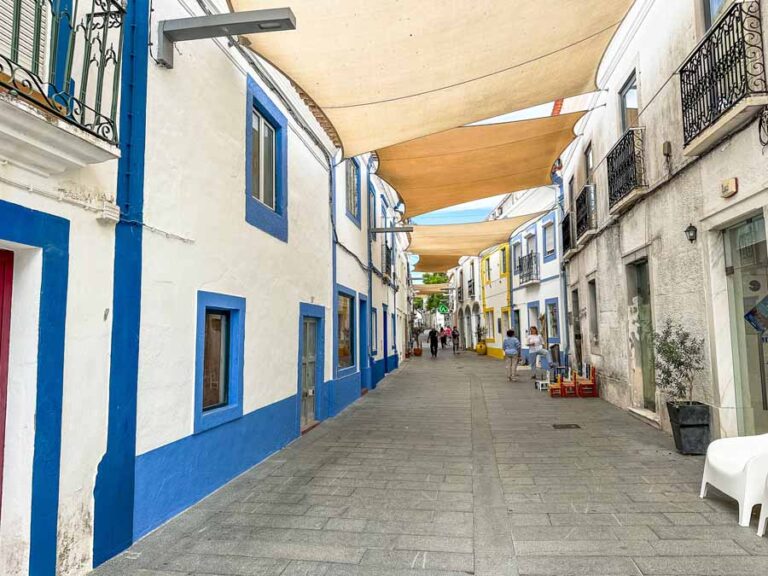

Camino de Santiago by Car⎥ 2-3 Week Epic Road Trip Experience
The Camino de Santiago is the most famous pilgrimage route in Europe, with numerous routes crossing through Spain, Portugal, France, and beyond. Hundreds of thousands of pilgrims complete the journey each year to arrive at Santiago de Compostela, a city tucked away in Galicia, Spain.
While the Camino de Santiago is typically done on foot or by bike, some people may not have the time or the physical means to complete the Camino. My mom and I had planned to walk the Camino Frances years ago, but unfortunately, an injury prevented us from walking together. We both were left feeling disappointed.
Since then, I’ve gone on to walk over 12 different Camino de Santiago routes, but I’ve also been able to share the joy of the Camino with my mom. On her last visit to Spain, we rented a car and got to enjoy the Camino de Santiago by car. We stopped in a mixture of historical cities, quaint villages, visited hidden gems, and appreciated iconic landmarks.
What’s great about doing a Camino road trip is that it can include a numerous of different Camino routes. I’ve included tips on where to start the Camino de Santiago by car, higlights, and add-on route options.
Again, this Camino road trip itinerary is best for those who may be interested in walking the Camino in the future, are short on time, or have physical limitations. It may also come in handy for a pilgrim who has injured themselves while walking and still wants to see things “along the way.”
The Camino calls and comes to everyone in their own ways; there is no judgement.
Here is my best overview of how to experience the Camino de Santiago by car.
Table of Contents
Disclaimer: There’s a chance this post contains affiliate links, and I receive a small (but grateful) portion of the sale. There’s no extra cost to you, and I only promote things that I use and love.
- What is the Camino de Santiago?
- How to Best Experience the Camino de Santiago by Car
- Recommended Place to Start a Camino Road Trip
- Bilbao & San Sebastián
- Vitoria-Gasteiz
- Pamplona
- Pamplona to Logroño & Wine Country Stops
- Logroño
- Logrono to Burgos & Alternative Options in Wine Country
- Burgos
- León
- Astorga
- Lugo
- Destination | Santiago de Compostela
- Continue to the Coast for 2-3 Days
- Return to the Basque Country Via Spain’s North Coast
- Conclusion | Experience the Best of the Camino de Santiago by Car
What is the Camino de Santiago?
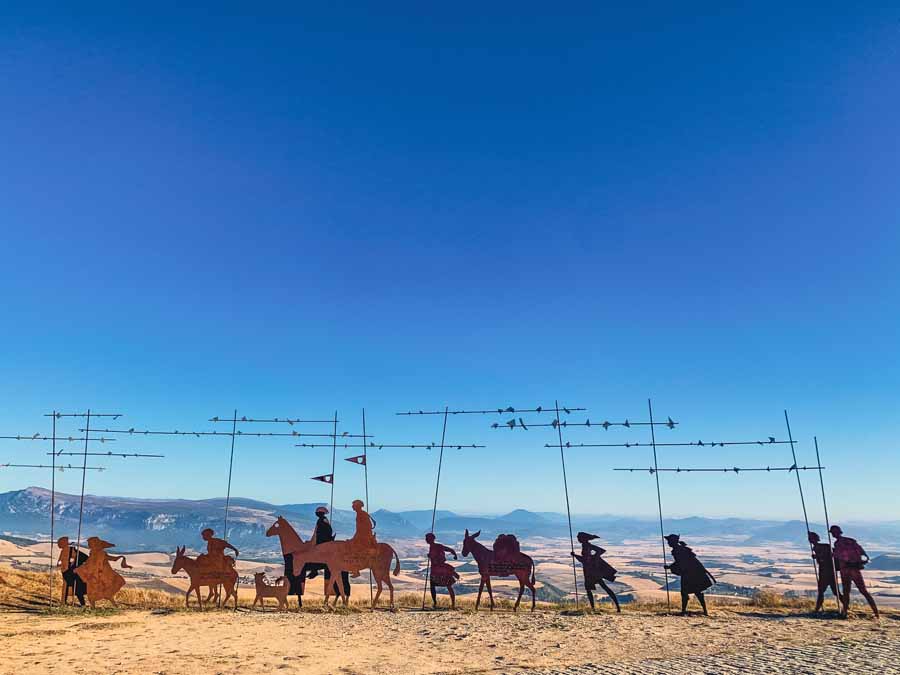
The Camino de Santiago is a long-distance route that leads pilgrims to stand at the impressive Cathedral of Santiago de Compostela, the alleged burial place of Saint James.
There are numerous Camino de Santiago routes, but the Camino Frances, or the French Way, is the most popular route.
Most pilgrims walking the Camino Frances start from Saint-Jean-Pied-de-Port, a small mountain village nestled in the French Pyrenees Mountains.
The second most popular route is the Camino Portuguese, which typically starts from Porto and then follows a historical inland route, a scenic Coastal path, or literally along the sea.
Pilgrims arrive at the Praza do Obradoiro, no matter what Camino route they complete, only to gaze at the impressive Cathedral of Santiago de Compostela.
Pilgrims walking or biking the Camino de Santiago can pick up a Compostela, or a completion certificate for making the journey. The Compostela is also issued for those who arrive on horseback. There is no completion certificate for following the way via car.
Curious About Walking the Camino de Santiago?
My best advice is to pack light, follow the yellow arrows, and let the magic unfold. These are my best tips for first-time pilgrims who plan on walking the Camino de Santiago.


➯ Hey… don’t forget your Travel Insurance! I love SafetyWing
How to Best Experience the Camino de Santiago by Car
With a car, it’s easy to combine the highlights of the numerous Camino de Santiago routes. This itinerary includes the Camino Frances, Camino del Norte, Camino Vasco, Camino Primitivo, and options to add the Camino Finisterre.
This overview includes some of my favorite places along the many routes I’ve walked. Make sure to delve into the local cuisine, explore the numerous stunning cathedrals, and visit the informative museums.
Recommended Starting Point to Start the Camino by Car
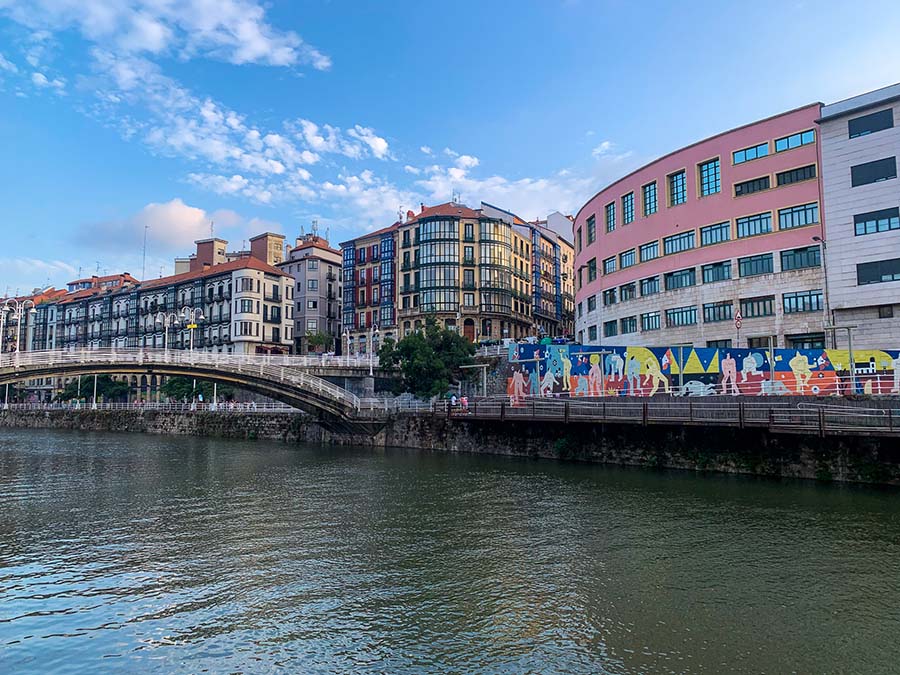
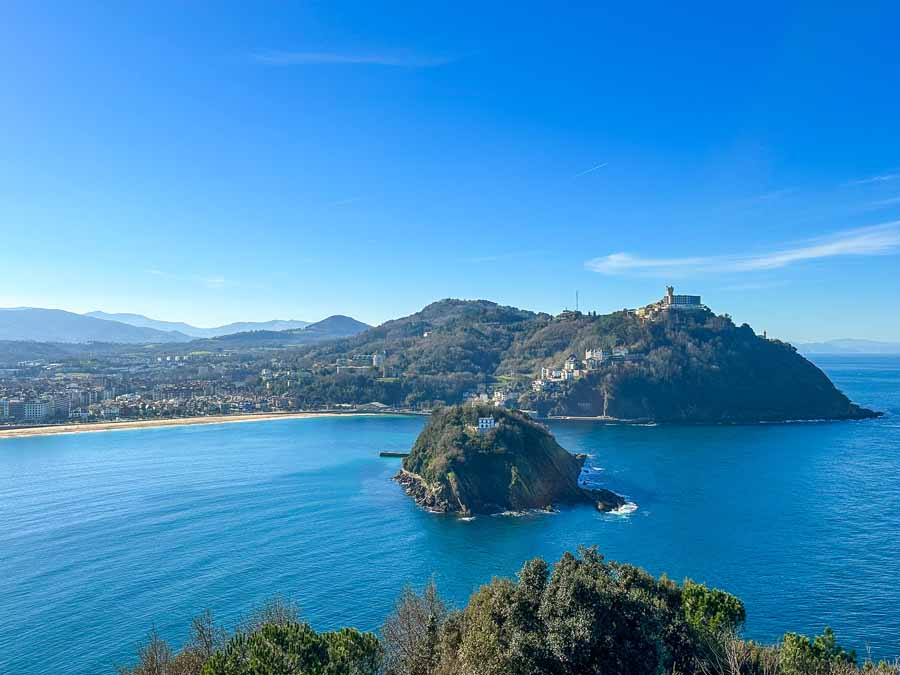
Hands down, my favorite place to start this driving itinerary of the Camino de Santiago is in Spain’s incredible Basque region. The Bilbao airport is great and has easy access to the city.
Remember, it costs money to drive across the border, so to keep costs down, this road trip itinerary is limited to Spain.
I suggest spending a few days in Bilbao and San Sebastian before picking up the rental car. Parking in both cities is expensive, and there’s really no need for a rental car until you’re ready to hit the road.
➜ This is my complete guide on the best ways to get between Bilbao and San Sebastián
One-Way rentals are always more expensive, so consider the price difference. Sometimes it’s a lot cheaper to have the same pick-up and drop-off location. In this Camino road trip itinerary, I’ve included an alternative route back to the Basque Country from Santiago via Spain’s Green North Coast. This is ideal for those utilizing the same drop-off location with their car rental.
If coming from the United States, don’t forget your International Driving Permit.
Bilbao & Donostia-San Sebastián (Camino del Norte)


Both Bilbao and San Sebastián are found on the Camino del Norte and are famous for their delicious pintxos and cuisine.
Donostia-San Sebastián is famous for being one of Spain’s most culinary-rich cities. It’s located on the Bay of Biscay and known for its stunning La Concha Beach and nearby surfing spots. San Sebastián is much smaller and offers an animated Old Town, an aquarium, seaside boardwalks, and is engulfed by rolling Montes.
San Sebastián boasts numerous Michelin Star Restaurants. It was a popular summer destination for the Spanish aristocracy, and to this day, the city still feels like it was built for royalty.
Bilbao is not located directly on the sea, but straddles the Nervión River. It’s close to the Ria de Bilbao, which can easily be reached via the metro. While Bilbao is a much larger city, there are lots of cultural aspects to appreciate. Bilbao has a condensed Casco Viejo (Old Town) with narrow cobblestone streets, the impressive Guggenheim museum, lively neighborhoods, a funicular, and, of course, plenty of places to delve into the delicious cuisine.
It would be easy to spend a week alone exploring both San Sebastián and Bilbao.


It’s also impossible not to mention the multiple-day trips from both Bilbao and San Sebastián. From coastal walks to village and vineyards to ciderhouses in between, don’t simply skip past these two very special cities in the Basque Country.
Vitoria-Gasteiz | Camino Vasco | 2 Nights

After delving into the northern cities of the Basque Country, head inland to visit Vitoria-Gasteiz, the capital of the Basque region. Vitoria-Gasteiz is located on the Camino Vasco.
- Bilbao to Vitoria-Gasteiz: 64 KM / +/- 55 minutes
- San Sebastián to Vitoria-Gasteiz: 100 KM / +/- 1 hour 20 minutes
To me, Vitoria-Gasteiz is one of the most overlooked cities in Spain. The city boasts a well-preserved medieval quarter that is shaped like an almond. Vitoria-Gasteiz is blessed with tons of museums (many of them are free), offers lots of art museums, and is decorated with street art.
There are delicious pintxos bars, many of which are less busy than San Sebastian and Bilbao. One of the best aspect of Vitoria-Gasteiz are the sprawling green spaces. It was awarded one of Europe’s Green Capitals and, more recently, a respected Global Green City.
Throw in the energy of the University, and it’s easy to see why Vitoria-Gasteiz is worth visiting.
Two nights in Vitoriz-Gasteiz is plenty of time to walk through the city and visit the sights at a casual pace. With an extra day, you could head out to visit the Salburua Park or rent a bike and follow the 33 KM Green Belt bike route that circles the entire city.
Where to Stay in Vitoria-Gasteiz
- Hostal Del Arquitecto is a centrally located hotel run by Jose, who is so passionate about Vitoria-Gasteiz and goes out of his way to make sure you get to experience and see the city through the eyes of a local.
- Hotel Arts-Gasteiz is a unique hotel that is decorated in art.
- HABITAKA, Hogares de Paso is located in the heart of the city and is a popular place to stay in Vitoria-Gasteiz
- Nirea Hotel is found in the lively Ensache District and is a favorite among travelers
➜ Browse all the Places to Sleep in Vitoria-Gasteiz
Pamplona | Camino Frances | 1 Night

I preferred Vitoria-Gasteiz over Pamplona, but if you didn’t like the vibe, it would be easy to swap and spend two nights in Pamplona. Pamplona takes us back on the Camino Frances.
- Vitoria-Gasteiz to Pamplona: 95 KM / +/- 1 hour 15 minutes
- Why It’s Significant on the Camino Frances: It’s the first major city in Spain after crossing the Pyrenees Mountains
Pamplona is most famous for its annual San Fermin festival, more commonly known as the running of the bulls. This festival takes place every year from July 6th to July 14th.
Pamplona is a fantastic hilltop city that is part of the Greater Basque cultural region. Although it’s technically located in the autonomous community of Navarre, it still has deep ties to the Basque Country, language, culture, and cuisine.


Ernest Hemingway was also drawn to the city, and there are many statues of him found around town. He can be spotted outside the Plaza de Torros (bull ring) and at his favorite cafe, Cafe Iruña.
One of the best things to do in Pamplona is simply to wander the Old Town streets and stop in at local pintxos bars and sample the cuisine. On top of eating pinchos, Pamplona has a cathedral, a free city museum, lively plazas, and lots of green parks and spaces.
Where to Stay in Pamplona
- Hostel Casa Ibarrola
- Aloha Hostel
- Iraipe Pamplona Hostal
- Hostal Espoz y Mina
- Pamplona Catedral Hotel
- Eurostars Pamplona
- Hotel Maisonnave
- Hotel Ciudadela Pamplona
- Hotel Tres Reyes Pamplona
➜ Browse all the Best Places to Stay in Pamplona
Pamplona to Logroño & Wine Country | Camino Frances | Afternoon Drive

Today is all about the drive. There is no rush to arrive in Logroño. The lively Calle Laurel Street doesn’t even start to get busy until at least 20:00. This drive stops at the special Eunate chapel, a few small villages, the free wine fountain, and ends in Logroño.
- Pamplona to Logroño: +/- 97 KM / +/- 1 hour 30 minutes
- The route is short, but there are a lot of places to see along the way. Take your time and enjoy the Navarra countryside that leads us to the La Rioja Wine Region.
Stop One: Church of Saint Mary of Eunate

- Entrance Fee: €2
The 12th-century Romanesque church of Santa Maria de Eunate is located in Muruzábal just off the Camino Frances. The unique church is beautiful on the exterior and is an octagon. The origins of this sacred place remain a mystery. Whispers suggest the church was linked to the Knights Templar.
The Eunate Church is small and lovely and is one of my favorite chapels on any of the Camino de Santiago routes I’ve walked. The interior is simple, but there is a special energy here.
Maybe that has to do with the original church’s name, “Ehun ate.” In the Basque language, this translates to “one hundred doors.” In the quiet space, it feels as if there is a doorway to another world.
For me, the pure magic of this place is enjoying the solitude of the exterior of the sacred church.
During the spring the area is surrounded by sunflower fields. If looking to stretch your legs there are a few local hiking trails that offer great views of the Chapel.
Stop 2: Visit a Few Villages in the Navarra Region


Numerous villages on the Camino de Santiago stole my heart. There is a nice stretch of towns here, including Puente la Reina, Cirauqui, and Estella.
Puente la Reina is famous for it’s 11th century bridge that crosses over the Arga River. It has 7 semicircular arches.
One of my favorite villages is Cirauqui. The hilltop village is surrounded by vineyards and is typically quiet except for a few passing pilgrims.
Estella is another larger village with lots of interesting Romanesque and Gothic architecture and has a lovely church and a local art museum. Have lunch or grab a snack at one of the cafeterias lining the river.
Stop 3: Monasterio de Santa María de Irache


Irache has a Monastery that can be visited, but the hours are limited. However, Irache is most famous for its free wine fountain. Bodegas Irache distributes about 100 Liters of free wine each day for passing pilgrims.
The wine museum is connected to the free wine fountain. There is a free museum where you can also purchase wine by the glass or grab a bottle for later.
After this, take the drive into Logroño, the capital of the Rioja Region.
Logroño | Camino Frances | 2 Nights
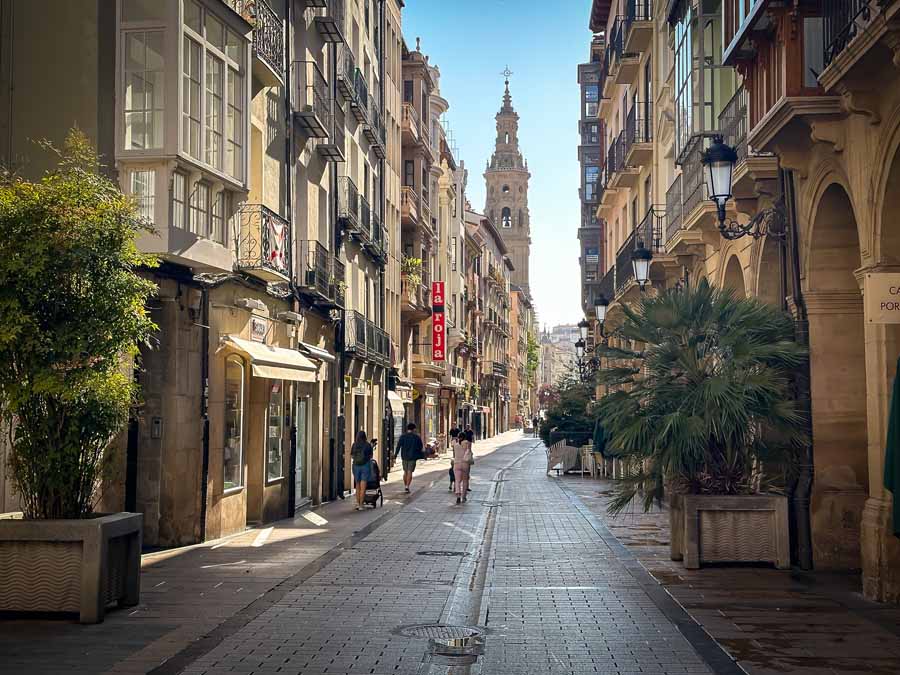
- Why It’s Significant on the Camino Frances: It’s the heart of the La Rioja Wine Region, and the nobility of Spain has been promoting the route since the 11th century to help export the wine and import artists and stone masons.
Logroño is the capital of the La Rioja region and the most populous city in the autonomous community of the same name. It is one of the most historic cities of the Camino Frances.
The Old Town in Logroño is charming, has a lovely market, a fantastic free museum (Museo de la Rioja), and bodegas that are found right in the city limits.
Logroño’s culinary treasures are found on Calle Laurel. This street is home to around 60 different tapas and pintxos bars that all offer local wines of the La Rioja wine region. At night, the streets come alive with musicians and hungry visitors and locals alike soaking in the jovial ambiance.

There are so many things to see and do in Logroño that I feel it warrants two nights. It would also be easy to divert off this Camino de Santiago road trip and combine it with this La Rioja road trip itinerary.
If you want to take a few wine tours, Logroño is a good place to base.
Wine Tours from Logroño
There are over 600 vineyards in the La Rioja Wine Region, so to get a “well-rounded” experience, an organized tour may be the best option. From Logroño, these are a few popular wine tours.
➡︎ This wine tour is run by a local wine producer from La Bodega del Tesoro. This wine tour picks up in Logroño and visits three vineyards in the La Rioja region.
➡︎ This La Rioja wine tour focuses on the Rioja Alta subzone and is a full-day tour in a small group setting.
Where to Stay in Logroño
- Albergue San Nicolás
- Winederful Hostel & Café
- Hostal La Numantina
- El Patio de San Nicolas
- Pensión La Castellana
- EightRooms La Rioja Pension
- Hotel Condes de Haro
- Hotel Sercotel Portales
- Apartamentos Laurel
- Eurostars Marqués de Vallejo
➜ Discover the best places to stay in Logroño Spain
Logroño to Burgos | Side Trips & Add-On Options
The next drive will take us to Burgos. Many people love Burgos, but for me, it was one of my least favorite cities on the Camino Frances. However, some people feel called to visit the UNESCO-listed Cathedral and spend the day wandering the old town. I’ll provide some alternative options… just in case.
- Logroño to Burgos: +/- 132 KM / +/- 1 hour 30 minutes
- There is the option to stop and spend a night in Haro, a village on the way, or visit the village of Clavijo, which has many legends connected to it.

Logroño is less than 30 minutes from Clavijo. This small pueblo is famous for the mythical battle of Clavijo in 844 between the Christians and the Moors.
The legend of the Battle of Clavijo says that while the Christians were losing the battle, St James miraculously appeared, leading them to victory. His intervention became a symbol of divine protection along the Camino. However, there is actually no proof of the battle; it’s more the story that birthed the “reconquista.”
In Clavijo, there is a spectacular hilltop castle. For me, I hiked to the ruins of San Prudencio Monastery, which should be done with care, as much of the monastery is being reclaimed by the Earth.
Option to Spend the Night in Haro

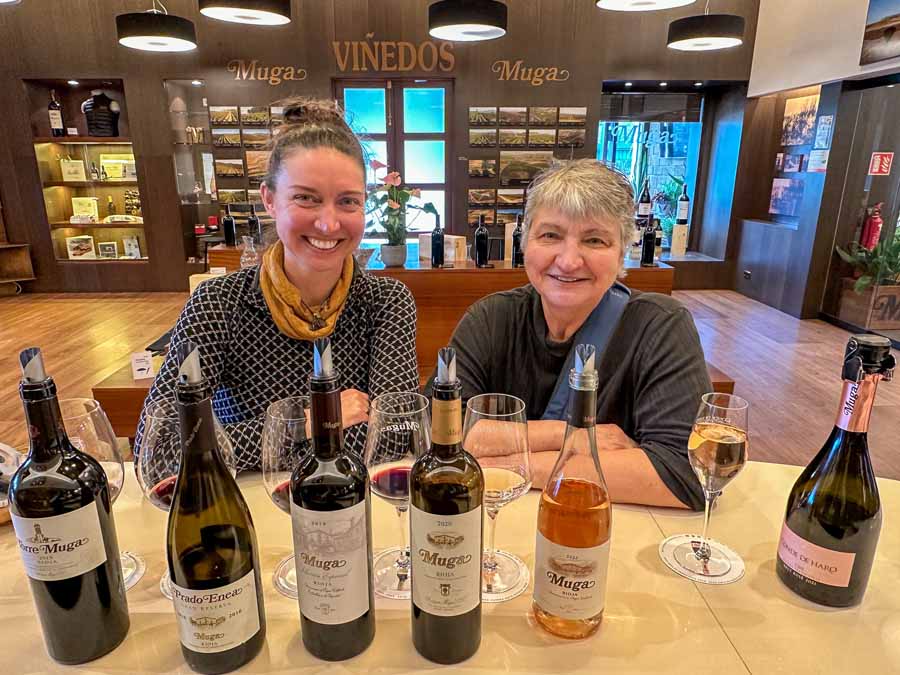
Logroño to Haro: +/- 48 KM / +/- 40 minutes
Haro is a fabulous village in the La Rioja region that has numerous wineries. It is the unofficial capital of the wine region of La Rioja.
By far, the most popular thing to do in Haro is to visit the El Barrio de la Estación, a small district near the Haro Train Station. In this area, find some of Spain’s top wine producers of La Rioja Alta. Near the Haro Train Station, there are seven bodegas that can be visited. This is the official website of the Barrio de la Estación.
On top of all the wineries near the station, Haro has a lovely main plaza, delicious restaurants, and is a delight to wander at night.
As I prefer small villages, I recommend to sleep in Haro and then simply pass through Burgos in the morning.
Burgos | Camino Frances | 1 Night

Burgos is known as being the “Gothic Capital of Spain.” In fact, the stunning Cathedral of Burgos is one of the most significant Gothic cathedrals along the Camino de Santiago.
- Why It’s Significant on the Camino Frances: It’s home to the UNESCO-Listed Catedral of Santa María de Burgos, a Gothic Cathedral where legendary Knight El Cid and his wife are buried. This is also the last major city before pilgrims depart for their journey on the Meseta.
The cathedral was built over 300 years, with construction beginning in 1221. Today, the Burgos Cathedral boasts impressive art collections, particularly those in the Gothic style, including stained glass windows, chapels, and the tombs of El Cid and his wife. The famous warrior is a national hero in Spain and is the main character of the epic poem “Cantar de mío Cid.”
Besides the main Cathedral in Burgos, the Arco de Santa María is a lovely medieval gateway to the city. I enjoyed journaling and walking along the Paseo del Espolón, the park right outside the gate. There are plenty of places to relax, grab a drink, or stroll along the Arlanzón.
One of the best views of the city is from Mirador Del Castillo. The Castle itself is small but worth a quick visit; however, it’s currently closed for renovations.
Where to Sleep in Burgos
- Mola! Hostel Burgos
- Hostel Trovadores
- Crisol Mesón del Cid
- Abba Burgos Hotel
- Hotel Alda Entrearcos
- Hostal riMboMbin
- NH Collection Palacio de Burgos
➜ Browse all the Best Places to Sleep in Burgos
León | Camino Frances | 2 Nights

Burgos to León is known as the Meseta, the large plateau that dominates much of Spain’s interior landscape. The Meseta is known for its long stretch of vastness that is broken up by small villages. Many pilgrims skip this section of the Camino Frances, but for me, it’s one of the most powerful, as it’s quiet and allows for the inner journey to take place.
If driving from Burgos, you will pass most of the Meseta. A nice place to break up the drive would be Sahagun, the official halfway point of the Camino Frances and a historical village.
- Burgos to Leon: +/- 180 KM / +/- 2 hours
- Why It’s Significant on the Camino Frances: León was an important Roman city and became a significant hub for pilgrims walking the French Way since the Middle Ages.


León is a fabulous historical city on the Camino Frances. I’ve visited León numerous times, and each time I visit, I find something new and exciting about the city.
León is home to one of the most memorable cathedrals on the Camino Frances, the Pulchara Leonina. This incredible cathedral is located in the heart of the Old Town. The León Cathedral boasts 125 beautiful stained-glass windows that depict stories of saints and the New Testament in the Bible.
My favorite place to visit is the Basílica de San Isidoro. The Museum of San Isidoro is worth visiting, and houses numerous relics and jewels, but the most incredible thing to see is the Pantheón Real, an ancient chapel that was built during the 11th century. On the ceiling, find original and beautiful frescos that are nicknamed the “Romanesque Sistine Chapel” of Spain.
The San Marcos Convent started as a pilgrim hospital in the 12th century. Later, the building became the headquarters of the Order of Santiago. The Plaza of San Marcos has a pilgrim statue that appears fatigued while resting in front of the now impressive building. To the left of the Convent is the luxurious Parador Hotel of León. This is an absolute treat to stay at.

Besides the three main historical buildings in León, there are numerous attractions. León has one of the best tapas scenes in Spain, and it’s easy to get lost and a little tipsy trying all the culinary delights in the Barrio Húmedo.
There’s a fabulous Gaudí building, Casa Botines, which can be visited.
Don’t skip through León, as I believe it warrants two days.
Where to Sleep in León
- Hostel Covent Garden
- Hostel Quartier Leon Jabalquinto
- Palacio Real Hostel
- Suites La Catedral
- Hospedería Pax
- Hotel Rincón del Conde
- Hotel Alda Vía León
- SUITES BERRUETA
- Hotel Real Colegiata San Isidoro
- Parador Hotel of León
➜ Browse all the Best Places to Sleep in León
Astorga | Camino Frances | 1 Night
A short distance from León is the small city of Astorga. This is the capital of the mysterious Maragatos culture. The Maragateria region is made up of around 40 villages spread across the Montes de Leon. Maragatos have their own cuisine, traditions, and colorful clothing. However, their origin story remains a mystery.
León to Astorga: +/- 53 KM / +/- 45 minutes
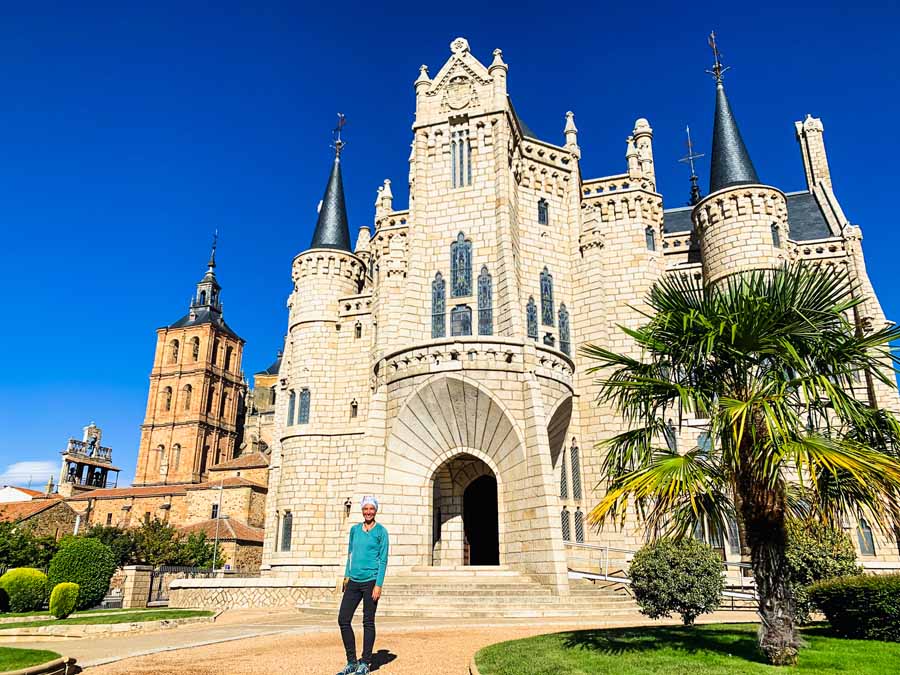

- Why It’s Significant on the Camino Frances: Astorga was an important Roman city, and during the Middle Ages, it offered over 20 pilgrim hospitals for those pilgrims walking the Camino Frances and those pilgrims coming from the south on the Via de la Plata.
By far the most popular thing to do in Astorga is to visit the Palacio Episcopal (Bishop’s Palace), designed by Gaudí. The entire building is stunning, and many of the artifacts are related to the Camino de Santiago. Visiting the Bishop’s Palace is a must-see site in Astorga.
Astorga also has the Cathedral of Santa Maria. This Cathedral was built between the 15th and 18th centuries in mostly a Gothic architectural style. The Cathedral admission also includes a visit to the connected museum.
Don’t miss a chance to view the clock tower of the Astorga City Hall. On the hour, two figurines dressed in traditional Magatato clothing ring the bell. Wander through the streets of Old Town, where you can see remnants of the Romans’ rule.

The nearby village of Castrillo de los Polvazares is worth a stroll. This picturesque stone village still serves up the traditional dish of Cocido Maragato (Maragato Stew). This chickpea and meat hearty stew is eaten in sequence: the meat first, then the chickpeas, followed by the soup, and finally the dessert.
Astorga is also famous for its delicious chocolate, and it’s possible to visit a chocolate museum.
Where to Stay in Astorga
➜ Browse all the Best Places to Sleep in Astorga
Lugo | Camino Primitivo | 2 Nights
From Astorga, we’ll leave behind the Camino Frances and head to Lugo on the Camino Primitivo.
- Astorga to Lugo: +/- 175 KM / +/- 2 hours minutes
- Looking to slow down and break up the trip? Add Ponferrada
Add on Option: Ponferrada


Ponferrada is a nice place to break up the drive, which is another historic city on the Camino Frances known for its Templar Castle. The Old Town of Ponferrada is nice to wander through or stretch your legs on a walk along the Sil River.
With an extra day or two, you could sleep in Ponferrada and visit the beautiful pueblo of Peñalba de Santiago, or see the interesting Roman Gold Mine of Las Medulas.
What to See in Lugo

Lugo is one of my favorite cities in Galicia. It is famous for having one of the best-preserved Roman Walls of the Western Empire, which is listed as a UNESCO World Heritage Site.
One of the best things to do in Lugo is to wander the Old Town and visit the cathedral. Within the walls lie many historical sites and rich museums. No trip to Lugo is complete without a casual stroll along the top of the Roman Walls.
Lugo is also known for its delicious culinary scene that boasts generous portions of tapas. Order a drink at any of the bars and choose from a variety of tapas, many which are written on a chalkboard.
The Old Town of Lugo is also filled with numerous museums, many of which are free to visit and connected to the city’s Roman past.
While the city is relatively small, there are also nearby gems, like the Celtic ruins of Castro de Viladonga.
Two days in Lugo is perfect to indulge in the culinary scene and casually visit the sites of the city and nearby hillsides.
Santiago de Compostela | Stay at Least 2 Nights

On to Santiago! Today is a short drive to Santiago de Compostela, the official ending point of the Camino de Santiago.
Lugo to Santiago de Compostela: +/- 105 KM / +/- 1 hour 25 minutes
- Why It’s Significant: Santiago de Compostela is the end of the road for all pilgrims, no matter which route they chose. It is said that Saint James is buried under the Cathedral of Santiago de Compostela
Santiago de Compostela is a bustling city that is full of life, energy, historical sites, and delicious food. The city has a big personality, so I recommend spending at least 2 days here.
The Old Town in Santiago is a UNESCO World Heritage Site and is home to the impressive Cathedral of Santiago de Compostela and is home to numerous museums, the delicious Mercado de Abastos, and Alameda Park. The Park of Alameda has one of the best views in Santiago de Compostela.


With at least two days, it’s worth getting more off the beaten path. Visit my favorite museum in Santiago de Compostela, Museo do Pobo Galego, and stroll through the Park of San Domingos de Bonaval. It’s also ample time to delve into the rich cuisine of the Galicia region.
Popular Tours in Santiago de Compostela
➡︎ Take a guided tour of the Cathedral of Santiago, and it’s worth it to add the Portico de la Gloria Option
➡︎ Get oriented to the city on this popular Guided Tour of the Santiago Cathedral, Museum, and Old City
➡︎ Try local wines and cheeses on this Cheese and Wine Tasting Experience
➡︎ Spend the afternoon in Old Town on this Tapas Tour of Santiago de Compostela
➡︎ Those looking to explore outside of Santiago de Compostela may wish to take one of these day trips.
Where to Stay in Santiago de Compostela
- Seminario Menor de la Asunción
- Albergue SP 55 by Bossh! Hotels
- Hospedería San Martin Pinario
- Hotel Rua Villar
- Hotel Plaza Obradoiro
- Pensión A Casa do Peregrino
- Parador de Santiago – Hostal Reis Catolicos
- Browse all the Best Places to Stay in Santiago de Compostela
▶︎ I’ve stayed numerous times in Santiago de Compostela, and these are my best recommendations for any type of traveler.
Continue to the Coast for 2-3 Days


One of my favorite places in Galicia is the Costa da Morte, or the Death Coast. The Camino Finisterre Muxia is how pilgrims reach the “End of the World” on foot, but with a car, you can see the best of this hidden treasure in Galicia.
The two most popular villages on the Death Coast are Finisterre and Muxia. Both villages have a lighthouse and a 0.0 Kilometer marker. Muxia is a quiet fishing village, whereas Finisterre was literally named after the Romans’ word for the End of the Earth.
While the two villages are great places to base, there are plenty of places to see nearby.
Cabo Touriñan marks the farthest western point in Spain on the Iberian Peninsula. Inland, you’ll find Celtic ruins and dolmens, and be blessed with white sandy beaches along the coastline.
The village of Cee is the access point to see the Ezaro Waterfall or take the climb up the mystical Monte Pindo.
Life moves slowly on the Costa da Morte. Relax, eat fresh seafood, and spend time watching the sunset over the Atlantic Ocean.
Return to the Basque Country Via Spain’s Green North Coast


Those who opted for a One-Way car rental may decide to leave the car in Santiago de Compostela. Alternatively, follow Spain’s north coast back to Bilbao or San Sebastián (wherever you picked up the car).
Many of these stops are included on the Camino Ingles and the Camino del Norte.
It would be easy to spend a week or more along the north coast of Spain or even heading inland to cities and natural parks.
A Coruña (Camino Ingles) is considered to be the posh city of Galicia and is home to the oldest working Roman lighthouse of Torre de Hércules and Galicia’s favorite brewery, Estella Galicia.
Ribadeo (near Cathedral Beach) and Cudillero are both small villages to explore, or head to the coastal gem of Gijón.
Those who want to head inland can stop in Oviedo, the capital of the Asturias region. Another option is to explore the incredible Picos de Europa National Park. Highlights include the Ruta del Cares Hike, the Lagos de Covadonga, and numerous small villages and hiking trails.
Follow along the coast (or return to the coast) to see beautiful seaside villages like Ribadesella, Llanes, or Comillas. Santander is a great place to spend the night with a delightful culinary scene.
Head back to the Basque Country or spend a night in another small village outside of the autonomous region. Personally, I love the tapas and feel of Castro Urdiales.
Again, it would be ideal to spend 1-2 weeks driving from Santiago de Compostela and visiting highlights along and near Spain’s north coast.
Conclusion | A Detailed Itinerary to Experience the Best of the Camino de Santiago by Car

This is a detailed itinerary to experience the best of the Camino de Santiago by car. This guide is for those who are not able to walk or scout the best of northern Spain to decide which Camino de Santiago route to walk.
This Camino de Santiago road trip includes multiple Camino de Santiago routes and could take anywhere from 2 – 3 weeks. Many of the highlights are found on the Camino Frances, but it also includes more lesser-known Camino routes.
This Camino road trip also includes a mixture of historical cities, small towns, landmarks, and natural beauty. I’ve included what to see at each stop, my recommened number of night to spend in each city, and add-on itineraries for those looking to get off the beaten path.
I’ve had the privlidge to walk more than 12 Camino de Santiago and wanted to share special places with my mom who was unable to walk. These sights are a mixture of all my favorite Camino routes strictly in Spain.
However you experience the Camino, I hope that it brings you joy and you find Camino magic along the way.
Buen Camino!
Is there anything missing from this Camino de Santiago road trip? Do you have spots that you loved that aren’t included on this northern Spain road trip? Let me know in the comments below!
Pack This Post for Later! Pin It!

Disclaimer: There’s a chance this post contains affiliate links, and I receive a small (but grateful) portion of the sale. There’s no extra cost to you, and I only promote things that I use and love.